Diaryบันทึก日记
Day 67: On Disappointment
Grammar only. The title is unchanged.แก้แต่ไวยากรณ์ ชื่อเรื่องคงเดิม只改语法。标题不动。
This entry is in English only.บันทึกนี้มีแต่ภาษาอังกฤษ此篇仅有英文。
Why, lately, I have felt so beaten up? It’s almost as though a number of people have sandbagged me and then put me in a bag before throwing me into the river with a large piece of steel attached to it to make sure that no way I would escape the death penalty. Why? The best method to answer this question, needless to say, is to ask myself and then look inside my own mind, trying aggressively to find out what has happened in the past few days, weeks, or months. We have a name for this method: introspection. It was the political philosophy Thomas Hobbes who popularized the term. In Leviathan or The Matter, Forme and Power of a Common Wealth Ecclesiasticall and Civil, Thomas Hobbes argues that the only way to arrive at the best system of governance is by introspecting: What is it that we want the most from the government? Is it wealth or happiness? Or, it is a constant pleasure? Hobbes argues that it’s none of these. What we want the most — which is the reason, as he has famously said, “why else would we lock our doors at night?” — is safety. Therefore, for Hobbes, the role of the government is to provide safety at all cost.

What about ourselves, then?
The key to introspection is to be reflexive and objective. Being honest about oneself is the only way. When you’re looking inside your own mind, you don’t need to pretend that other people are watching. You can honestly ask yourself what exactly has made you feel the way you feel. Often, those things are not the things conventionally acceptable by the society. It could be your excessive (and most of the time illicit) sexual drive; it could be your aggression against the religious establishment. Or, it could be how you feel so uncomfortable about something simply because we’re lacking in words to describe all the discomforts. Most of the time, it’s easy to tell ourselves a lie when we feel this kind of discomfort. It’s even easier to blame your emotional discomfort on others: that it isn’t you where the problem lies. Once and for all, let’s get this right: there is only one cause of an emotional discomfort, and that is our expectation.
I like reading Hobbes but I must also accept that I have not read him thoroughly enough to discuss with rigor how he frames his use of the term introspection. The way I see it is that it has to do with the mismatch between what we expect and what we are getting. You might say, at this point, though, that “sometimes I didn’t even expect anything but I’d still feel the emotional discomfort.” That’s true; yet, what is likely to be the case is that we “subconsciously” something without even knowing it. We might subconsciously expect a bigger or a more expensive gift from someone because the gift we have given to that someone earlier was big. But once you’ve found that what’s in the box is small, it’s hard to think of such a disappointment as simply the encounter with an unexpected. It’s a disappointment, and it usually shows, because you have an expectation of what you would like to get whether or not such expectation was clear to you. I felt deeply sad when my father, someone so important to me and someone who I didn’t expect to leave me so quickly, passed away. Did I consciously not wantibg him to die? Of course I didn’t want him to die. It’s because he’s important to me.
Love is another thing — maybe the worst thing out there to talk about expectation and most of us’ failure to deal with our inability to arrive at a good compromise when the expectation is not met. Heartbreaking, that is to say, is nothing less than a solid mismatch of expectation. We usually think of a divorce, or a falling out between two people, as a state of incompatibility. It’s not and it’s never about incompatibility. It only is the state of incompatibility only when you think of yourself as having done everything right, and other having done everything wrong.
Love dies when your expectation is not met. For instance, Tony, a friend whose life story I had mentioned in a couple of posts ago, had fallen out of love with his partner because his expectation was not met. He expected her to be understanding, to give him an unconditional support and love, and to be there when he wanted her. Tony had framed these expectations as “minimal” for a relationship and he could well be right, but the fact that matter was that his way of understanding of unconditional support and love was different from those of his ex-partner. She also had her own understanding of these; so, it’s not possible for them to be together which was not because they were compatible, but because they expected someone else totally different and they could not discuss those differences in their expectations.
Tony was disappointed because he had expected too much. I think he was a perfect match with his ex-partner. They liked similar things. They shared the same interest in many activities. The only thing that was “incompatible” between them was their expectations. I was disappointed too, about love, because I used to expect too much. I wanted
I was disappointed too, about love, because I used to expect too much. Once upon a time, I thought I had met the love of my life, but that relationship did not last long at all. Here’re the reasons. I used to want someone to want me unconditionally — but that wasn’t her goal in being in a relationship with me. All she wanted was someone to love her unconditionally — but only when she needed it. She didn’t want me to love her to the point that I would try to protect her from herself. Also, while I wanted her to reciprocate my unconditional love by giving me the benefit of the doubt whenever something might not seem right to her urgent emotionality in the moment, she saw my expectation as unrealistic because she did not think I wanted that. I thought she liked me because I was critical, but it turned out that was not the case at all: She didn’t want anything critical from me but a pat in the back, always. These were unfortunate mismatches in our expectations.
So, here is the takeaway message: If you don’t want to be disappointed, don’t expect too much from anyone (including yourself) and from anything.
Lord Buddha had said this more than two millennia ago. The only way to be content with life is to not expecting life to give you what you “think” you need. Some of what people “think” they need, as Lord Buddha had pointed out, are unrealistic, such as wanting someone to be with you all the time, to love you no matter what, to have the best of everything and anything, and to live a fulfilling life without any efforts to fulfil it meaningfully. Lord Buddha’s suggestion may be too radical and too difficult to implement in real life. The French Enlightenment thinker Jean-Jacques Rousseau, meanwhile, has a better suggestion that is, in fact, along the same line as Lord Buddha’s. Rousseau’s idea is that the root of our desire for external objects (e.g., clothes, cars, jewelry) is the creation of an artificial superstructure that the people in power produce to keep those in a socio-economically inferior position in a perpetual stage of poverty. We don’t and never ever need any of these, Rousseau has argued centuries ago (I’ll return to this point in my next post on my take on the new — and the only way of a good life — thinking about life: minimalism).
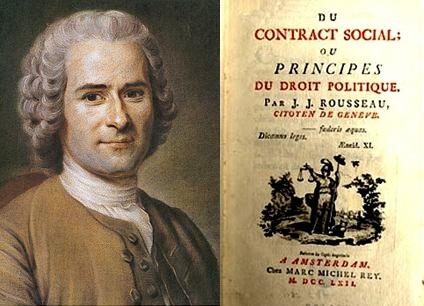
The same goes with the notion of romantic love and family. Karl Marx, adding to Rousseau’s claim, argues that we “love” because the powerful and economically superior people want us to think that it’s a “good thing to love.” By “wanting to love,” we are reproducing more and more laborers to serve the economically powerful (God damn bastards, aren’t they) — and therefore chaining ourselves to the perpetual chains of inescapable slavery. We are worse than slaves, Marx argues, because we can’t emancipate from this slavery. As waged laborers, we have to get up to work — because of our love for our spouse, parents, and kids. We work long hours to pay bills because we feel as though there’s an aura of actuality that makes us feel that we do so because we are responsible for other the lives of those whom we think we love. According to Rousseau, those whom he calls the “noble savages” are the ones who are free from all of these superstructures. They’re freer than we are, and they’re happier than we are, claims Rousseau. This superstructure makes the inferior class desire what they do not need. By constantly creating a series of unnecessary desires, the superior class is essentially putting the inferior class to work in pursuing desires that can never be completely fulfilled. Members of the inferior class are made slaves to the superfluous needs that the rich have created to keep them in check. We have too much and too high expectations and that is not natural. It’s by design.
So, the takeaway, again, here: Don’t expect too much from anyone and about anything. Most of our desires are not that necessary anyway, so why expect them? Why want them?
Unedited original.ต้นฉบับที่ไม่ได้แก้未经修改的原文。
Why, lately, I have felt so beaten up? It’s almost as though a number of people have sandbagged me and then put me in a bag before throwing me into the river with a large piece of steel attached to it to make sure that no way I would escape the death penalty. Why? The best method to answer this question, needless to say, is to ask myself and then look inside my own mind, trying aggressively to find out what has happened in the past few days, weeks, or months. We have a name for this method: introspection. It was the political philosophy Thomas Hobbes who popularized the term. In Leviathan or The Matter, Forme and Power of a Common Wealth Ecclesiasticall and Civil, Thomas Hobbes argues that the only way to arrive at the best system of governance is by introspecting: What is it that we want the most from the government? Is it wealth or happiness? Or, it is a constant pleasure? Hobbes argues that it’s none of these. What we want the most — which is the reason, as he has famously said, “why else would we lock our doors at night?” — is safety. Therefore, for Hobbes, the role of the government is to provide safety at all cost.
What about ourselves, then?
The key to introspection is to be reflexive and objective. Being honest about oneself is the only way. When you’re looking inside your own mind, you don’t need to pretend that other people are watching. You can honestly ask yourself what exactly has made you feel the way you feel. Often, those things are not the things conventionally acceptable by the society. It could be your excessive (and most of the time illicit) sexual drive; it could be your aggression against the religious establishment. Or, it could be how you feel so uncomfortable about something simply because we’re lacking in words to describe all the discomforts. Most of the time, it’s easy to tell ourselves a lie when we feel this kind of discomfort. It’s even easier to blame your emotional discomfort on others: that it isn’t you where the problem lies. Once and for all, let’s get this right: there is only one cause of an emotional discomfort, and that is our expectation.
I like reading Hobbes but I must also accept that I have not read him thoroughly enough to discuss with rigor how he frames his use of the term introspection. The way I see it is that it has to do with the mismatch between what we expect and what we are getting. You might say, at this point, though, that “sometimes I didn’t even expect anything but I’d still feel the emotional discomfort.” That’s true; yet, what is likely to be the case is that we “subconsciously” something without even knowing it. We might subconsciously expect a bigger or a more expensive gift from someone because the gift we have given to that someone earlier was big. But once you’ve found that what’s in the box is small, it’s hard to think of such a disappointment as simply the encounter with an unexpected. It’s a disappointment, and it usually shows, because you have an expectation of what you would like to get whether or not such expectation was clear to you. I felt deeply sad when my father, someone so important to me and someone who I didn’t expect to leave me so quickly, passed away. Did I consciously not wantibg him to die? Of course I didn’t want him to die. It’s because he’s important to me.
Love is another thing — maybe the worst thing out there to talk about expectation and most of us’ failure to deal with our inability to arrive at a good compromise when the expectation is not met. Heartbreaking, that is to say, is nothing less than a solid mismatch of expectation. We usually think of a divorce, or a falling out between two people, as a state of incompatibility. It’s not and it’s never about incompatibility. It only is the state of incompatibility only when you think of yourself as having done everything right, and other having done everything wrong.
Love dies when your expectation is not met. For instance, Tony, a friend whose life story I had mentioned in a couple of posts ago, had fallen out of love with his partner because his expectation was not met. He expected her to be understanding, to give him an unconditional support and love, and to be there when he wanted her. Tony had framed these expectations as “minimal” for a relationship and he could well be right, but the fact that matter was that his way of understanding of unconditional support and love was different from those of his ex-partner. She also had her own understanding of these; so, it’s not possible for them to be together which was not because they were compatible, but because they expected someone else totally different and they could not discuss those differences in their expectations.
Tony was disappointed because he had expected too much. I think he was a perfect match with his ex-partner. They liked similar things. They shared the same interest in many activities. The only thing that was “incompatible” between them was their expectations. I was disappointed too, about love, because I used to expect too much. I wanted
I was disappointed too, about love, because I used to expect too much. Once upon a time, I thought I had met the love of my life, but that relationship did not last long at all. Here’re the reasons. I used to want someone to want me unconditionally — but that wasn’t her goal in being in a relationship with me. All she wanted was someone to love her unconditionally — but only when she needed it. She didn’t want me to love her to the point that I would try to protect her from herself. Also, while I wanted her to reciprocate my unconditional love by giving me the benefit of the doubt whenever something might not seem right to her urgent emotionality in the moment, she saw my expectation as unrealistic because she did not think I wanted that. I thought she liked me because I was critical, but it turned out that was not the case at all: She didn’t want anything critical from me but a pat in the back, always. These were unfortunate mismatches in our expectations.
So, here is the takeaway message: If you don’t want to be disappointed, don’t expect too much from anyone (including yourself) and from anything.
Lord Buddha had said this more than two millennia ago. The only way to be content with life is to not expecting life to give you what you “think” you need. Some of what people “think” they need, as Lord Buddha had pointed out, are unrealistic, such as wanting someone to be with you all the time, to love you no matter what, to have the best of everything and anything, and to live a fulfilling life without any efforts to fulfil it meaningfully. Lord Buddha’s suggestion may be too radical and too difficult to implement in real life. The French Enlightenment thinker Jean-Jacques Rousseau, meanwhile, has a better suggestion that is, in fact, along the same line as Lord Buddha’s. Rousseau’s idea is that the root of our desire for external objects (e.g., clothes, cars, jewelry) is the creation of an artificial superstructure that the people in power produce to keep those in a socio-economically inferior position in a perpetual stage of poverty. We don’t and never ever need any of these, Rousseau has argued centuries ago (I’ll return to this point in my next post on my take on the new — and the only way of a good life — thinking about life: minimalism).
The same goes with the notion of romantic love and family. Karl Marx, adding to Rousseau’s claim, argues that we “love” because the powerful and economically superior people want us to think that it’s a “good thing to love.” By “wanting to love,” we are reproducing more and more laborers to serve the economically powerful (God damn bastards, aren’t they) — and therefore chaining ourselves to the perpetual chains of inescapable slavery. We are worse than slaves, Marx argues, because we can’t emancipate from this slavery. As waged laborers, we have to get up to work — because of our love for our spouse, parents, and kids. We work long hours to pay bills because we feel as though there’s an aura of actuality that makes us feel that we do so because we are responsible for other the lives of those whom we think we love. According to Rousseau, those whom he calls the “noble savages” are the ones who are free from all of these superstructures. They’re freer than we are, and they’re happier than we are, claims Rousseau. This superstructure makes the inferior class desire what they do not need. By constantly creating a series of unnecessary desires, the superior class is essentially putting the inferior class to work in pursuing desires that can never be completely fulfilled. Members of the inferior class are made slaves to the superfluous needs that the rich have created to keep them in check. We have too much and too high expectations and that is not natural. It’s by design.
So, the takeaway, again, here: Don’t expect too much from anyone and about anything. Most of our desires are not that necessary anyway, so why expect them? Why want them?