Diaryบันทึก日记
Designated Survivor: Bangkok
Grammar only. The title is unchanged.แก้แต่ไวยากรณ์ ชื่อเรื่องคงเดิม只改语法。标题不动。
This entry is in English only.บันทึกนี้มีแต่ภาษาอังกฤษ此篇仅有英文。
An Experimental Novel of Day 126
Chapter 1: Champagne Supernova
House
He woke to the hook looping in his skull:
Where were you while we were getting high?
A hook from the 90s’ smash hit by the British band Oasis. “Why is this old song from more than thirty years ago looping in my head?” Asked Doc as he tried to get up.
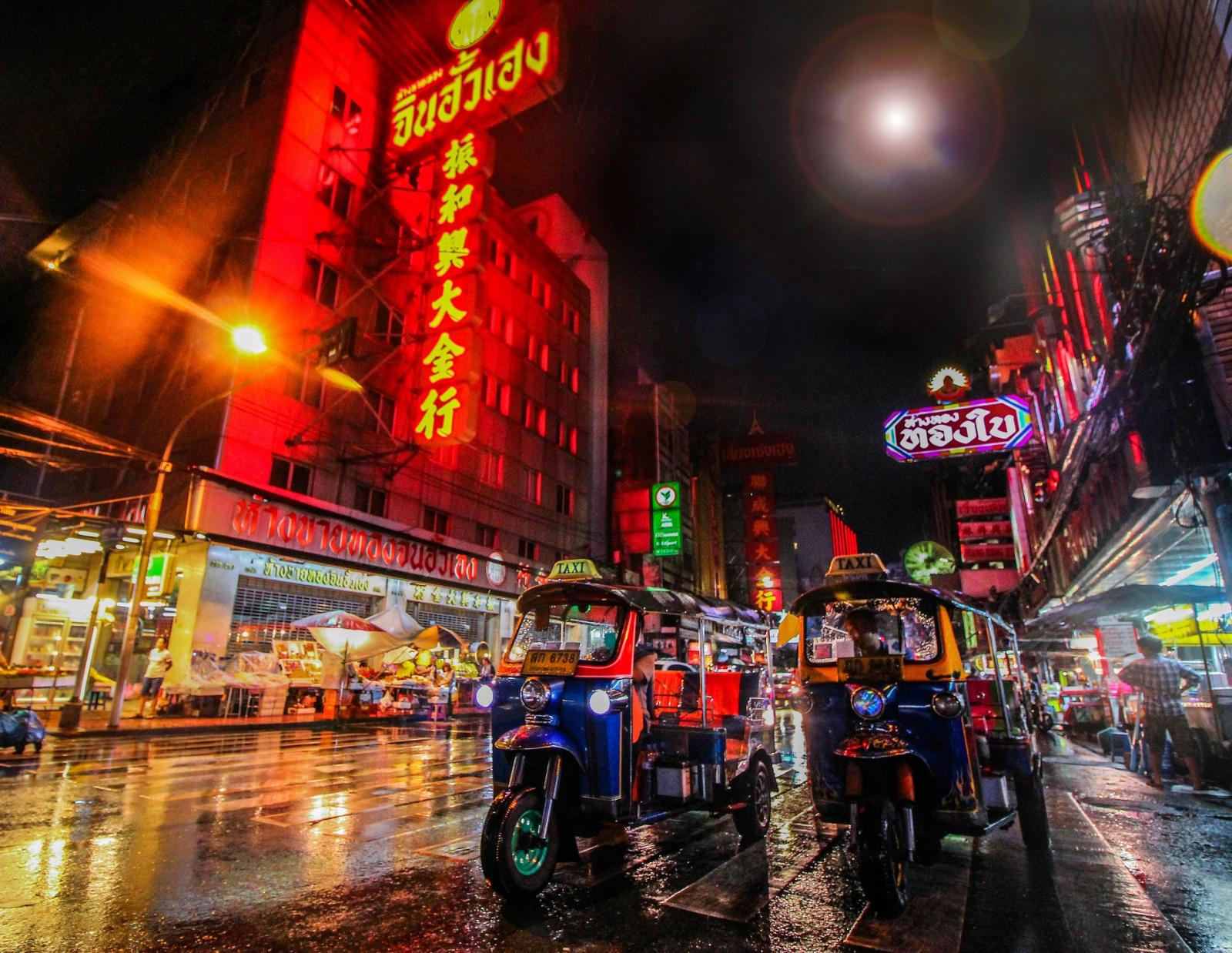
Maybe because the air smelled like Bangkok: Warm, heavy, and sweet with jasmine rice drifting up from downstairs. Bangkok always smelled like the 90s: The smell of social warmth before social media, bearable humidity after tropical rain, and ambition despite its challenges. His mother clanged a pot in rhythm, as she always did. She still called him Nong, or “little brother,” in Thai: For 43 years and she always would.
He hadn’t gotten used to Bangkok.
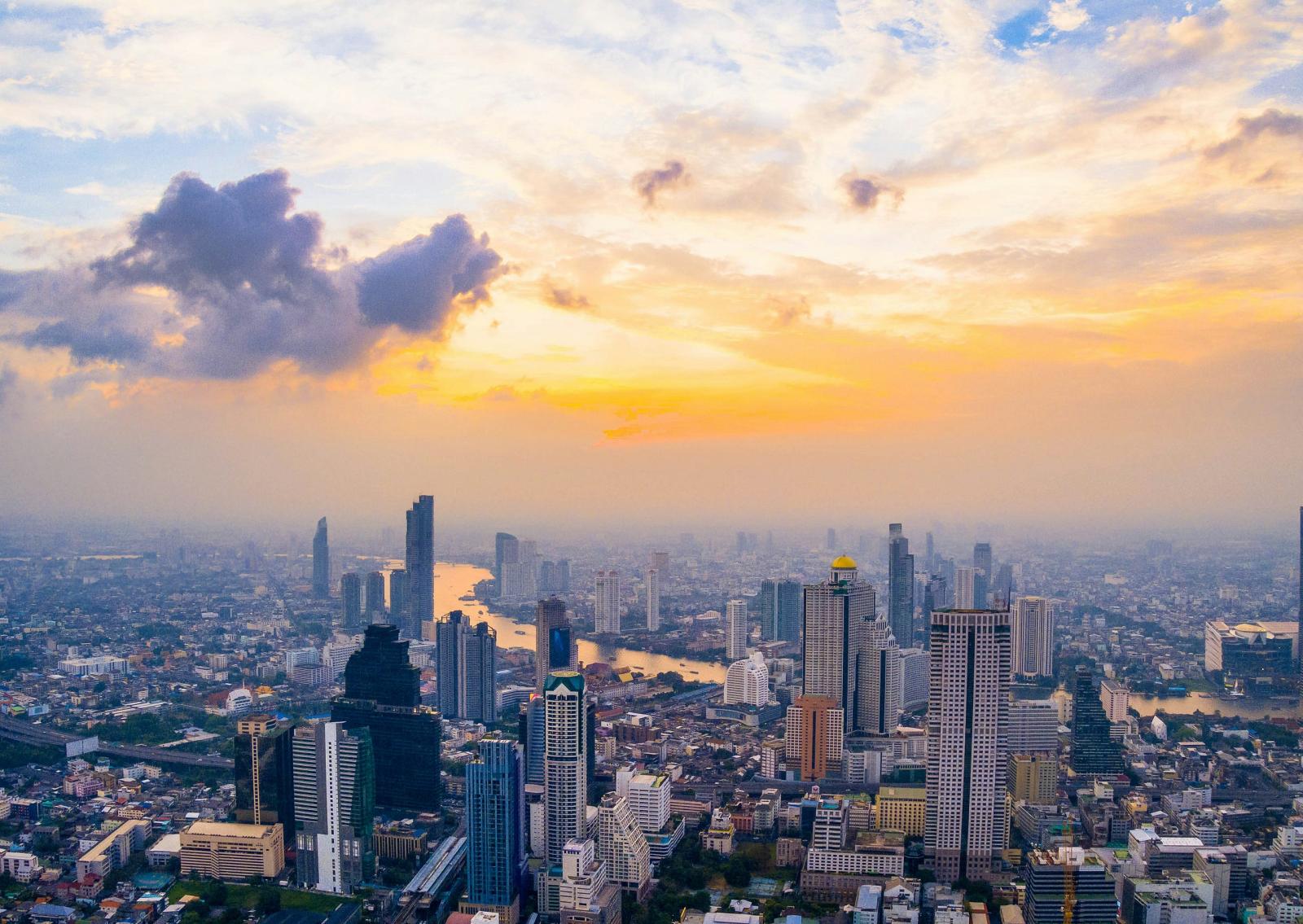
Every morning, especially after a weed night — almost every night since the legalization in 2022 — a song from the 90s or early 2000s lifted him off his dream. It’s half-intentional: He set his wakeup song to be from those periods. To him, that was the ambience he needed to reconnect after more than a decade of being away from it. He had so much and too little to remember.
Random songs from the 90s and early 2000s had been playing in the background since 6:45. He programmed the volume to increase from 5 to 50 per cent by 7:30 should he not stop the music from playing, usually with voice control.
Seven years since he had moved back home and half-joked about becoming a hikikomori., a term he heard when he was in Japan. He once looked it up: hiku means “to pull,” komoru means “to withdraw.” A Japanese word for those who retreat until rooms become islands.
He laughed at it, but it fit too well: the mother folding clothes, the rice steaming, the joints smoked at night, the game console Nintendo Switch 2 when his brain needed static. Bangkok outside, world inside.
7:02am
Not 7:00 or 7:05 — was the time his smart watch disguised as a simple watch decided that he was in the state of light sleep from which he should wake up and feel fresh. The smart watch collected all kinds of data, e.g., pulse, blood oxygen, his sleep cycles, and determined the right time for him to get out of bed. Science said that this way he would wake up more energetic than usual. He believed it.
His two dogs, however, often got up and stepped on his body like it’s their playground way before the alarm on his watch anyway: What’s the point of this smart watch, he thought?
Cold shower

Painful but needed to wake all his cells up at once. He learned that from popular science. It seemed to be working for him.
Cold shower, with podcast. More bearable.
He didn’t read the news anymore.
He inhaled it. Three hours a day, minimum. The voice of the Economist guy, the cautious tones of Wall Street Journal, the libertarian sharpness of Bloomberg, the smug optimism of a TED speaker. He needed all of them. He needed to know how the world was spinning because that was his job: To translate chaos into coherence. Spotify Wrapped once told him he’d listened to 1,150 hours of podcasts that year. “So much of a hikikomori,” he murmured while showering. He didn’t brag about it. He was just keeping his edge sharp.
Then vanity rituals: scalp massage, three spurts of tonic: One for the scalp health, one for the hair nourishment, and one as a placebo.
And there’s the IoT toothbrush that mapped his teeth and scolded him for missing spots. He thought it was ridiculous, and yet, it worked. The brush recorded his brushing stats; he wondered who was watching.
Old college T-shirt: The T was so cracked that it could have been read just M-I-something, fabric soft as memory, now only pajamas. Outside, it would raise questions: Are you really from MIT? Or worse, “What’s MIT?”
He never thought he looked like a typical MIT graduate: The mirror threw back a bearded face framed by round Le Corbusier glasses and four silver hoops — one star, one leaf, two plain rings. Ninety-two point five percent silver from artisans in Southern Thailand. They were thin enough to sleep in. He had never taken them off. They were part of him.
7:22am
After a shower, he stepped onto the balcony, boxer shorts, bare chest, two dogs at his feet like sentinels. On the same balcony he grew up looking at the stars and once-in-a-lifetime solar eclipse, from when he was young. Now he’s back at his home turf after years abroad. In a city obsessed with condos, a two-story house with a patch of lawn felt illegal.
Drip coffee, no breakfast — his rule. He preferred coffee from southeast asian origins: He had pride in the part of the world that made him strong.
The stomach must ask before he feeds it.
He learned it from a report about the 2016 Nobel Prize in Medicine or Physiology: There’s a process called autophagy in which the cells eat themselves and produce growth hormones. That process could only be accelerated by fasting. He put a slice of butter into his coffee mug. He learned about the “bulletproof coffee” methods from his tech friends in San Francisco a few years ago when he was still living abroad. The belief is that it would boost the metabolism of the drinkers. He had never tried to prove it.
He sat down with the cup, facing the sun.
He closed his eyes and let the light burn a film of gold behind his eyelids. The leftover weed from last night’s smoke still moved in his blood like slow lightning.
Even though he smoked regularly, the Vitamin D from the sun, and the cold shower, usually exorcized the pothead ghost out of him during his morning rituals.
He smiled at the absurd thought — maybe he came back to Thailand because weed had become legal. Weed helped him sleep and stopped him from overthinking.
Maybe he wasn’t joking.
Three Black Mirrors
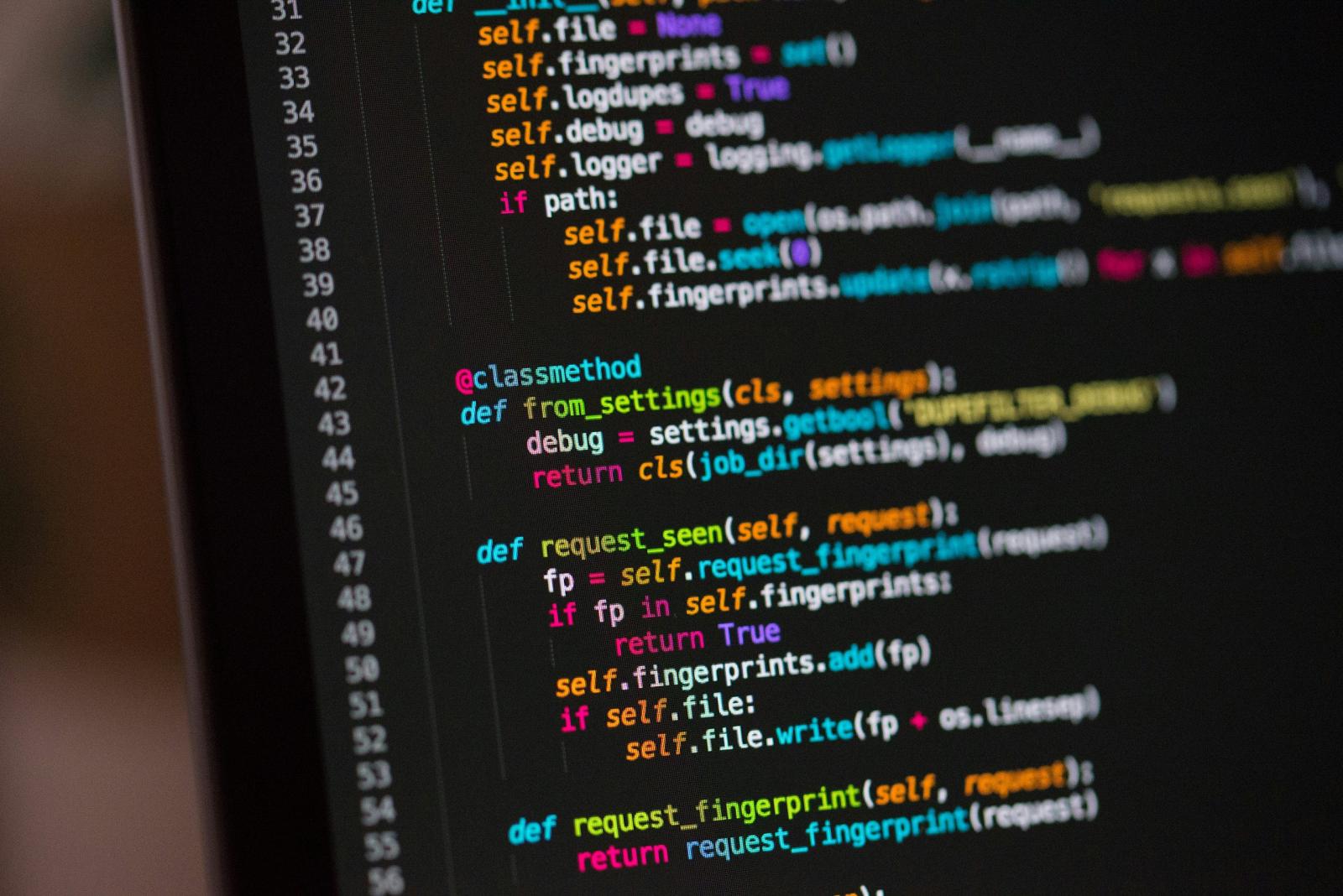
8:00 sharp: Three screens lit up at once — laptop, tablet, phone — connected by a single ghosting mouse. His cockpit. He’s sitting on the floor with the screens on a small folder table he bought from IKEA.
Some people said he played God. They weren’t wrong.
Three meetings at once: a policy roundtable on broadband expansion, an investor call on climate data for a smart bus operation, and a telemedicine pilot briefing.
Cameras off. He was still wearing only his boxer and sitting by his balcony. He created realistic half body avatars of him wearing a suit to appear on all virtual conference rooms. These avatars could nod and smile. No one could tell from the thumbnail window of a virtual call that it was not a real person, just AI-generated avatars.
When he had to speak, or when the conversation transcribed in real time found mentions of his name, his avatars would show a quick pop up on his screen as a signal to jump in. The avatars moved their mouths that sync with his words when he turned on a microphone to speak. His smart speaker waited like an obedient clerk, ready with numbers, data, maps. He used all his smart devices with precision, but not like a pro, but a child who wanted to try everything out there.
His “Second Brain” — an advanced AI model, run entirely on his own computer, trained on his own notes, phrasing, and moods — was a black box. It’s transcribing, tagging, and summarizing everything he or his avatars were listening to in real time. Engineers got concise replies. Governors got warmth. Billionaires got charm. Friends got roasted.
The Second Brain never touched the internet directly; it listened only to him and only uploaded what its owner had approved.
On a spreadsheet, an AI pop-up icon on the right side of the screen, he clicked and dictated without looking:
“Approve tranche B if survey hits 85% coverage. If not, hold. You know I’d probably go at 72%, but don’t tell anyone yet. Draft the email as if I’m smiling.”
The machine wrote. He skimmed. Approved. Moved on.
He distrusted the big tech stacks that claimed to be gods of data, but he used them anyway. He knew there’s a limit to how much he could avoid using them. He wouldn’t be able to do what he did if he had to reject all big tech and go back to the Flintstones’ era.
He used a smartphone, but was careful with which apps to download and permissions to allow. He used a laptop, but knew when to toggle his wifi off and had a small lid in front of the camera. He used all kinds of technology — as a tool of which he was the master. He used AI, but his AI wasn’t built for scale or style: it was built for loyalty.
Sometimes, when the light from the three screens hit his face just right, he caught his reflection — half-awake, half-ashamed — and thought of those nights in the late nineties when the boys in his dorm traded porn tapes like cigarettes. They also traded cigarettes, weed, and bootlegged boose too. The sound always came first, before the image — warped, breathless, forbidden. Maybe that was when his brain learned to mix pleasure with secrecy, intimacy with surveillance.
When it came to real matters, he unplugged.

These were words that could ripple into policy or a business deal. The Big Brother Tech smart glasses went back into their coffin-like charger, and all the third party software off as well as his all black mirrors’ built-in cameras. He would let only encrypted software run in his three black mirrors.
On the rightmost mirror screen, the news feed kept running quietly — a mix of algorithm and accident.
Some talk-show host was whispering about the abbot in Pathumthani, a city next to Bangkok, the one with too many disciples and too much money. The abbot had been saying about how much he would like to “clean up” Thailand. The feed showed his new temple dome, all gold-plated, built with “donations” that came mostly from men now sitting in Parliament. In Thailand, that wasn’t news; that was gravity.
Below that, a ticker crawled across the bottom edge of his reflection:
“Thailand–Indonesia investment race tightens as Jakarta fast-tracks AI and port infrastructure.”
He smirked. He hoped that the competition wouldn’t turn into stupidity.
And another headline — smaller, fainter — “Minister of Digital Economy and Society is rumored to face reshuffle before the end of session.”
Then another one: “Budget defense tonight: Threshold of Growth and Austerity for Thailand,” which he didn’t even bother to read.
Let the noise flow. The signal would show itself later.
He stuck at the last headline that showed up on the feed: “Thai Army stands by: Another coup might be on the horizon.,”
Before he could reach “click for details” — a ping.
Unknown number: Doc, press room. Urgent. The DPM needs you. 17:10, Parliament Building, Sector 3, Press Hall 1412-B.
The message had him at Doc. DPM was short for Deputy Prime Minister. The details — sector, hall, room — made it real. Only insiders wrote like that.
He cross-checked the sender through his encrypted directory — unlisted, but formatted like an internal government code. Close enough to trust.
He closed his eyes, stretched, as a notification showed on his phone something about the budget defense at the parliament this afternoon that could stretch to an all-nighter.
“Shit,” he’s reminded of something important he had forgotten:
The speech for Uncle Prasert.
The Dictation

Uncle Prasert — or His Excellency Minister Prasert Yenjit of Digital Economy and Society (MDES). It’s the same minister his AI just fed him with a rumor about another cabinet reshuffling. MDES is the smallest ministry, with a medium budget, and loud reputation. Prasert was not an uncle in a biological sense, but a family friend from his village hometown in Northeastern Thailand. Doc’s mother knew him and his family well. The nation ran on fictitious kinship: We are all in this together. He called Doc in public “the special boy from my village who went to MIT.”
Thirty years ago, he was just the kind pharmacist across the street. Now, he sat in cabinet meetings. He worked his way up from having just himself in the new Northeastern faction years ago. Now more than a dozen members of parliament were loyal to him. That’s how elected politicians negotiate their cabinet positions in Thailand.
The Doc never met Minister “Uncle” Prasert in person after he became a minister. The last time they met was at the funeral of Doc’s father some 15 years ago. They didn’t need to. Minister Prasert heard from other high level director generals that the Doc was good at data-driven negotiation and known as an excellent speech writer. In the cabinet, Prasert was known for his ability to use the right people for the right jobs.
Once a while, Minister Prasert’s secretary would call the Doc and ask for a brief, urgent analysis, or a speech for important events. The Doc never said no — not to the Minister but to his village uncle.
He’d almost forgotten tonight’s speech.
It wasn’t in the AI calendar because the request came through a personal call from the Minister’s office, not a system log. Luckily he used an AI to make a note in his calendar.
“Oh, shit,” he muttered.
He laid back, spine relaxed, eyes closed.
He then dictated to his AI software on his laptop:
“Good evening, ladies and gentlemen. On behalf of the Ministry of Digital Economy and Society, I want to begin with the elephant in the room: Connectivity is not charity; it’s infrastructure. When a girl in Surin reads biology without a glitch, that’s GDP. When a clinic in Nan transmits a heart scan in thirty seconds, that’s not a miracle — that’s public health.”
Two minutes. Method-acting in its prime. The Doc’s eyes were still closed as he imagined himself the minister who would be giving this powerful speech to the parliament. Tight as rails, smooth as silk. “No stones left unturned; no counterarguments left to be made by the oppositions,” he told himself as he dictated the speech.
Done. 1,000 words. His AI transcribed, edited, and showed him the speech. He edited one metaphor, saved it, and sent it to the Minister’s aide.
He had been in the flow. He didn’t eat lunch though he slightly remembered his mom’s saying something about lunch hours ago. It was the same rule: eat only when the stomach asked for it.
2:32pm
Another ping.
Unknown number: Doc, come now. Crisis.
So be it.
Transit
He dressed like a contradiction: navy (with thin stripes) suit, gray tie, Kepten & Son rucksack, smart glasses on. The Le Corbusier pair went into the bag. The dogs followed him to the door.
He kissed both heads, carefully walked across the threshold — Thai call it Thoranee Pratoo — the sacred lip of the house. Stepping on it would bring bad luck, Thai mothers said.
He didn’t believe in luck anyway.
At 3:03pm, as he was walking about the door, he received a message from the Minister’s secretary:
Supatra (Minister Sec): We read your speech. Great speech, Doc. The minister really loves it. We can always count on you.
“Great speech, hey,” he thought to himself either he was that good, or they didn’t really care. That’s just two minutes of his time.
He was tempted to smoke a joint before walking up the sky train’s platform, but then he realized he was still partially stoned from last night.
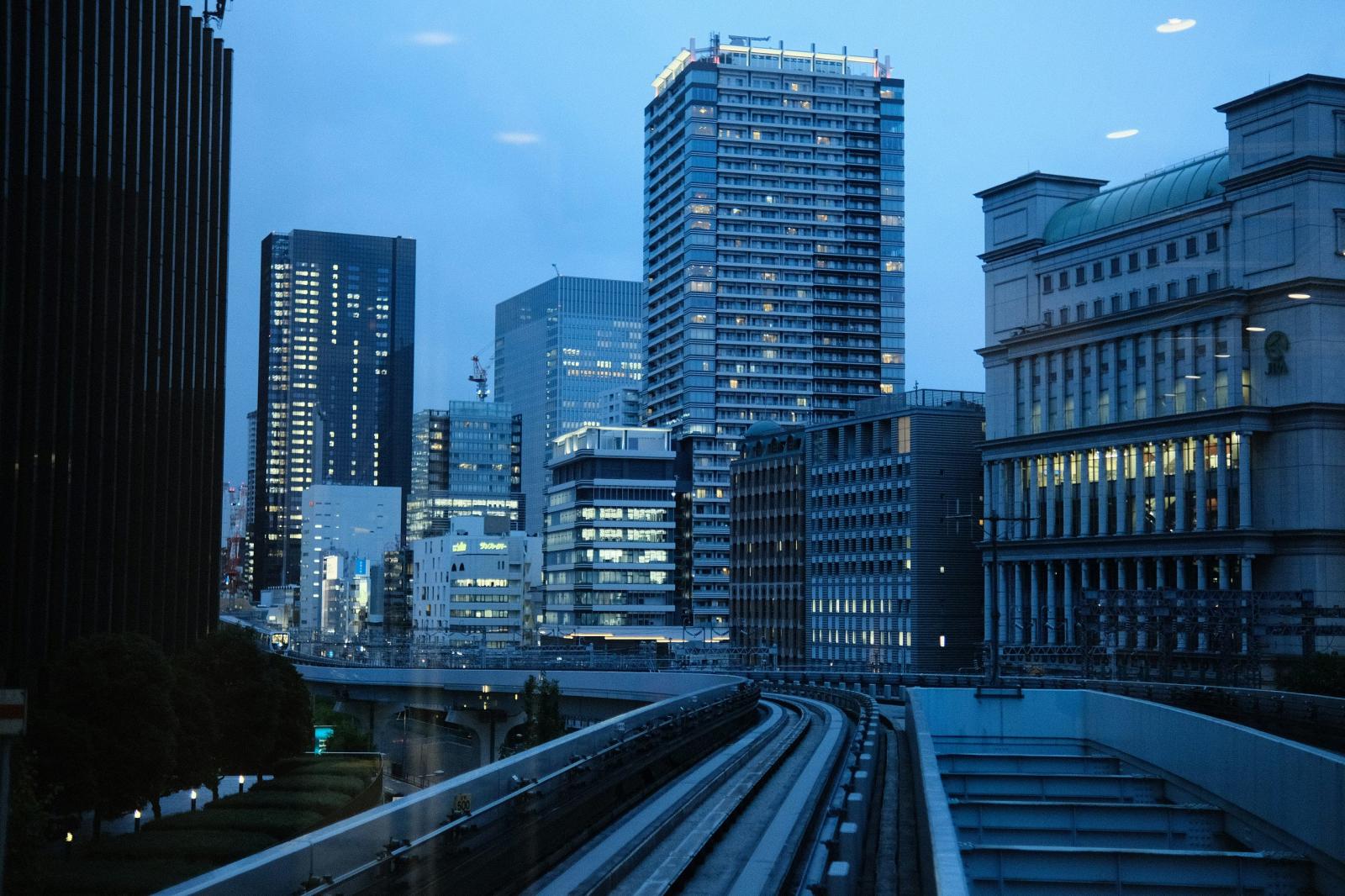
On Bangkok’s BTS Skytrain, he floated above the city’s roofs — old wood and new glass, temples and malls. The smart glasses had many five microphones, two on-ear speakers, and a camera. They handled voice-to-text, so he dictated his work while being on the move. He avoided sensitive words. He didn’t trust who listened.
He also used his smart glasses to take skyline photos, a few of the crowd, and a pretty Korean girl in a jeans blouse. Beautiful. A group of young students in college uniforms and white freshman shoes. Sensual. Out of reach. Perverse. Doc was a complicated man.
4:33pm.
After an hour of a skytrain ride, he switched modes to a motorcycle taxi, the only way to get around Bangkok’s crisscrossed alleyways and heavy traffic. As he moved in the back of a motorcycle, in suit and tie, he thought of himself as a superhero from a movie traveling to save the good guy. The city blurred behind him as he moved through alleyways: It’s chaos with choreography.
5:05pm.
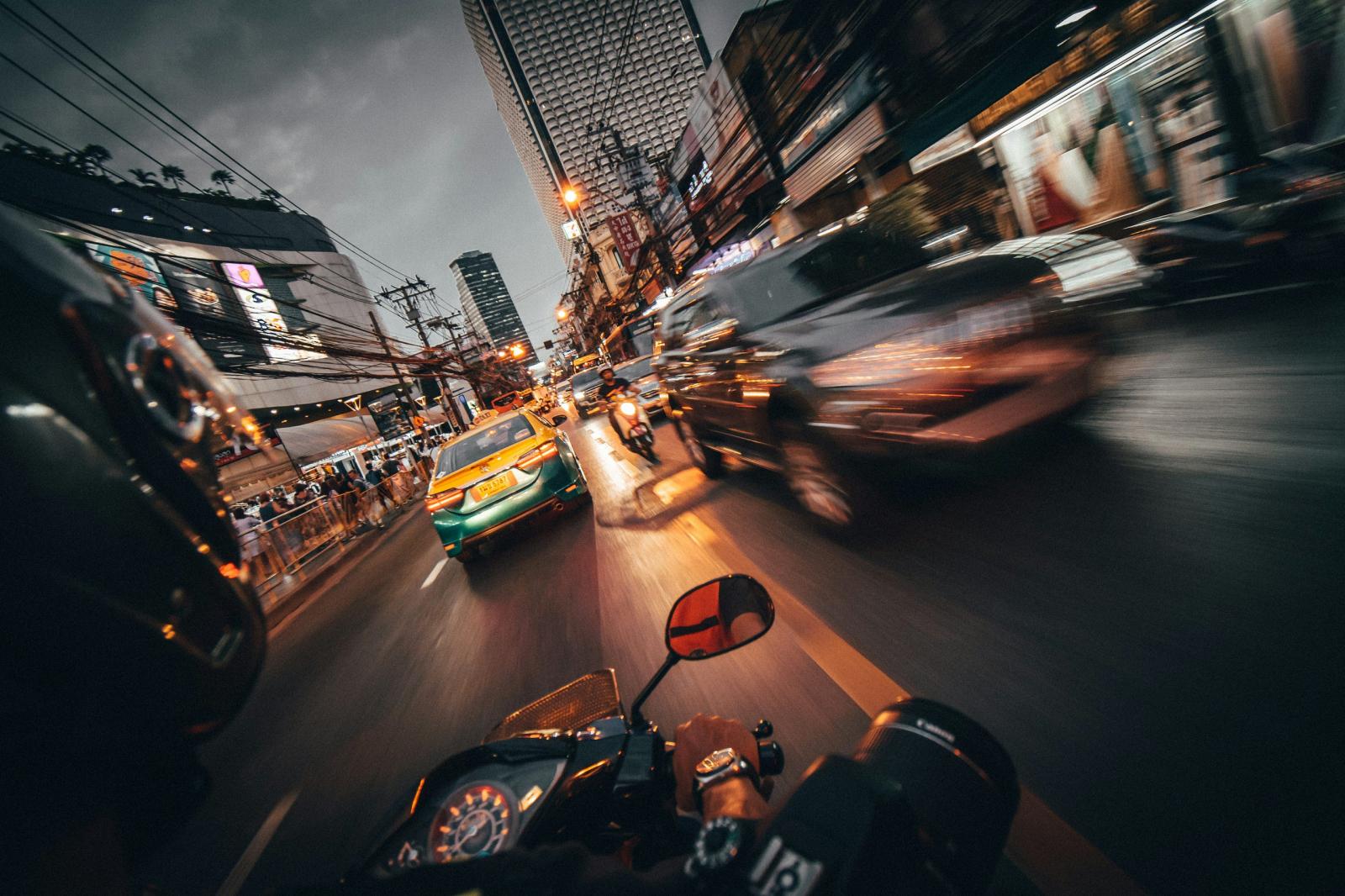
He got off the motorcycle at the Parliament’s drop off point. He gave a 100 baht banknote for a 20 baht ride. “Keep the change,” he said. He could feel the rider being uncomfortable from taking so much from his passenger.
“Please, keep it. Thanks for getting me here just in time. I really need this,” he padded the rider on the back and ran toward the security checkpoint.
Room 1412-B, or the Press Room
5:06pm
Security Checkpoint of the Royal Thai Parliament by the river. All marble, mirrors, and noise.
The security guard squinted at the photo on his government card — no beard, no earrings, no hipster haircut — then waved him in.
5:09am.
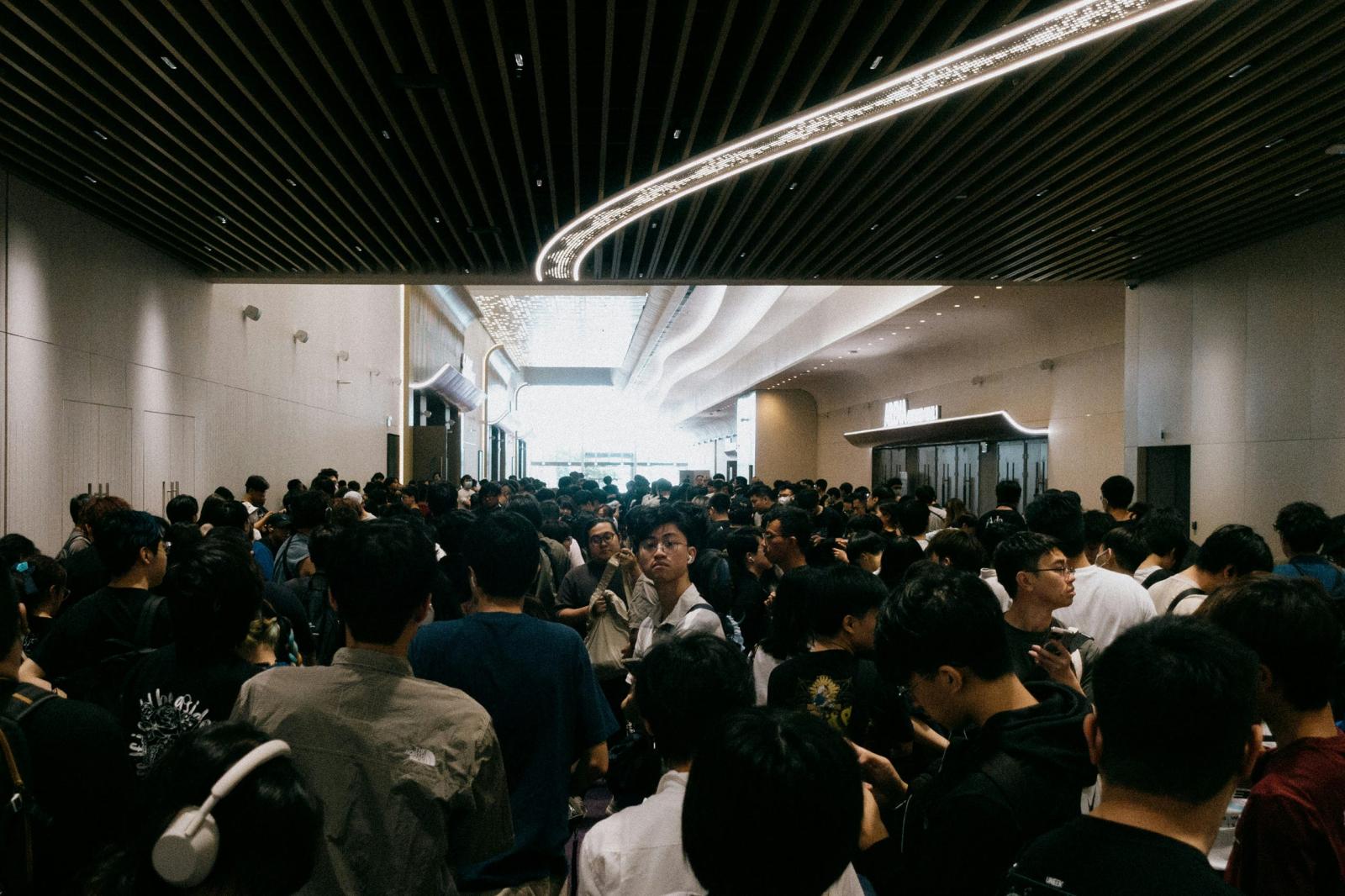
Room 1412-B was a storm.
Reporters snapping. Cameras flashing. A young, terrified Deputy Minister drowning behind the podium.
Doc entered quietly, smart glasses listening, five microphones drinking the room. Linked to his smart glasses, an app on his phone was transcribing everything the glasses sent over. His AI processed keywords scrolled across his phone’s screen in real-time: corruption, breach, sue, missing funds. This information was being processed over the internet with his fine-tuned local processing unit — Second Brain — at home. “This is a war of persuasion by information and,” he always thought, every time he had to go and “fix” someone else’s problem.
He walked up the side. The DPM saw him — relief and fear.
“Doc? Why are you here?”
This Deputy Prime Minister (DPM) was young, handsome, appointed not by the Prime Minister’s Office to “monitor” things. Big title, but no real role in the government. He was a political ornament who had once launched a broadband campaign that failed spectacularly. The Doc had warned him not to do it. He did it anyway. Then the Doc cleaned up the mess. That’s how this uneasy bond began.
“What? Your team didn’t text me?” Doc was surprised.
Doc showed DPM the text.
The Deputy Prime Minister turned to his aides. Nobody spoke.
“Well, whoever did,” he said, “you’re here now. Help me.”
“No need for briefing,” said the Doc. “I already know what’s going on.” Doc didn’t have the time to explain how his AI had already prepared a thorough analysis of the situation, and of the room itself.
He pointed to the water bottle.
“Pour, Sir. Slowly. I need a minute.”
He read the analysis that his AI sent back to him.
He then whispered to the same AI app on his smartphone, already hungry for a prompt as the data had already been swallowed and analyzed through his smart glasses:
“5-minute-long speech on behalf of the DPM. First, analyze the sentiment you have collected from the crowds. Gather info from the internet about the situation from all possible. Promise satellite coverage as backup. End with hospitals and schools. No adjectives.”
Doc AI’s system drew not from news feeds or model weights, but from the thousand hours of his own recordings — his voice negotiating, persuading, disarming men twice his rank. It spoke with his rhythm, his restraint, his calculated warmth. Sometimes many dots got connected accidentally.
Doc went back and forth with his AI a couple more times to tweak the results.
DPM drank water slowly while wiping his sweat from his forehand with his Burberry handkerchief.
“There you are,” Doc shouted quietly once his AI started sending the output to his phone.
The output wasn’t a speech; it was a ghost version of him, polished and obedient, speaking the words he would have said if he’d had one more breath to think.
Ten seconds.
Done.
He immediately forwarded it to the DPM.
The DPM adjusted the microphone in front of him.
He then read the text word-for-word from his phone, word for word starting:
“Rest assured, my fellow Thai citizens — we will sue every damn baht back from the contractors who don’t follow the contracts!”
Everyone listened, including the DPM himself who felt as if he just composed these words himself although he was reading these texts out loud for the first time.
By the third sentence, the mob had quieted.
“We will make sure we bring the bad guys to justice,” he said — and then, with the calm of someone who writes other people’s words for a living, Doc had a paragraph ready for him to say next:
“While the investigators do their work and while the courts follow every legal step, we must also protect the living and rebuild what violence sought to destroy. Today I can announce two immediate actions. First, we have opened urgent talks with private partners — including Elon Musk — to deploy Starlink connectivity where the network is weakest.
That means children in remote villages, clinics on the border, and public shelters will get reliable internet within days, not months. Second, we will connect these sites to a secure medical-data pipeline so health workers can access patient records, coordinate care, and deliver telemedicine to places that have never seen it before.
The speech fit like armor.
That last paragraph was a reused line from another meeting the Doc attended and gave a speech a few years ago.
“Rest assured, my fellow Thai citizens,” the DPM ended his speech.
After applause trickled, the DPM turned and whispered,
“Doc, you weren’t called because you don’t play by the lines.”
“I know,” said the Doc.
“Do you really know Elon Musk?” DPM asked.
“Not yet, but his team will call your office soon,” Doc replied. “You’re welcome.”
The Doc smiled as if he felt as though this DPM had just gained a little bit more respect from him for being honest at least once.
He still did not know how he felt about calling Doc, Professor, Fixer, Ajarn (In Thai, for the teacher), or whatever names they gave to him, crying for help whenever you could no longer control the narrative. The Doc walked out before anyone could thank him.
In the next few minutes, the DPM would soon realize that the clip of his miraculous composure — his words, really the Doc’s words — had been replayed a million times. On Tiktok. On Instagram. On X. Everyone said the same thing: Who wrote that speech?
Corridor
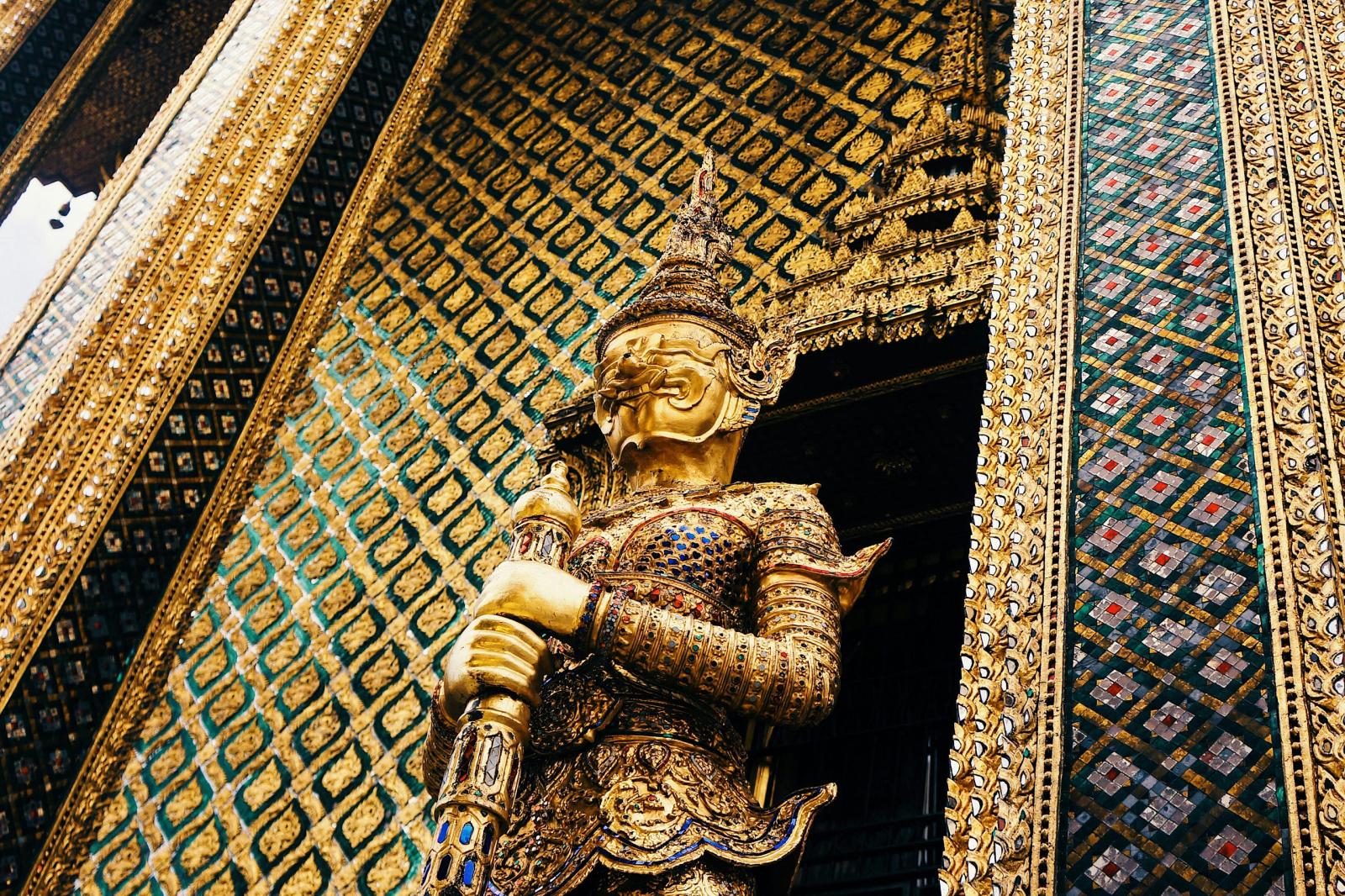
5:20pm
The corridor buzzed — Parliament after rain. The Doc almost made it out when a laugh cut through. A text from an unregistered number flashed, then vanished. He ignored it, thinking it was another rumor about a late-night reshuffle.
Two Harvard faces. Polished, tieless, and smug.
“Doc! Still fixing the kingdom with your toys?”
Doc was about to respond with the actual codename of his GPUs, but then decided against it. He didn’t like to entertain sarcasm, unless he didn’t know that it was.
They grinned. “Budget night. Everyone’s here. Even the Prime Minister. If anything happens to this building, Thailand stops.”
They laughed. The irony missed them.
“It’s lucky we have you, Doc. Because of your hard work on the ground, we can do our job in policy design,” one of them said.
Perhaps, the doc thought that it’s just an old university rivalry: Harvard-MIT. Doc always thought of himself as a village boy who made it to MIT.
He wouldn’t call them friends but they were certainly classmates and colleagues to him. He didn’t like to run into them like this but he would also miss them if one day they would just disappear.
Having read Immanuel Kant’s philosophy, Doc saw these elite classmates and colleagues as “not having yet emerged from their self-imposed maturity.” He used an AI recorder on his smartphone to record his thoughts.
He didn’t laugh. He just smiled.
He needed air.
And weed.
His phone buzzed once, a soft vibration through the table.
“Get out of Parliament. Now.” No sender ID. No context.
He frowned, thought it was a prank, slid it face-down. “Someone who pranked me to come, and now wanted to prank me to get out,” he thought.
Then he switched notifications off — it’s already past his office hours — he’d learned that interruptions kill thinking.
“Ouch.” He almost tipped over.
This dangerous design of the door’s frame of the exit of this parliament that stuck out of the floor for no reason got a few people at the parliament injured every year. Both users and visitors had complained but the dangerous raised bar was still there on the floor.
He remembered from a chitchat with the head of security that they couldn’t fix it yet because if they would start then they would have to fix the whole building too.
“The contractor cut corners so much that this parliament could collapse anytime,“ said the head of security.
There he was, accidentally stepping on the Thoranee Pratoo and almost tipping over by it.
Very bad luck.
Ferry

6:14pm
He texted his lover: Running late. Crossing now. Save me a seat [heart emoji].
He walked from the Parliament to a pier nearby. He needed to cross to the other side of the river for a romantic dinner date. The view would be the grand Thai parliament itself. “It doesn’t look all that bad from afar,” he liked to method-act as an architect.
He bought a paper ticket using coins — faster than QR. The boatman smoked. So did he.
Half a joint of weed into the crossing, he lifted his chin to the fading sun. “Play Champagne Supernova, ” he told the smart glasses he just realized he’s still wearing from the skytrain.
Nothing. Battery dead — drained by snapping photos of random women and the Parliament’s chaos.
He hummed the melody himself. The skyline moved past — old temples, new towers, all painted gold by the last light. He didn’t bother to change back to his lighter non-smart glasses.
How many special people change?
How many lives are livin’ strange?
Where were you while we were gettin’ high?
Slowly walkin’ down the hall
Faster than a cannonball
Where were you while we were gettin’ high?
He also thought of Creep by Radiohead and All Apologies by Nirvana. The anthems of those who never belonged. He took off his smartphone and turned off all notifications for the day. Nothing would get through, except some saved numbers like Mom’s or brother’s, and some “special numbers” from very important people. He had received calls from both in strange times.
He wasn’t sad. Not happy either. Just alive, moving between banks.
Rooftop
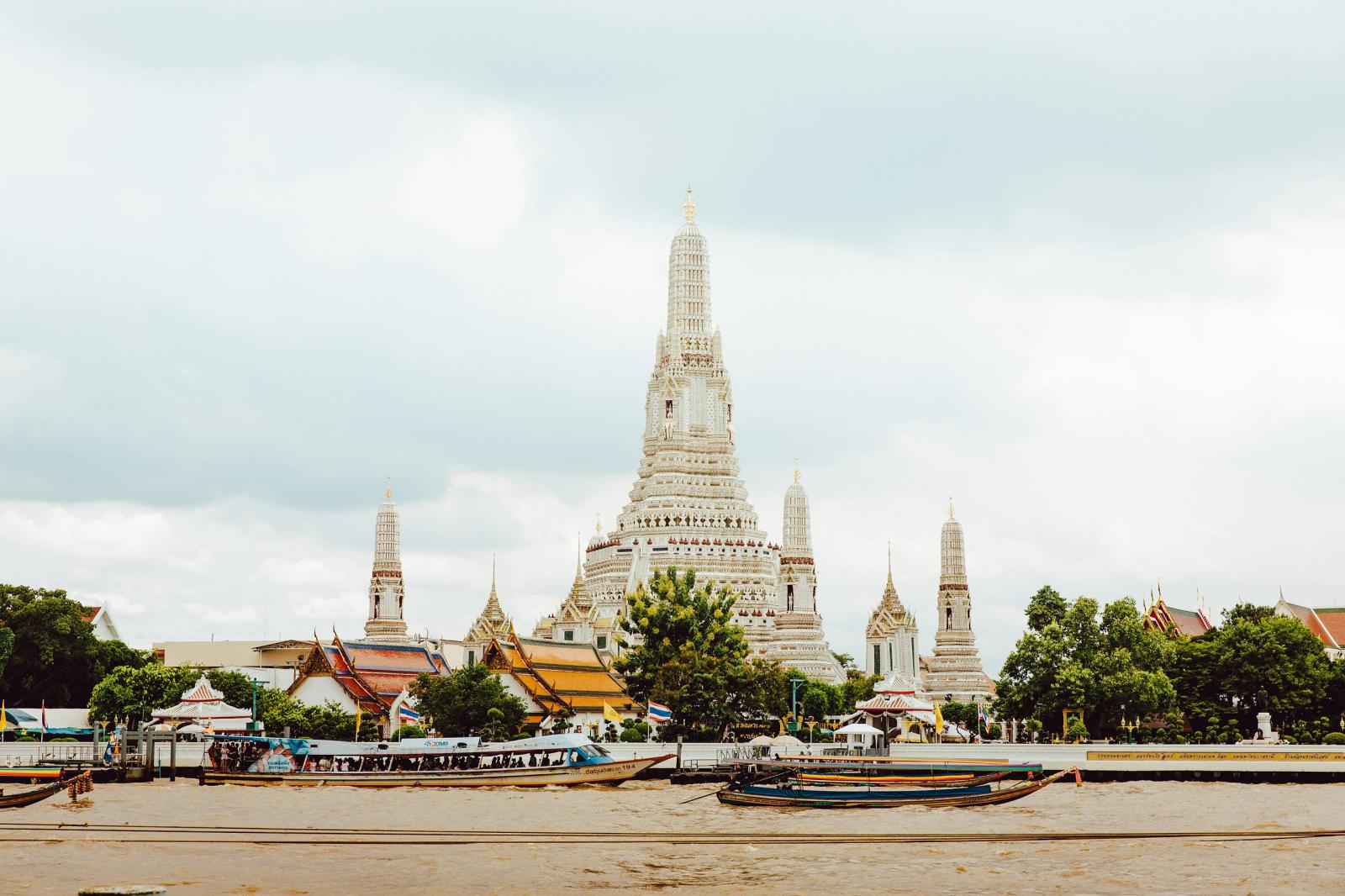
He got off the ferry and rushed through a crooked alleyway to arrive on the other side of the main street on the other side of the river. There’s a restaurant, not quite Michelin-recognized, famous enough to require a one-week advanced reservation.
Above the Pier was the name of the rooftop bar and restaurant.
He took the elevator up to the rooftop of an old building that looked like a shophouse modified into a hipster loft.
She waited at the table, half-lit by sunset. Thai, a hint of Chinese in her face, English with Canadian rhythm. She wore a black dress with horizontal stripes, making her look even younger than she was, which was already a lot younger than I was. Hence, she religiously called him Pee — big brother, polite, intimate. He called her Nong — little sister, adoring, and relatable. It’s the same word his mother called him by.
He kissed her cheek. Then her lip. He touched her waist. He loved touching her waist.
“You’re late,” she said. He smiled.
“You have almost been replaced,” she challenged.
“By whom,” he smiled, “Some Harvard guy?”
They laughed. Ordered beer: Always IPA for him and alternating between weizen and pilsner for her. He took the other half of the joint to the restroom and came back mellow.
He told her about the unknown text, the deputy’s panic, the fix.
Parliament glowed across the river — white and gold in the dusk. Lights were almost all on because everyone important in Thai politics were all in that building. The Doc felt lucky he had left.
“Budget night,” he said. “Everyone’s in one room. All the oxygen in the country, right there.” He thought of the speech he dictated for Minister Prasert to give tonight when it’s his turn to defend his massive spending schemes.
“Dangerous,” she said.
He grinned. “If someone wants to end corruption, tonight’s efficient.”
She didn’t laugh. He shrugged it off.
They talked about Labubu dolls. Lisa Blackpink. Rerun episodes of Big Bang Theory.
The sun was long gone, but the last light was still mesmerizing.
The skyline softened.
He remembered the line that woke him:
Where were you while we were getting high?
He hummed again — softly this time.
Someday you will find me
Caught beneath the landslide
In a Champagne Supernova in the sky.
He had never known what it meant: Champagne Supernova? Maybe a flash of champagne-colored light swallowing everything. A once-in-a-lifetime explosion.
He looked at her and thought: maybe this was it.
Then the sky brightened.
Champagne Supernova in the Sky
7:01pm
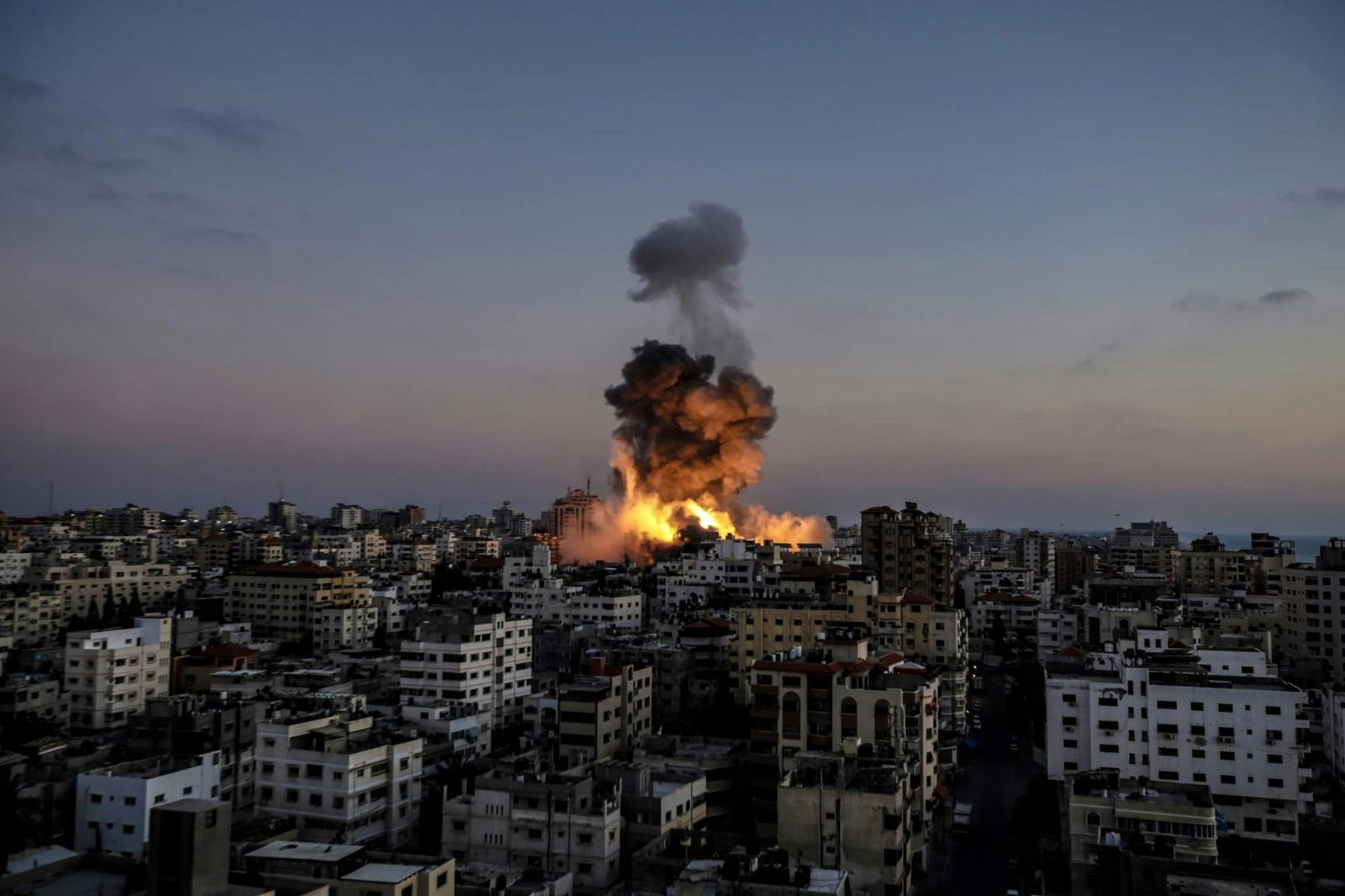
A flash.
White erased color.
For a second, beautiful.
Then came the sound — wrong, late, monstrous.
The Parliament’s collapsing in front of our eyes.
Screams.
Dust.
More screams.
More dust.
His smart glasses blinked awake. A red dot. A voice:
“Compliance notice: you appear to be ‘the first on the scene’ at an emergency event. For public safety, your smartglasses will activate reserve capture. Do you consent?”
“Wasn’t the battery dead?” he thought.
The smartglasses started recording anyway.
He gripped her hand. Watched the inferno across the river. They couldn’t believe their eyes. There was one large explosion and the entire building collapsed in row like dominos. Everyone was now on the street and by the piers watching the burning parliament.
The gradient color palette of the sky that night.
Whatever that was made such a stark contrast to the grey smoke and burning hot fire coming out of the collapsing structure.
So this was it.
The meaning that had escaped him all his life.
“A Champagne Supernova in the sky.”
And he, the man who hated being seen, distrustful of big tech, and did not consent for his eyewear to be used as a surveillance equipment of anyone, had just become the first “camera” of the next era of the history of humankind.
Exploration Statement
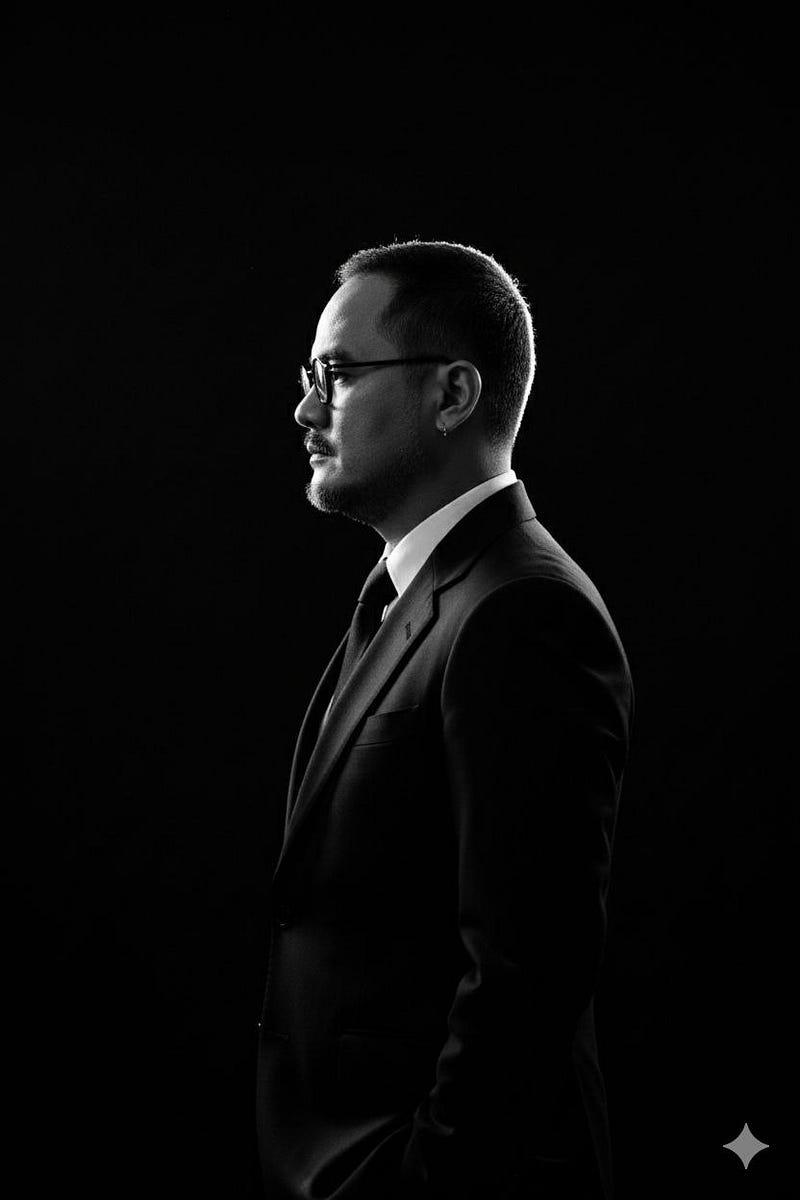
This piece is an exploration. It looks like a poster. It reads like a map of a city and a man who both know how to bend things — politics, technology, memory — into stories.
I wanted the image to feel like a doorway: a single frame that opens onto motion, argument, and a long, quiet intelligence. The figure at the center is less an idol than a witness — someone who carries data and doubt in the same pocket, who loves small human rituals and also trusts scaffolds of steel and code.
The skyline behind him is not only place; it is motive. The dogs at his feet, the construction, the temple and the floating idea of catastrophe — these are the textures of a city that refuses to be reduced to a single story.
I aimed for economy. Scenes are economical; language and color are economical. The poster’s composition tries to do what good reporting does: make you look, and then make you ask questions. It is meant to be readable at first glance and stubborn at the second. It is urban, human, a little ironic, and quietly urgent.
Artist’s Note — About Method and Intent
This project is an experiment in many registers. It uses AI as a research tool, not as a deus ex machina. Historically an author would learn by doing — Hemingway hunting, bullfighting, the old apprenticeship of living to write.
Today we can close a few physical distances with desk research, but we still need the body of experience to make the data sing. I blended three things here: structured desk research (rapid, wide, cross-checked), the lived material of growing up and working in Bangkok, and two decades of professional practice — architecture, urban design, teaching, and smart-city policy. The result is a narrative and an image that try to be as plausible as they are sympathetic.
I did not use AI to fake authority; I used it to accelerate and deepen research. Where the novel leans technical, it leans on facts and practice so the plot holes about process and feasibility are small. Where the novel leans human, it leans on memory and observation so the emotions feel earned. Thailand is the subject and the setting — its warmth, contradictions, rituals, and institutional edges. This is not a travelogue; it is an attempt to hold a city up to a light and show its colors.
This piece is a work-in-progress and a conversation starter. Critique, corrections, and ridiculous questions are welcome. If something feels true, that’s because it came from both files and footsteps. If something feels imagined, that’s because stories need spine. Keep me honest — comments welcome.
Unedited original.ต้นฉบับที่ไม่ได้แก้未经修改的原文。
An Experimental Novel of Day 126
Chapter 1: Champagne Supernova
House
He woke to the hook looping in his skull:
Where were you while we were getting high?
A hook from the 90s’ smash hit by the British band Oasis. “Why is this old song from more than thirty years ago looping in my head?” Asked Doc as he tried to get up.
Maybe because the air smelled like Bangkok: Warm, heavy, and sweet with jasmine rice drifting up from downstairs. Bangkok always smelled like the 90s: The smell of social warmth before social media, bearable humidity after tropical rain, and ambition despite its challenges. His mother clanged a pot in rhythm, as she always did. She still called him Nong, or “little brother,” in Thai: For 43 years and she always would.
He hadn’t gotten used to Bangkok.
Every morning, especially after a weed night — almost every night since the legalization in 2022 — a song from the 90s or early 2000s lifted him off his dream. It’s half-intentional: He set his wakeup song to be from those periods. To him, that was the ambience he needed to reconnect after more than a decade of being away from it. He had so much and too little to remember.
Random songs from the 90s and early 2000s had been playing in the background since 6:45. He programmed the volume to increase from 5 to 50 per cent by 7:30 should he not stop the music from playing, usually with voice control.
Seven years since he had moved back home and half-joked about becoming a hikikomori., a term he heard when he was in Japan. He once looked it up: hiku means “to pull,” komoru means “to withdraw.” A Japanese word for those who retreat until rooms become islands.
He laughed at it, but it fit too well: the mother folding clothes, the rice steaming, the joints smoked at night, the game console Nintendo Switch 2 when his brain needed static. Bangkok outside, world inside.
7:02am
Not 7:00 or 7:05 — was the time his smart watch disguised as a simple watch decided that he was in the state of light sleep from which he should wake up and feel fresh. The smart watch collected all kinds of data, e.g., pulse, blood oxygen, his sleep cycles, and determined the right time for him to get out of bed. Science said that this way he would wake up more energetic than usual. He believed it.
His two dogs, however, often got up and stepped on his body like it’s their playground way before the alarm on his watch anyway: What’s the point of this smart watch, he thought?
Cold shower
Painful but needed to wake all his cells up at once. He learned that from popular science. It seemed to be working for him.
Cold shower, with podcast. More bearable.
He didn’t read the news anymore.
He inhaled it. Three hours a day, minimum. The voice of the Economist guy, the cautious tones of Wall Street Journal, the libertarian sharpness of Bloomberg, the smug optimism of a TED speaker. He needed all of them. He needed to know how the world was spinning because that was his job: To translate chaos into coherence. Spotify Wrapped once told him he’d listened to 1,150 hours of podcasts that year. “So much of a hikikomori,” he murmured while showering. He didn’t brag about it. He was just keeping his edge sharp.
Then vanity rituals: scalp massage, three spurts of tonic: One for the scalp health, one for the hair nourishment, and one as a placebo.
And there’s the IoT toothbrush that mapped his teeth and scolded him for missing spots. He thought it was ridiculous, and yet, it worked. The brush recorded his brushing stats; he wondered who was watching.
Old college T-shirt: The T was so cracked that it could have been read just M-I-something, fabric soft as memory, now only pajamas. Outside, it would raise questions: Are you really from MIT? Or worse, “What’s MIT?”
He never thought he looked like a typical MIT graduate: The mirror threw back a bearded face framed by round Le Corbusier glasses and four silver hoops — one star, one leaf, two plain rings. Ninety-two point five percent silver from artisans in Southern Thailand. They were thin enough to sleep in. He had never taken them off. They were part of him.
7:22am
After a shower, he stepped onto the balcony, boxer shorts, bare chest, two dogs at his feet like sentinels. On the same balcony he grew up looking at the stars and once-in-a-lifetime solar eclipse, from when he was young. Now he’s back at his home turf after years abroad. In a city obsessed with condos, a two-story house with a patch of lawn felt illegal.
Drip coffee, no breakfast — his rule. He preferred coffee from southeast asian origins: He had pride in the part of the world that made him strong.
The stomach must ask before he feeds it.
He learned it from a report about the 2016 Nobel Prize in Medicine or Physiology: There’s a process called autophagy in which the cells eat themselves and produce growth hormones. That process could only be accelerated by fasting. He put a slice of butter into his coffee mug. He learned about the “bulletproof coffee” methods from his tech friends in San Francisco a few years ago when he was still living abroad. The belief is that it would boost the metabolism of the drinkers. He had never tried to prove it.
He sat down with the cup, facing the sun.
He closed his eyes and let the light burn a film of gold behind his eyelids. The leftover weed from last night’s smoke still moved in his blood like slow lightning.
Even though he smoked regularly, the Vitamin D from the sun, and the cold shower, usually exorcized the pothead ghost out of him during his morning rituals.
He smiled at the absurd thought — maybe he came back to Thailand because weed had become legal. Weed helped him sleep and stopped him from overthinking.
Maybe he wasn’t joking.
Three Black Mirrors
8:00 sharp: Three screens lit up at once — laptop, tablet, phone — connected by a single ghosting mouse. His cockpit. He’s sitting on the floor with the screens on a small folder table he bought from IKEA.
Some people said he played God. They weren’t wrong.
Three meetings at once: a policy roundtable on broadband expansion, an investor call on climate data for a smart bus operation, and a telemedicine pilot briefing.
Cameras off. He was still wearing only his boxer and sitting by his balcony. He created realistic half body avatars of him wearing a suit to appear on all virtual conference rooms. These avatars could nod and smile. No one could tell from the thumbnail window of a virtual call that it was not a real person, just AI-generated avatars.
When he had to speak, or when the conversation transcribed in real time found mentions of his name, his avatars would show a quick pop up on his screen as a signal to jump in. The avatars moved their mouths that sync with his words when he turned on a microphone to speak. His smart speaker waited like an obedient clerk, ready with numbers, data, maps. He used all his smart devices with precision, but not like a pro, but a child who wanted to try everything out there.
His “Second Brain” — an advanced AI model, run entirely on his own computer, trained on his own notes, phrasing, and moods — was a black box. It’s transcribing, tagging, and summarizing everything he or his avatars were listening to in real time. Engineers got concise replies. Governors got warmth. Billionaires got charm. Friends got roasted.
The Second Brain never touched the internet directly; it listened only to him and only uploaded what its owner had approved.
On a spreadsheet, an AI pop-up icon on the right side of the screen, he clicked and dictated without looking:
“Approve tranche B if survey hits 85% coverage. If not, hold. You know I’d probably go at 72%, but don’t tell anyone yet. Draft the email as if I’m smiling.”
The machine wrote. He skimmed. Approved. Moved on.
He distrusted the big tech stacks that claimed to be gods of data, but he used them anyway. He knew there’s a limit to how much he could avoid using them. He wouldn’t be able to do what he did if he had to reject all big tech and go back to the Flintstones’ era.
He used a smartphone, but was careful with which apps to download and permissions to allow. He used a laptop, but knew when to toggle his wifi off and had a small lid in front of the camera. He used all kinds of technology — as a tool of which he was the master. He used AI, but his AI wasn’t built for scale or style: it was built for loyalty.
Sometimes, when the light from the three screens hit his face just right, he caught his reflection — half-awake, half-ashamed — and thought of those nights in the late nineties when the boys in his dorm traded porn tapes like cigarettes. They also traded cigarettes, weed, and bootlegged boose too. The sound always came first, before the image — warped, breathless, forbidden. Maybe that was when his brain learned to mix pleasure with secrecy, intimacy with surveillance.
When it came to real matters, he unplugged.
These were words that could ripple into policy or a business deal. The Big Brother Tech smart glasses went back into their coffin-like charger, and all the third party software off as well as his all black mirrors’ built-in cameras. He would let only encrypted software run in his three black mirrors.
On the rightmost mirror screen, the news feed kept running quietly — a mix of algorithm and accident.
Some talk-show host was whispering about the abbot in Pathumthani, a city next to Bangkok, the one with too many disciples and too much money. The abbot had been saying about how much he would like to “clean up” Thailand. The feed showed his new temple dome, all gold-plated, built with “donations” that came mostly from men now sitting in Parliament. In Thailand, that wasn’t news; that was gravity.
Below that, a ticker crawled across the bottom edge of his reflection:
“Thailand–Indonesia investment race tightens as Jakarta fast-tracks AI and port infrastructure.”
He smirked. He hoped that the competition wouldn’t turn into stupidity.
And another headline — smaller, fainter — “Minister of Digital Economy and Society is rumored to face reshuffle before the end of session.”
Then another one: “Budget defense tonight: Threshold of Growth and Austerity for Thailand,” which he didn’t even bother to read.
Let the noise flow. The signal would show itself later.
He stuck at the last headline that showed up on the feed: “Thai Army stands by: Another coup might be on the horizon.,”
Before he could reach “click for details” — a ping.
Unknown number: Doc, press room. Urgent. The DPM needs you. 17:10, Parliament Building, Sector 3, Press Hall 1412-B.
The message had him at Doc. DPM was short for Deputy Prime Minister. The details — sector, hall, room — made it real. Only insiders wrote like that.
He cross-checked the sender through his encrypted directory — unlisted, but formatted like an internal government code. Close enough to trust.
He closed his eyes, stretched, as a notification showed on his phone something about the budget defense at the parliament this afternoon that could stretch to an all-nighter.
“Shit,” he’s reminded of something important he had forgotten:
The speech for Uncle Prasert.
The Dictation
Uncle Prasert — or His Excellency Minister Prasert Yenjit of Digital Economy and Society (MDES). It’s the same minister his AI just fed him with a rumor about another cabinet reshuffling. MDES is the smallest ministry, with a medium budget, and loud reputation. Prasert was not an uncle in a biological sense, but a family friend from his village hometown in Northeastern Thailand. Doc’s mother knew him and his family well. The nation ran on fictitious kinship: We are all in this together. He called Doc in public “the special boy from my village who went to MIT.”
Thirty years ago, he was just the kind pharmacist across the street. Now, he sat in cabinet meetings. He worked his way up from having just himself in the new Northeastern faction years ago. Now more than a dozen members of parliament were loyal to him. That’s how elected politicians negotiate their cabinet positions in Thailand.
The Doc never met Minister “Uncle” Prasert in person after he became a minister. The last time they met was at the funeral of Doc’s father some 15 years ago. They didn’t need to. Minister Prasert heard from other high level director generals that the Doc was good at data-driven negotiation and known as an excellent speech writer. In the cabinet, Prasert was known for his ability to use the right people for the right jobs.
Once a while, Minister Prasert’s secretary would call the Doc and ask for a brief, urgent analysis, or a speech for important events. The Doc never said no — not to the Minister but to his village uncle.
He’d almost forgotten tonight’s speech.
It wasn’t in the AI calendar because the request came through a personal call from the Minister’s office, not a system log. Luckily he used an AI to make a note in his calendar.
“Oh, shit,” he muttered.
He laid back, spine relaxed, eyes closed.
He then dictated to his AI software on his laptop:
“Good evening, ladies and gentlemen. On behalf of the Ministry of Digital Economy and Society, I want to begin with the elephant in the room: Connectivity is not charity; it’s infrastructure. When a girl in Surin reads biology without a glitch, that’s GDP. When a clinic in Nan transmits a heart scan in thirty seconds, that’s not a miracle — that’s public health.”
Two minutes. Method-acting in its prime. The Doc’s eyes were still closed as he imagined himself the minister who would be giving this powerful speech to the parliament. Tight as rails, smooth as silk. “No stones left unturned; no counterarguments left to be made by the oppositions,” he told himself as he dictated the speech.
Done. 1,000 words. His AI transcribed, edited, and showed him the speech. He edited one metaphor, saved it, and sent it to the Minister’s aide.
He had been in the flow. He didn’t eat lunch though he slightly remembered his mom’s saying something about lunch hours ago. It was the same rule: eat only when the stomach asked for it.
2:32pm
Another ping.
Unknown number: Doc, come now. Crisis.
So be it.
Transit
He dressed like a contradiction: navy (with thin stripes) suit, gray tie, Kepten & Son rucksack, smart glasses on. The Le Corbusier pair went into the bag. The dogs followed him to the door.
He kissed both heads, carefully walked across the threshold — Thai call it Thoranee Pratoo — the sacred lip of the house. Stepping on it would bring bad luck, Thai mothers said.
He didn’t believe in luck anyway.
At 3:03pm, as he was walking about the door, he received a message from the Minister’s secretary:
Supatra (Minister Sec): We read your speech. Great speech, Doc. The minister really loves it. We can always count on you.
“Great speech, hey,” he thought to himself either he was that good, or they didn’t really care. That’s just two minutes of his time.
He was tempted to smoke a joint before walking up the sky train’s platform, but then he realized he was still partially stoned from last night.
On Bangkok’s BTS Skytrain, he floated above the city’s roofs — old wood and new glass, temples and malls. The smart glasses had many five microphones, two on-ear speakers, and a camera. They handled voice-to-text, so he dictated his work while being on the move. He avoided sensitive words. He didn’t trust who listened.
He also used his smart glasses to take skyline photos, a few of the crowd, and a pretty Korean girl in a jeans blouse. Beautiful. A group of young students in college uniforms and white freshman shoes. Sensual. Out of reach. Perverse. Doc was a complicated man.
4:33pm.
After an hour of a skytrain ride, he switched modes to a motorcycle taxi, the only way to get around Bangkok’s crisscrossed alleyways and heavy traffic. As he moved in the back of a motorcycle, in suit and tie, he thought of himself as a superhero from a movie traveling to save the good guy. The city blurred behind him as he moved through alleyways: It’s chaos with choreography.
5:05pm.
He got off the motorcycle at the Parliament’s drop off point. He gave a 100 baht banknote for a 20 baht ride. “Keep the change,” he said. He could feel the rider being uncomfortable from taking so much from his passenger.
“Please, keep it. Thanks for getting me here just in time. I really need this,” he padded the rider on the back and ran toward the security checkpoint.
Room 1412-B, or the Press Room
5:06pm
Security Checkpoint of the Royal Thai Parliament by the river. All marble, mirrors, and noise.
The security guard squinted at the photo on his government card — no beard, no earrings, no hipster haircut — then waved him in.
5:09am.
Room 1412-B was a storm.
Reporters snapping. Cameras flashing. A young, terrified Deputy Minister drowning behind the podium.
Doc entered quietly, smart glasses listening, five microphones drinking the room. Linked to his smart glasses, an app on his phone was transcribing everything the glasses sent over. His AI processed keywords scrolled across his phone’s screen in real-time: corruption, breach, sue, missing funds. This information was being processed over the internet with his fine-tuned local processing unit — Second Brain — at home. “This is a war of persuasion by information and,” he always thought, every time he had to go and “fix” someone else’s problem.
He walked up the side. The DPM saw him — relief and fear.
“Doc? Why are you here?”
This Deputy Prime Minister (DPM) was young, handsome, appointed not by the Prime Minister’s Office to “monitor” things. Big title, but no real role in the government. He was a political ornament who had once launched a broadband campaign that failed spectacularly. The Doc had warned him not to do it. He did it anyway. Then the Doc cleaned up the mess. That’s how this uneasy bond began.
“What? Your team didn’t text me?” Doc was surprised.
Doc showed DPM the text.
The Deputy Prime Minister turned to his aides. Nobody spoke.
“Well, whoever did,” he said, “you’re here now. Help me.”
“No need for briefing,” said the Doc. “I already know what’s going on.” Doc didn’t have the time to explain how his AI had already prepared a thorough analysis of the situation, and of the room itself.
He pointed to the water bottle.
“Pour, Sir. Slowly. I need a minute.”
He read the analysis that his AI sent back to him.
He then whispered to the same AI app on his smartphone, already hungry for a prompt as the data had already been swallowed and analyzed through his smart glasses:
“5-minute-long speech on behalf of the DPM. First, analyze the sentiment you have collected from the crowds. Gather info from the internet about the situation from all possible. Promise satellite coverage as backup. End with hospitals and schools. No adjectives.”
Doc AI’s system drew not from news feeds or model weights, but from the thousand hours of his own recordings — his voice negotiating, persuading, disarming men twice his rank. It spoke with his rhythm, his restraint, his calculated warmth. Sometimes many dots got connected accidentally.
Doc went back and forth with his AI a couple more times to tweak the results.
DPM drank water slowly while wiping his sweat from his forehand with his Burberry handkerchief.
“There you are,” Doc shouted quietly once his AI started sending the output to his phone.
The output wasn’t a speech; it was a ghost version of him, polished and obedient, speaking the words he would have said if he’d had one more breath to think.
Ten seconds.
Done.
He immediately forwarded it to the DPM.
The DPM adjusted the microphone in front of him.
He then read the text word-for-word from his phone, word for word starting:
“Rest assured, my fellow Thai citizens — we will sue every damn baht back from the contractors who don’t follow the contracts!”
Everyone listened, including the DPM himself who felt as if he just composed these words himself although he was reading these texts out loud for the first time.
By the third sentence, the mob had quieted.
“We will make sure we bring the bad guys to justice,” he said — and then, with the calm of someone who writes other people’s words for a living, Doc had a paragraph ready for him to say next:
“While the investigators do their work and while the courts follow every legal step, we must also protect the living and rebuild what violence sought to destroy. Today I can announce two immediate actions. First, we have opened urgent talks with private partners — including Elon Musk — to deploy Starlink connectivity where the network is weakest.
That means children in remote villages, clinics on the border, and public shelters will get reliable internet within days, not months. Second, we will connect these sites to a secure medical-data pipeline so health workers can access patient records, coordinate care, and deliver telemedicine to places that have never seen it before.
The speech fit like armor.
That last paragraph was a reused line from another meeting the Doc attended and gave a speech a few years ago.
“Rest assured, my fellow Thai citizens,” the DPM ended his speech.
After applause trickled, the DPM turned and whispered,
“Doc, you weren’t called because you don’t play by the lines.”
“I know,” said the Doc.
“Do you really know Elon Musk?” DPM asked.
“Not yet, but his team will call your office soon,” Doc replied. “You’re welcome.”
The Doc smiled as if he felt as though this DPM had just gained a little bit more respect from him for being honest at least once.
He still did not know how he felt about calling Doc, Professor, Fixer, Ajarn (In Thai, for the teacher), or whatever names they gave to him, crying for help whenever you could no longer control the narrative. The Doc walked out before anyone could thank him.
In the next few minutes, the DPM would soon realize that the clip of his miraculous composure — his words, really the Doc’s words — had been replayed a million times. On Tiktok. On Instagram. On X. Everyone said the same thing: Who wrote that speech?
Corridor
5:20pm
The corridor buzzed — Parliament after rain. The Doc almost made it out when a laugh cut through. A text from an unregistered number flashed, then vanished. He ignored it, thinking it was another rumor about a late-night reshuffle.
Two Harvard faces. Polished, tieless, and smug.
“Doc! Still fixing the kingdom with your toys?”
Doc was about to respond with the actual codename of his GPUs, but then decided against it. He didn’t like to entertain sarcasm, unless he didn’t know that it was.
They grinned. “Budget night. Everyone’s here. Even the Prime Minister. If anything happens to this building, Thailand stops.”
They laughed. The irony missed them.
“It’s lucky we have you, Doc. Because of your hard work on the ground, we can do our job in policy design,” one of them said.
Perhaps, the doc thought that it’s just an old university rivalry: Harvard-MIT. Doc always thought of himself as a village boy who made it to MIT.
He wouldn’t call them friends but they were certainly classmates and colleagues to him. He didn’t like to run into them like this but he would also miss them if one day they would just disappear.
Having read Immanuel Kant’s philosophy, Doc saw these elite classmates and colleagues as “not having yet emerged from their self-imposed maturity.” He used an AI recorder on his smartphone to record his thoughts.
He didn’t laugh. He just smiled.
He needed air.
And weed.
His phone buzzed once, a soft vibration through the table.
“Get out of Parliament. Now.” No sender ID. No context.
He frowned, thought it was a prank, slid it face-down. “Someone who pranked me to come, and now wanted to prank me to get out,” he thought.
Then he switched notifications off — it’s already past his office hours — he’d learned that interruptions kill thinking.
“Ouch.” He almost tipped over.
This dangerous design of the door’s frame of the exit of this parliament that stuck out of the floor for no reason got a few people at the parliament injured every year. Both users and visitors had complained but the dangerous raised bar was still there on the floor.
He remembered from a chitchat with the head of security that they couldn’t fix it yet because if they would start then they would have to fix the whole building too.
“The contractor cut corners so much that this parliament could collapse anytime, “ said the head of security.
There he was, accidentally stepping on the Thoranee Pratoo and almost tipping over by it.
Very bad luck.
Ferry
6:14pm
He texted his lover: Running late. Crossing now. Save me a seat [heart emoji].
He walked from the Parliament to a pier nearby. He needed to cross to the other side of the river for a romantic dinner date. The view would be the grand Thai parliament itself. “It doesn’t look all that bad from afar,” he liked to method-act as an architect.
He bought a paper ticket using coins — faster than QR. The boatman smoked. So did he.
Half a joint of weed into the crossing, he lifted his chin to the fading sun. “Play Champagne Supernova,” he told the smart glasses he just realized he’s still wearing from the skytrain.
Nothing. Battery dead — drained by snapping photos of random women and the Parliament’s chaos.
He hummed the melody himself. The skyline moved past — old temples, new towers, all painted gold by the last light. He didn’t bother to change back to his lighter non-smart glasses.
How many special people change?
How many lives are livin’ strange?
Where were you while we were gettin’ high?
Slowly walkin’ down the hall
Faster than a cannonball
Where were you while we were gettin’ high?
He also thought of Creep by Radiohead and All Apologies by Nirvana. The anthems of those who never belonged. He took off his smartphone and turned off all notifications for the day. Nothing would get through, except some saved numbers like Mom’s or brother’s, and some “special numbers” from very important people. He had received calls from both in strange times.
He wasn’t sad. Not happy either. Just alive, moving between banks.
Rooftop
He got off the ferry and rushed through a crooked alleyway to arrive on the other side of the main street on the other side of the river. There’s a restaurant, not quite Michelin-recognized, famous enough to require a one-week advanced reservation.
Above the Pier was the name of the rooftop bar and restaurant.
He took the elevator up to the rooftop of an old building that looked like a shophouse modified into a hipster loft.
She waited at the table, half-lit by sunset. Thai, a hint of Chinese in her face, English with Canadian rhythm. She wore a black dress with horizontal stripes, making her look even younger than she was, which was already a lot younger than I was. Hence, she religiously called him Pee — big brother, polite, intimate. He called her Nong — little sister, adoring, and relatable. It’s the same word his mother called him by.
He kissed her cheek. Then her lip. He touched her waist. He loved touching her waist.
“You’re late,” she said. He smiled.
“You have almost been replaced,” she challenged.
“By whom,” he smiled, “Some Harvard guy?”
They laughed. Ordered beer: Always IPA for him and alternating between weizen and pilsner for her. He took the other half of the joint to the restroom and came back mellow.
He told her about the unknown text, the deputy’s panic, the fix.
Parliament glowed across the river — white and gold in the dusk. Lights were almost all on because everyone important in Thai politics were all in that building. The Doc felt lucky he had left.
“Budget night,” he said. “Everyone’s in one room. All the oxygen in the country, right there.” He thought of the speech he dictated for Minister Prasert to give tonight when it’s his turn to defend his massive spending schemes.
“Dangerous,” she said.
He grinned. “If someone wants to end corruption, tonight’s efficient.”
She didn’t laugh. He shrugged it off.
They talked about Labubu dolls. Lisa Blackpink. Rerun episodes of Big Bang Theory.
The sun was long gone, but the last light was still mesmerizing.
The skyline softened.
He remembered the line that woke him:
Where were you while we were getting high?
He hummed again — softly this time.
Someday you will find me
Caught beneath the landslide
In a Champagne Supernova in the sky.
He had never known what it meant: Champagne Supernova? Maybe a flash of champagne-colored light swallowing everything. A once-in-a-lifetime explosion.
He looked at her and thought: maybe this was it.
Then the sky brightened.
Champagne Supernova in the Sky
7:01pm
A flash.
White erased color.
For a second, beautiful.
Then came the sound — wrong, late, monstrous.
The Parliament’s collapsing in front of our eyes.
Screams.
Dust.
More screams.
More dust.
His smart glasses blinked awake. A red dot. A voice:
“Compliance notice: you appear to be ‘the first on the scene’ at an emergency event. For public safety, your smartglasses will activate reserve capture. Do you consent?”
“Wasn’t the battery dead?” he thought.
The smartglasses started recording anyway.
He gripped her hand. Watched the inferno across the river. They couldn’t believe their eyes. There was one large explosion and the entire building collapsed in row like dominos. Everyone was now on the street and by the piers watching the burning parliament.
The gradient color palette of the sky that night.
Whatever that was made such a stark contrast to the grey smoke and burning hot fire coming out of the collapsing structure.
So this was it.
The meaning that had escaped him all his life.
“A Champagne Supernova in the sky.”
And he, the man who hated being seen, distrustful of big tech, and did not consent for his eyewear to be used as a surveillance equipment of anyone, had just become the first “camera” of the next era of the history of humankind.
Exploration Statement
This piece is an exploration. It looks like a poster. It reads like a map of a city and a man who both know how to bend things — politics, technology, memory — into stories.
I wanted the image to feel like a doorway: a single frame that opens onto motion, argument, and a long, quiet intelligence. The figure at the center is less an idol than a witness — someone who carries data and doubt in the same pocket, who loves small human rituals and also trusts scaffolds of steel and code.
The skyline behind him is not only place; it is motive. The dogs at his feet, the construction, the temple and the floating idea of catastrophe — these are the textures of a city that refuses to be reduced to a single story.
I aimed for economy. Scenes are economical; language and color are economical. The poster’s composition tries to do what good reporting does: make you look, and then make you ask questions. It is meant to be readable at first glance and stubborn at the second. It is urban, human, a little ironic, and quietly urgent.
Artist’s Note — About Method and Intent
This project is an experiment in many registers. It uses AI as a research tool, not as a deus ex machina. Historically an author would learn by doing — Hemingway hunting, bullfighting, the old apprenticeship of living to write.
Today we can close a few physical distances with desk research, but we still need the body of experience to make the data sing. I blended three things here: structured desk research (rapid, wide, cross-checked), the lived material of growing up and working in Bangkok, and two decades of professional practice — architecture, urban design, teaching, and smart-city policy. The result is a narrative and an image that try to be as plausible as they are sympathetic.
I did not use AI to fake authority; I used it to accelerate and deepen research. Where the novel leans technical, it leans on facts and practice so the plot holes about process and feasibility are small. Where the novel leans human, it leans on memory and observation so the emotions feel earned. Thailand is the subject and the setting — its warmth, contradictions, rituals, and institutional edges. This is not a travelogue; it is an attempt to hold a city up to a light and show its colors.
This piece is a work-in-progress and a conversation starter. Critique, corrections, and ridiculous questions are welcome. If something feels true, that’s because it came from both files and footsteps. If something feels imagined, that’s because stories need spine. Keep me honest — comments welcome.