Diaryบันทึก日记
Day 78: On Design Thinking Part 2: It All Began in Kraków
Grammar only. The title is unchanged.แก้แต่ไวยากรณ์ ชื่อเรื่องคงเดิม只改语法。标题不动。
This entry is in English only.บันทึกนี้มีแต่ภาษาอังกฤษ此篇仅有英文。
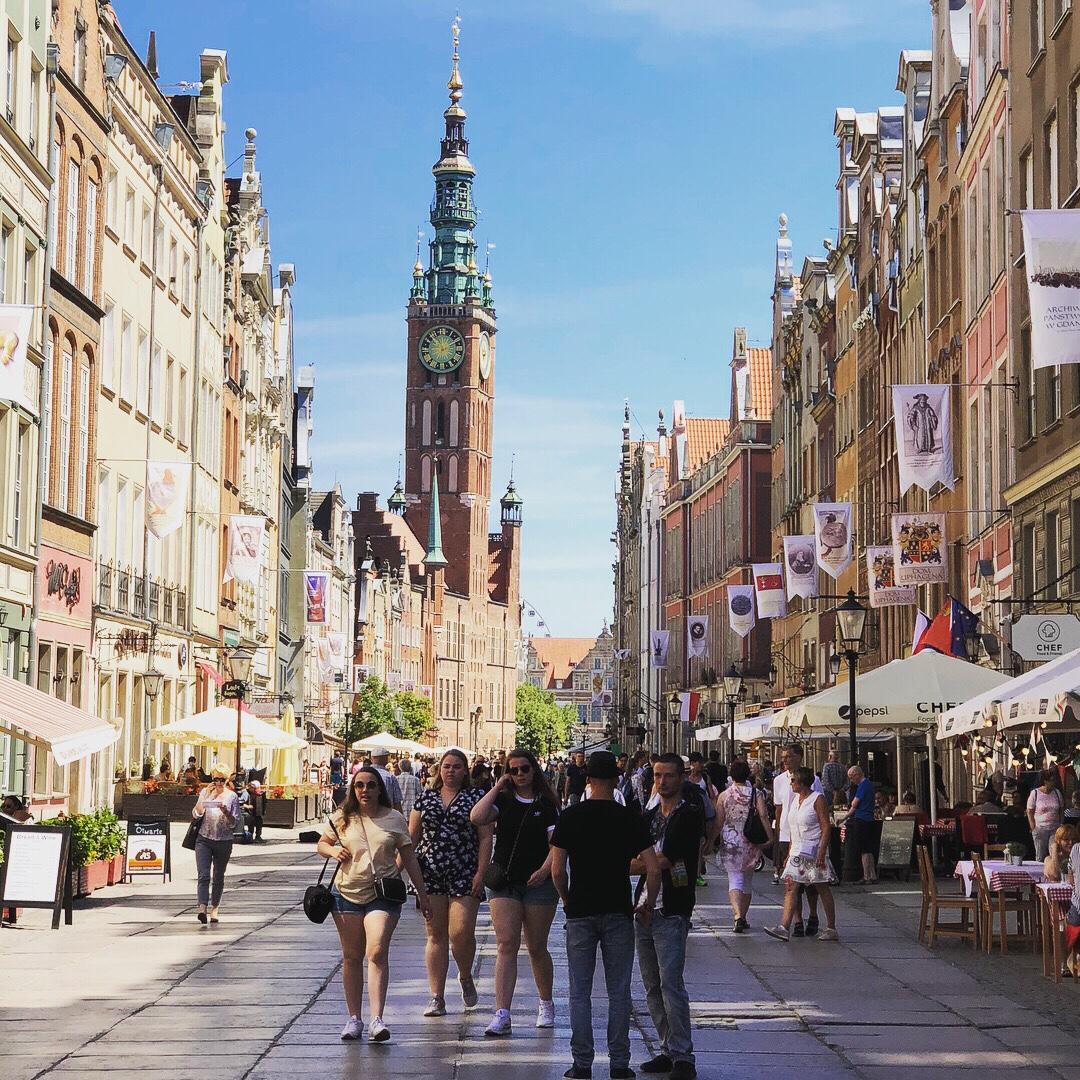
So, let me tell you a bit about the background of this design thinking series.
For most of 2016 and 2017, I had many opportunities to conduct workshops on this very topic, which I found to be speaking directly to the question that I had been having for many years: How could I use years of theoretical knowledge that I had learned from school in real life?
Design thinking came to me first as a surprise. I, too, taught that it’s one of those terms that people liked to name-drop because “it sounded cool,” without knowing its true meaning. Only after a few months of a truly deep dive, I realized that this was a gold mine.
In fact, I personally had long been doubting my own ability to be an individual in the world. In many posts prior to this, I talked about how I felt that the educational and socials system in which I was born were too rigid for me, to the point that I, at several points in my life, felt as though I did not have a lot to contribute to my community. It’s until I had recognized some of the key principles of design thinking (about which I talked in my Day 76 post) that I began to see myself, retroactively, somewhat as a natural design thinker. Hold on right there. I am not saying that which was a good thing. To be a design thinker, as I wrote in my last post, one has to constantly challenge himself/herself with the idea that there’s always a possibility for things to be better than it is. In other words, one has to see things the way they actually are, and not through the lens of acceptance by the majority.

For instance, I saw I was a horrible good student throughout my formal education simply because I didn’t always good grades (actually, almost never) and I had never won any awards at all. The society thought me as an ordinary majority, who would probably go on to become a much-less-than-extraordinary employee in a mediocre company. That’s the way things were presented to me through the lens of acceptance by the majority — so, what psychologists would call — “social proof.”
Then, I asked myself to take a look at the situation differently. The question I had for myself was, What was the reason for me to feel no inspiration at all for what I was studying? Hence, the bad grades and hence the award-less student life. That’s exactly the time when I realized that I was starting to see things the way they were. If anyone were to study what he/she was passionate in, there’s very likely he or she would do much better than. Wouldn’t you agree?
I knew that I enjoyed making drawing. I liked to travel and look at great buildings. Most of the film photographs I took back then were all buildings, monuments, and edifices. Thinking about architecture, and how I could re-design my house to fit my own customized need, made me feel really happy. Every day was a holiday when I thought about architecture so to speak. Of course, it would be nice if I was also good at biology (my worst subject in high school), geography, mathematics, and chemistry.
But maybe I wasn’t interested in those fields as much — so why would I let things that I wasn’t even interested in define who I was?
So, I shifted my focus from being “good at what the society thought I should be good at”to what mattered to me and my passion, and that which, back then, was architectural design. I then decided to enroll in a modest technical institution where my entrance examination score was just enough to be admitted outside of Bangkok. Anyone who knew my academic attributes as a student would not be able to predict how I would go on to receive a First Class Honors in architectural design from the technical institute where I enrolled as an undergraduate student. After that, as they always say, the rest is history.
I did not know how to call my way of thinking then. So, my classmates helped me by calling it “thinking out of the box,” “critical thinking,” “thinking laterally,” and most amusingly, “thinking like Non.” Years have passed, and I have come to see design thinking in a much more interesting spotlight. And now that I have a name to call it, I have become much more interested in exploring what it has to offer. Design thinking wasn’t just a cliche, it’s a combination of practical philosophy, cognitive psychology and robust strategy for innovation. My realization that I could just focus on what I was interested in came from my (then quite) shallow understanding of the self improvement. But for sure my ability to see things the way they were got me a jump start.
Of course, my love and obsession with both cognitive psychology and robust strategy for innovation started much later (from early this year onward to be precise) so these two fields, in fact, gradually grew on me as profound elements of design thinking. Many of my classmates back then still made fun of me by calling design thinking “thinking like Non” — they could never forget that, couldn’t they?
So, to begin, I offered myself as a laborer and keen observer to a company that used design thinking to innovate. Then, I read as many books as possible on the topic. I continued to search as many examples and case studies as I could online, and in real life, to get the sense of what might be the practical gist of the idea: To see what worked and what did not. And most important, I learned from hundreds of students from all age groups, academic levels, and placements in life in their professional career paths not only what is the apt way to introducing this concept to them, but also what might help them to become a better individual in whatever they were trying to do. In the process that took more than a full year of a combination of self-reflection, self-closing (so that I could think clearly), and self-exploring, I indeed had learned quite a bit.
The real challenge that I had was when I decided to offer a course called “design thinking” as a semester-long undergraduate course for non-designs students at a new university where I would soon be lecturing as a visiting instructor.This was supposed to be a sabbatical semester for me; so I was in that mode of thinking as well (i.e., an “I can teach anything” mode) when I almost carelessly gave the title of the course to the administrator of the university I was a visiting instructor. Well, normally a course that I offered were merely a two-day-long workshop, so there’re so much to instruct during the 16-20 hours of lectures, workshops, and intense seminar. But a semester-long, as in 15-week long, undergraduate course? For students who did not necessary have any knowledge of academic or non-academic background in design? More importantly, was I mad?
In the spirit of design thinking, I took up this very challenge anyway. I thought to myself: What if I could use design thinking to “design” this course?
The course eventually had the following aspects:
-
A 15-week-long course; for each week, a reading introducing the key definition of “creativity” from a variety of academic fields that are totally new to students is introduced to the class;
-
Every 2-3 weeks, students would be asked to engage in a hands-on workshop designed to test their synthesis of those key aspects of creativity ranging from a coffee cup to a gift-giving experience, to a better uncluttered life; and,
-
There’s no final paper — students would determine what they want to do for their own good at the end of the course
How did I come up with this?
Let’s look at the three principles that I wrote about in my last post and how I used them to come up with a design thinking course at Jagiellonian University in Krakow, Poland.
First, don’t always assume that the end-users of your design know what they want. This was the most important factor for my designing the course the way I did. The classic joke goes, “You can always be sure that your boss will never see what you bring for him to see if that thing is an innovation — and you can also always be sure that he will not like it right away because he won’t know how it works.” My first idea was to teach design thinking as a design course, and that was basically what students were looking forward to as they had signed up for the course weeks earlier even before they met me in person and received the preliminary syllabus! If I were to give them that course, I would be giving them exactly “what they thought creativity was.” What’s the point of learning about creativity if you already know what it was? And to the point — my own point — what did I know really about design that made me feel so confident to teach them? So, that idea was only partially saved and the rest of it got immediately thrown into the garbage can. I realized that both me and my students were not any of kinds of design experts. I knew architectural design, but not industrial, graphic, communication, etc, design. So, I decided to offer the course with the most basic sets of knowledge that would get the students attention throughout the 15-week-long semester — the idea of creativity and innovation.
Second, don’t always assume that things exist because they work. Far from it actually. The reason why things “look like they work” has to do, first and foremost, with our “availability bias” and “social proof.” I cannot recall how many times I heard people’s saying “That building is great; they’re so many people there so it must be a good building.” So, the assumption is that because a lot of people are using it, so it must be good; and/or, because the definition of a building is something that doesn’t collapse, so it is standing and people are using it, so therefore it must be a good building. This is not all wrong, but definitely not all right. Most of the time, we use whatever that is available to us.
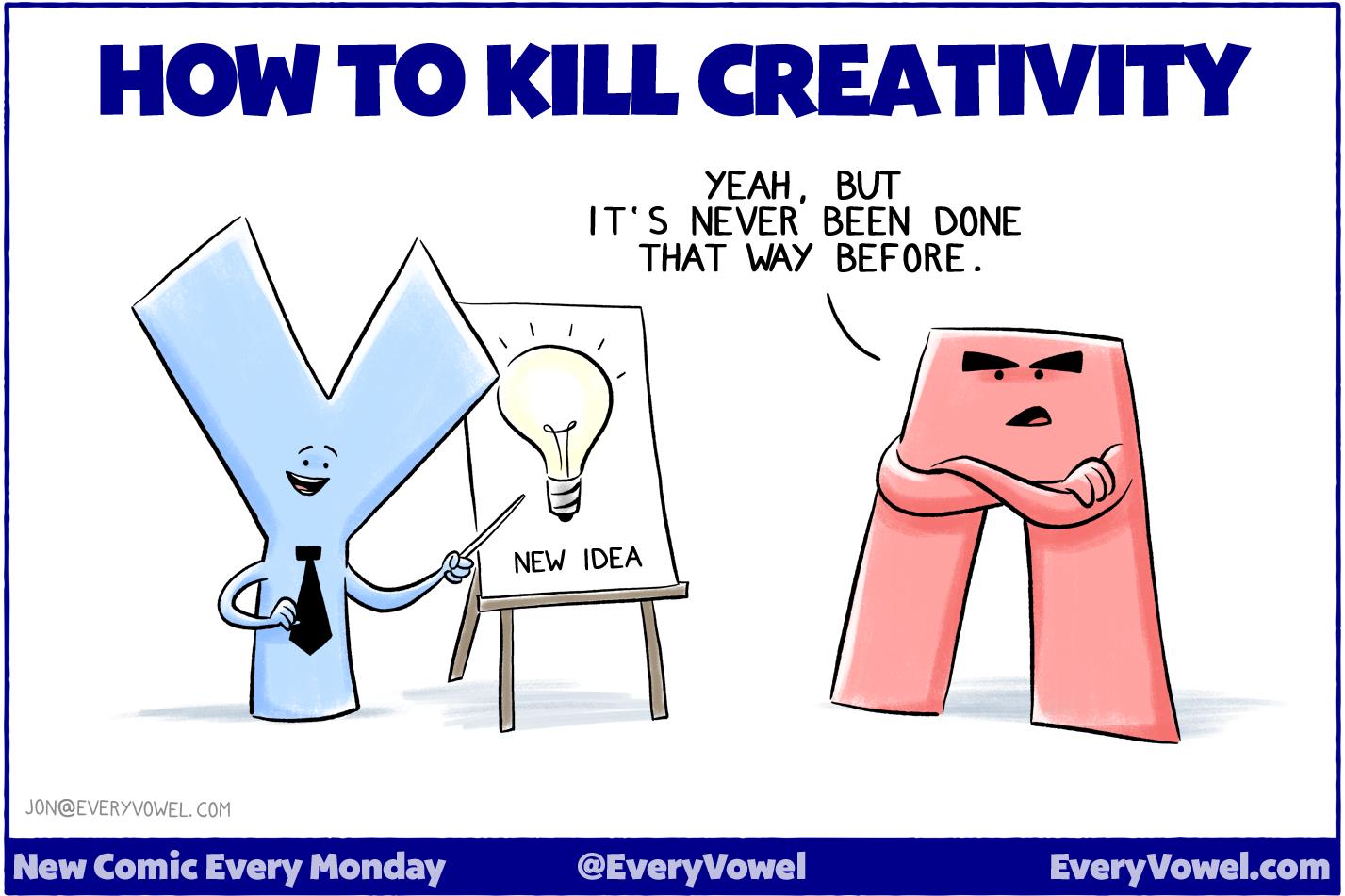
In Bangkok, I drink instant coffee — although I know that brew coffee is much more delicious and better for my health (there’re many research that show that the process by which the instant coffee grain is made dried is unhealthy). But it is not that easy to find a brew coffee where I live in Bangkok, so I drink whatever I can find! Instant coffee does works! And if a lot of coffee-lovers like me feel the same way, we would all be buying up instant coffee from the supermarket, which should not be confused with the impression that “Bangkok people like instant coffee” or that “Instant coffee is good.” O.K. So, this example is easy to understand because of the comparative benchmark that I have (i.e., I have drunk better brew coffee elsewhere in the world), so that which is the reason why I know that instant coffee exist not because it was the best, but because it was the best viable option in a particular circumstance.
Now, I want you to take a step further — by imaging that everything around you can be better. Look at everything around you; a pen, a notebook, computer, mobile phone, etc., and asked yourself, “If you were to design the world’s first pen, notebook, computer, mobile phone — as if they have never existed before in the history of mankind — how would you go about and design them and what will they look like? This was a challenging question that I also asked myself when I was putting together this design thinking course. So, instead of hitting the internet and search as many available and existing syllabi for courses with a similar name — and perhaps learn from those in designing my own course — I started with finding a nice spot in my apartment’s compound where I could see the trees, smell the glass, and listen to the singing of the birds. These were the elements that made my apartment in Poland sort of a heaven on earth even though no other amenities were there. Then, I visualized how should creativity be taught. By doing so, I wrote this following paragraph that became the basis of this course:
This is an experimental class.
There are three reasons behind its experimental nature. First, the idea of “studying creativity” seems like an oxymoron. A fixed set of conventions may provide guidelines for what might be useful to learn but it should not overshadow the creative process that learners should design for themselves. Second, as design is not about thinking about what to design, but one step beyond in not only conceiving but also producing it to test out in reality, the best methods to deliver design education should also be similar. This aspect of learning, therefore, requires a high level of flexibility from both the instructor and learner. Third, design require a “focused chaos”; hence, we will rely on our intuitions to deliver the best possible learning outcomes based on that.
This class meets once a week for a 1.5-hour session that will consist of an interactive lecture, learner-oriented seminar, spontaneous workshop depending on the week, and extensive “design homework.” After the first session during which the instructor will give a general overview of the particular session and some thinking points, most sessions will be devoted to discussions and hands-on experience of creative process. The close reading and critique of required texts are essential to the preparation for each session, so students are required to have read all the required readings before each session. The experimental nature of this course would require students to use design thinking and design research methods to critique and analyze special topics and assignments given to the students for the workshop session each week.
Finally, don’t always think that design thinking process has to involve high-tech and advanced stuff. For me, this was the key. I used to think that I would need to do all sorts of things to make a course with the name like “design thinking” sound and appear super high-tech. It should, shoudn’t it? I was trying to make contacts with the departments of engineering and the industrial parks associated with the university with the hope that they would let me use their workshop. I was hoping to create an “app” on a phone for students to write and report their progress. I was aiming at spending around $3,000 of the course’s budget (which I had yet to have) on things that I thought would make the course more sophisticated. But then, I was caught off guard by my own principle when I revisited it: What makes something good isn’t always need to be that high-tech, is it? I often use an example of a carry-on luggage that I would like to get a permission of my mother to buy (yes, I am always 36 but I still need her permission if I want to buy anything that is more expensive than $100). I was convinced that a carry-on luggage with a new bluetooth capacity would forever give me a peace of mind — I will always be able to track it, find it, and see where it is on the conveyable belt. This carry-on will be a bit heavier because of the battery-powered bluetooth technology and probably a few hundred dollars more expensive than a typical all-around Samsonite carry-on, but it still, to me, seemed like a good price to pay for such a convenience. It’s not until my mother told me that “if you want your carry-on luggage to be distinguishable, why don’t you just put a colored-ribbon around the handle?”

Eureka! That was the moment for me. In this sense, designing a course like this design thinking course. So, at the end, to learn about the concept of prototyping, for instance, all we used were paper cups and scissors — and we got to learn quite a lot actually by doing that as the goal of the exercise was not to create the most innovative coffee cup, but to learn and experience how one could establish his/her ability to “make” rather than just to think. We also learned about the concept of “nudge,” which is widely known and cited in the field of behavioral economics, as a creative process to encourage (not force) people to do things that they should do and to not do things that they should not do. Sometimes, nudging has a large and impact on the society without the society’s having to spend its hard-earned taxes on anything. Perhaps we’ll get back to that in the later post.
I’ll stop here for now today. Will be back soon for the next in this very series of design thinking!
Unedited original.ต้นฉบับที่ไม่ได้แก้未经修改的原文。
So, let me tell you a bit about the background of this design thinking series.
For most of 2016 and 2017, I had many opportunities to conduct workshops on this very topic, which I found to be speaking directly to the question that I had been having for many years: How could I use years of theoretical knowledge that I had learned from school in real life?
Design thinking came to me first as a surprise. I, too, taught that it’s one of those terms that people liked to name-drop because “it sounded cool,” without knowing its true meaning. Only after a few months of a truly deep dive, I realized that this was a gold mine.
In fact, I personally had long been doubting my own ability to be an individual in the world. In many posts prior to this, I talked about how I felt that the educational and socials system in which I was born were too rigid for me, to the point that I, at several points in my life, felt as though I did not have a lot to contribute to my community. It’s until I had recognized some of the key principles of design thinking (about which I talked in my Day 76 post) that I began to see myself, retroactively, somewhat as a natural design thinker. Hold on right there. I am not saying that which was a good thing. To be a design thinker, as I wrote in my last post, one has to constantly challenge himself/herself with the idea that there’s always a possibility for things to be better than it is. In other words, one has to see things the way they actually are, and not through the lens of acceptance by the majority.
For instance, I saw I was a horrible good student throughout my formal education simply because I didn’t always good grades (actually, almost never) and I had never won any awards at all. The society thought me as an ordinary majority, who would probably go on to become a much-less-than-extraordinary employee in a mediocre company. That’s the way things were presented to me through the lens of acceptance by the majority — so, what psychologists would call — “social proof.”
Then, I asked myself to take a look at the situation differently. The question I had for myself was, What was the reason for me to feel no inspiration at all for what I was studying? Hence, the bad grades and hence the award-less student life. That’s exactly the time when I realized that I was starting to see things the way they were. If anyone were to study what he/she was passionate in, there’s very likely he or she would do much better than. Wouldn’t you agree?
I knew that I enjoyed making drawing. I liked to travel and look at great buildings. Most of the film photographs I took back then were all buildings, monuments, and edifices. Thinking about architecture, and how I could re-design my house to fit my own customized need, made me feel really happy. Every day was a holiday when I thought about architecture so to speak. Of course, it would be nice if I was also good at biology (my worst subject in high school), geography, mathematics, and chemistry.
But maybe I wasn’t interested in those fields as much — so why would I let things that I wasn’t even interested in define who I was?
So, I shifted my focus from being “good at what the society thought I should be good at”to what mattered to me and my passion, and that which, back then, was architectural design. I then decided to enroll in a modest technical institution where my entrance examination score was just enough to be admitted outside of Bangkok. Anyone who knew my academic attributes as a student would not be able to predict how I would go on to receive a First Class Honors in architectural design from the technical institute where I enrolled as an undergraduate student. After that, as they always say, the rest is history.
I did not know how to call my way of thinking then. So, my classmates helped me by calling it “thinking out of the box,” “critical thinking,” “thinking laterally,” and most amusingly, “thinking like Non.” Years have passed, and I have come to see design thinking in a much more interesting spotlight. And now that I have a name to call it, I have become much more interested in exploring what it has to offer. Design thinking wasn’t just a cliche, it’s a combination of practical philosophy, cognitive psychology and robust strategy for innovation. My realization that I could just focus on what I was interested in came from my (then quite) shallow understanding of the self improvement. But for sure my ability to see things the way they were got me a jump start.
Of course, my love and obsession with both cognitive psychology and robust strategy for innovation started much later (from early this year onward to be precise) so these two fields, in fact, gradually grew on me as profound elements of design thinking. Many of my classmates back then still made fun of me by calling design thinking “thinking like Non” — they could never forget that, couldn’t they?
So, to begin, I offered myself as a laborer and keen observer to a company that used design thinking to innovate. Then, I read as many books as possible on the topic. I continued to search as many examples and case studies as I could online, and in real life, to get the sense of what might be the practical gist of the idea: To see what worked and what did not. And most important, I learned from hundreds of students from all age groups, academic levels, and placements in life in their professional career paths not only what is the apt way to introducing this concept to them, but also what might help them to become a better individual in whatever they were trying to do. In the process that took more than a full year of a combination of self-reflection, self-closing (so that I could think clearly), and self-exploring, I indeed had learned quite a bit.
The real challenge that I had was when I decided to offer a course called “design thinking” as a semester-long undergraduate course for non-designs students at a new university where I would soon be lecturing as a visiting instructor.This was supposed to be a sabbatical semester for me; so I was in that mode of thinking as well (i.e., an “I can teach anything” mode) when I almost carelessly gave the title of the course to the administrator of the university I was a visiting instructor. Well, normally a course that I offered were merely a two-day-long workshop, so there’re so much to instruct during the 16-20 hours of lectures, workshops, and intense seminar. But a semester-long, as in 15-week long, undergraduate course? For students who did not necessary have any knowledge of academic or non-academic background in design? More importantly, was I mad?
In the spirit of design thinking, I took up this very challenge anyway. I thought to myself: What if I could use design thinking to “design” this course?
The course eventually had the following aspects:
-
A 15-week-long course; for each week, a reading introducing the key definition of “creativity” from a variety of academic fields that are totally new to students is introduced to the class;
-
Every 2-3 weeks, students would be asked to engage in a hands-on workshop designed to test their synthesis of those key aspects of creativity ranging from a coffee cup to a gift-giving experience, to a better uncluttered life; and,
-
There’s no final paper — students would determine what they want to do for their own good at the end of the course
How did I come up with this?
Let’s look at the three principles that I wrote about in my last post and how I used them to come up with a design thinking course at Jagiellonian University in Krakow, Poland.
First, don’t always assume that the end-users of your design know what they want. This was the most important factor for my designing the course the way I did. The classic joke goes, “You can always be sure that your boss will never see what you bring for him to see if that thing is an innovation — and you can also always be sure that he will not like it right away because he won’t know how it works.” My first idea was to teach design thinking as a design course, and that was basically what students were looking forward to as they had signed up for the course weeks earlier even before they met me in person and received the preliminary syllabus! If I were to give them that course, I would be giving them exactly “what they thought creativity was.” What’s the point of learning about creativity if you already know what it was? And to the point — my own point — what did I know really about design that made me feel so confident to teach them? So, that idea was only partially saved and the rest of it got immediately thrown into the garbage can. I realized that both me and my students were not any of kinds of design experts. I knew architectural design, but not industrial, graphic, communication, etc, design. So, I decided to offer the course with the most basic sets of knowledge that would get the students attention throughout the 15-week-long semester — the idea of creativity and innovation.
Second, don’t always assume that things exist because they work. Far from it actually. The reason why things “look like they work” has to do, first and foremost, with our “availability bias” and “social proof.” I cannot recall how many times I heard people’s saying “That building is great; they’re so many people there so it must be a good building.” So, the assumption is that because a lot of people are using it, so it must be good; and/or, because the definition of a building is something that doesn’t collapse, so it is standing and people are using it, so therefore it must be a good building. This is not all wrong, but definitely not all right. Most of the time, we use whatever that is available to us.
In Bangkok, I drink instant coffee — although I know that brew coffee is much more delicious and better for my health (there’re many research that show that the process by which the instant coffee grain is made dried is unhealthy). But it is not that easy to find a brew coffee where I live in Bangkok, so I drink whatever I can find! Instant coffee does works! And if a lot of coffee-lovers like me feel the same way, we would all be buying up instant coffee from the supermarket, which should not be confused with the impression that “Bangkok people like instant coffee” or that “Instant coffee is good.” O.K. So, this example is easy to understand because of the comparative benchmark that I have (i.e., I have drunk better brew coffee elsewhere in the world), so that which is the reason why I know that instant coffee exist not because it was the best, but because it was the best viable option in a particular circumstance.
Now, I want you to take a step further — by imaging that everything around you can be better. Look at everything around you; a pen, a notebook, computer, mobile phone, etc., and asked yourself, “If you were to design the world’s first pen, notebook, computer, mobile phone — as if they have never existed before in the history of mankind — how would you go about and design them and what will they look like? This was a challenging question that I also asked myself when I was putting together this design thinking course. So, instead of hitting the internet and search as many available and existing syllabi for courses with a similar name — and perhaps learn from those in designing my own course — I started with finding a nice spot in my apartment’s compound where I could see the trees, smell the glass, and listen to the singing of the birds. These were the elements that made my apartment in Poland sort of a heaven on earth even though no other amenities were there. Then, I visualized how should creativity be taught. By doing so, I wrote this following paragraph that became the basis of this course:
This is an experimental class.
There are three reasons behind its experimental nature. First, the idea of “studying creativity” seems like an oxymoron. A fixed set of conventions may provide guidelines for what might be useful to learn but it should not overshadow the creative process that learners should design for themselves. Second, as design is not about thinking about what to design, but one step beyond in not only conceiving but also producing it to test out in reality, the best methods to deliver design education should also be similar. This aspect of learning, therefore, requires a high level of flexibility from both the instructor and learner. Third, design require a “focused chaos”; hence, we will rely on our intuitions to deliver the best possible learning outcomes based on that.
This class meets once a week for a 1.5-hour session that will consist of an interactive lecture, learner-oriented seminar, spontaneous workshop depending on the week, and extensive “design homework.” After the first session during which the instructor will give a general overview of the particular session and some thinking points, most sessions will be devoted to discussions and hands-on experience of creative process. The close reading and critique of required texts are essential to the preparation for each session, so students are required to have read all the required readings before each session. The experimental nature of this course would require students to use design thinking and design research methods to critique and analyze special topics and assignments given to the students for the workshop session each week.
Finally, don’t always think that design thinking process has to involve high-tech and advanced stuff. For me, this was the key. I used to think that I would need to do all sorts of things to make a course with the name like “design thinking” sound and appear super high-tech. It should, shoudn’t it? I was trying to make contacts with the departments of engineering and the industrial parks associated with the university with the hope that they would let me use their workshop. I was hoping to create an “app” on a phone for students to write and report their progress. I was aiming at spending around $3,000 of the course’s budget (which I had yet to have) on things that I thought would make the course more sophisticated. But then, I was caught off guard by my own principle when I revisited it: What makes something good isn’t always need to be that high-tech, is it? I often use an example of a carry-on luggage that I would like to get a permission of my mother to buy (yes, I am always 36 but I still need her permission if I want to buy anything that is more expensive than $100). I was convinced that a carry-on luggage with a new bluetooth capacity would forever give me a peace of mind — I will always be able to track it, find it, and see where it is on the conveyable belt. This carry-on will be a bit heavier because of the battery-powered bluetooth technology and probably a few hundred dollars more expensive than a typical all-around Samsonite carry-on, but it still, to me, seemed like a good price to pay for such a convenience. It’s not until my mother told me that “if you want your carry-on luggage to be distinguishable, why don’t you just put a colored-ribbon around the handle?”
Eureka! That was the moment for me. In this sense, designing a course like this design thinking course. So, at the end, to learn about the concept of prototyping, for instance, all we used were paper cups and scissors — and we got to learn quite a lot actually by doing that as the goal of the exercise was not to create the most innovative coffee cup, but to learn and experience how one could establish his/her ability to “make” rather than just to think. We also learned about the concept of “nudge,” which is widely known and cited in the field of behavioral economics, as a creative process to encourage (not force) people to do things that they should do and to not do things that they should not do. Sometimes, nudging has a large and impact on the society without the society’s having to spend its hard-earned taxes on anything. Perhaps we’ll get back to that in the later post.
I’ll stop here for now today. Will be back soon for the next in this very series of design thinking!