Diaryบันทึก日记
Day 79: On Design Thinking Part 3: The Black Swan
Grammar only. The title is unchanged.แก้แต่ไวยากรณ์ ชื่อเรื่องคงเดิม只改语法。标题不动。
This entry is in English only.บันทึกนี้มีแต่ภาษาอังกฤษ此篇仅有英文。
First, this is not about the film Black Swan starring Natalie Portman, but the book The Black Swan: The Impact of the Highly Improbable by Nassim Nicholas Taleb.
But what does Taleb means by the black swan?
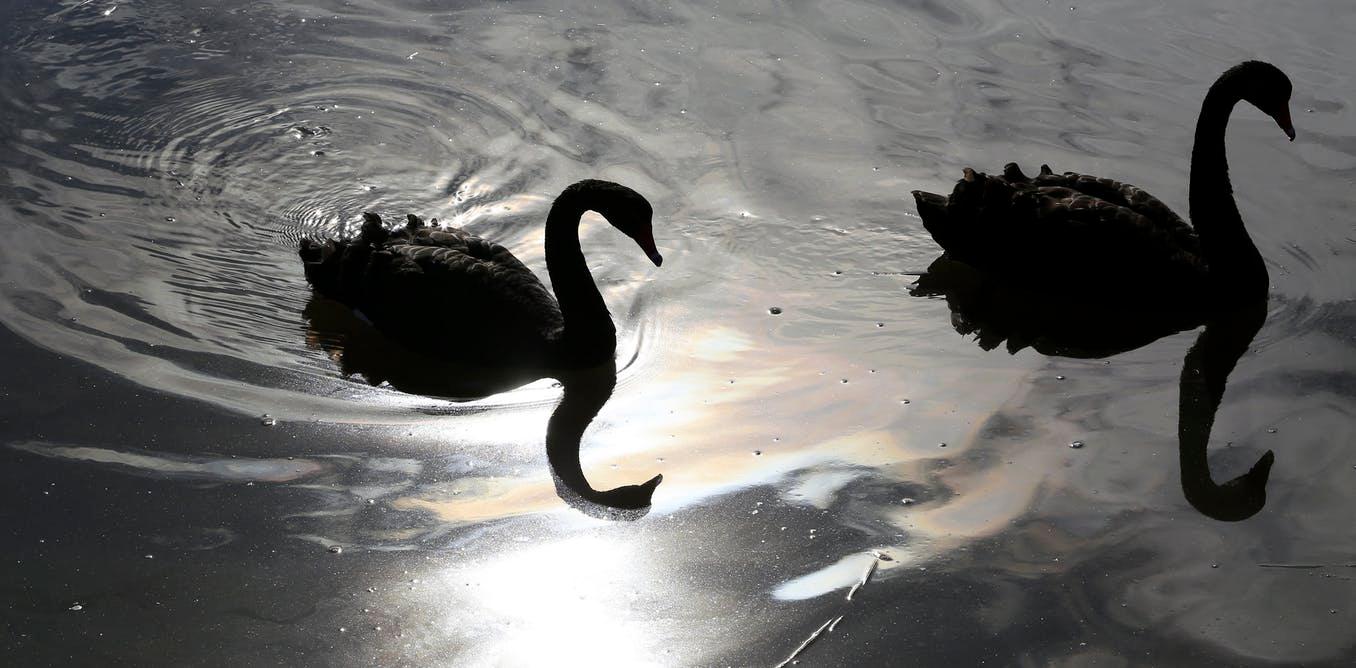
It means, as the subtitle of the aforementioned book suggest, something that “seems improbable, but possible. He derives this term from a story of how we humankind believed “all swans were white” until 1697 when some explorers, for the first time, saw black swans in Australia. “Impossible,” was the feeling that these explorers had, but since they saw those black swans with their own eyes they had to believe it.
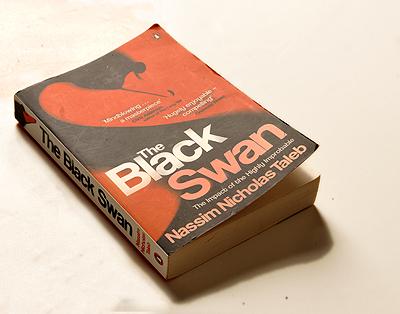
So, in the design thinking course that I had the pleasure of teaching last semester, I did not introduce this concept until the last 4 weeks of the semester. I was not sure that the book and the concept of black swans (which is arguably one of the most important concepts in risk management today) would be useful to design. Thanks to the lively discussion with my students, I was confirmed energetically by the interaction throughout the 1.5-hour seminar on this very concept that it’s crucial for design thinkers to understand the impact of the highly improbable.
One of the design concepts that I have yet to allude to is “resilience,” or the idea that something that is well designed should be able to recover quickly from the difficulty or robust in difficult situations. If the design is resilience, it will be popular. Think of something as basic as tiding the ribbon around the handle of your carry-on luggage to help you identify it when coming out of the conveyable belt with many other look-alike carry-ons. This “design thinking” is more resilience than a $500 bluetooth-operated carry-on luggage — for which to work you would need batteries in both your smartphone (yes, you’ll also need a smartphone) and the the bluetooth-operated carry-on itself. You would also need to spend time taking the battery out of the carry-on upon your getting through the security gate. Finally, it will only do the job that the ribbon does despite its much higher realm of technology. You’ll still lose it if someone steals it, or it still won’t be arriving with you if the airline misplaced it.
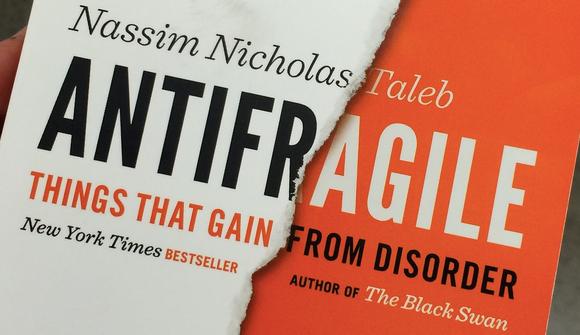
What about for a company, city, or an individual to be resilient? Since we don’t have the superpower to predict the future, what we need is the ability to be less vulnerable to the improbable difficulty. Kodak, as a company, invented many things. The reliance on the market for film blinded the company from seeing the then less-productive child –the digital camera technology. For that reason, Kodak got pushed out of the market by surprise when most people decide that they would go for the memory chips instead of films. So, as Taleb sees it, we need to be resilient in order to survive the unexpected. He also coins another term for this form of resilience — an antidote to the black swans — called “antifragile,” which features also in his book Antifragile: Things That Gain From Disorder. Although I really like this term, that’s another topic for another time. For this post, let’s stick to “resilience” rather than “antifragile” for now.
Let’s get back to the black swans. I want to use the three most vivid examples that Taleb uses in the book to illustrate what kinds of things are considered highly probable.
First, 9/11 attacks — it goes without saying that we could have prevented it if we thought that it was highly probably. The problem that Taleb outlines is that the 9/11 attacks make many of us feel as though we could “sort of” or “almost” predicted them, which is only because they are explained retrospectively. So, the first practical thing to learn about the notion of the black swans is: When the improbable takes place, don’t look back at the past in pursuit of justifying why it happens (as it only looks justifiable after the fact); so, do quickly move on and be antifragile (dang, I just said let’s stick to resilience).
To show you more why 9/11 attacks were only explainable retroactively, let’s look at the second example: “the turkey:”
Consider a turkey that is fed every day. Every single feeding will firm up the bird’s belief that it is the general rule of life to be fed every day by friendly members of the human race “looking out for its best interests,” as a politician would say. On the afternoon of the Wednesday before Thanksgiving, something unexpected will happen to the turkey. It will incur a revision of belief.
Right? Just because it was well fed every day, the turkey was under the impression that everything was under its control — it might even thought of itself as important whereas the bigger power over it operates at a much higher and completely different ontological plane. How many times have you been in this kind of “turkey situation?” For me? Plenty, plenty, plenty (I thought I was fed to strive, but at the end I found out that I was fed to be consumed — metaphorically).
One more example. Third, you:
Imagine a speck of dust next to a planet a billion times the size of the earth. The speck of dust represents the odds in favor of your being born; the huge planet would be the odds against it. So stop sweating the small stuff. Don’t be like the ingrate who got a castle as a present and worried about the mildew in the bathroom. Stop looking the gift horse in the mouth—remember that you are a Black Swan.
So, we are all black swans. Definitionally, we do not have any clue about our birth. Even if we could trace one step back to the meeting of our biological parents: What brought them together and made them decide to have a family? In other words, you are thrown into the world as a black swan. Now we know what the black swans are. How do we deal with them?
Taleb argues, and I hereby add practical advise to his argument in red, three main things about the black swans:
- Black swans are improbable, and often almost impossible, until they happen (just like the “discovery” of the black swans in Western Australia 1697). Don’t beat yourself up too much if you happen to suffer a lot from it because you weren’t prepared for it. You are not alone. Think of the way to be resilience, think of stoicism, think of antifragile and quickly and robustly learn from it in order to rise up as fast as you can again to tackle the existence and aftermaths of the black swans. In design, we cannot always come up with something exclusively “for the black swans” since we don’t know when they are coming (and more importantly what they are); yet, this doesn’t mean that you cannot be somewhat prepared. The same reason we will never know for sure what would be the best antidote to which of the black swans in your life, we also do not know which one of our ideas previously thought as useless might become useful. So, never throw away any notes, drawings, post-it notes, sketches, and prototypes of ideas that you have. Systematically organize them in a shelve, or scan them and organize them on your computer. They might not seem to be useful now, but you may need some of them in dealing with black swans;
- Black swans cannot be explained by the past — think of the turkey story. So, don’t try to make sense of it. What you could do is to make yourself as resilience as possible. This might mean: Don’t get over-consumed by data, take small risks to test the water, do not take any big risk (putting all the eggs in one basket), and try your best to keep your option open and welcome. In design, too, this can be practiced by thinking about the variety of ideas that you are investing your time and resource in. For instance, a lot of people who get laid off from the company for whom they have been working for years often do not know what else to do or how to make a living afterwards. The closing of the company or the lay-off can be the black swans but those who stay afloat after the fact are resilience. A practical advise: Always have a small pet project on the side — something that you are interested in and feeling good about when you engage in. Did you know that WeChat (China’s largest social media + mobile payment network) was sort of a pet project of the mother company? There’re many of these examples. Work on your pet project and enjoy it, as it might become handy to you.
- There are always unexpected factors involved in just about anything. For example, there’s one time that I was so focusing on an exam, which I hoped to ace. I have read all the books, set an alarm on my phone, and I even let many of my friends know that they must call me should I not be present at the exam room at least half an hour before the exam. That morning, well, truth be told, there’s a problem with the main electrical circuit board of my building, so my phone was not charged and therefore was out of battery, which meant that no one on whom I relied could call me. A practical advise? Do not set your alarm clock on your phone; get a real alarm clock from IKEA. Sorry, that was a joke. I would never do that to you. The problem here is that there’re always more factors that we thought we have already covered. One way of looking at any problems is to expect that something might not go as planned (like a stoic) which may include visualizing some worst-case scenarios beforehand and walk through in your imagination, with positive thoughts, about how you might go about and fix it. Moreover, I think those who tend to be at the worst receiving end of a black swan that happen in this way are those who have been criticizing others something that if they could see it through this very lens, would know that it could well be them who make the mistakes. So, a practical advise is, and I shall quite Dr Jordan Peterson, “set your house in perfect order before criticizing the world.” And since the idea of anything that is “perfect” is probably just a fantasy, just don’t criticize and focus on your very own pursuit and care with great care and carefulness.
In my life, there’re many times that I suffered greatly from black swans. I can tell you the most impactful one: The death of my father.
He was 62, and just retired from work for about one and a half year. My father, at the time, lived in Bangkok with my mother and brother. He was no Hercules but he seemed to not be in any stages of seriously bad health, which I found out later that he was not well at all (and he just didn’t want me to know). As for me, I was only a few hours away from my very first class of my doctorate. I had a wonderful girlfriend and was happy to be in the US where I called my intellectual home. My father was planning to come visit me in the States with my mother and we had a series of grand plans on what we wanted to do. Everything was pictured-perfect (at least to me, the turkey), until I receive an nerve-wrackingly short text message from my brother: “Dad passed away.”
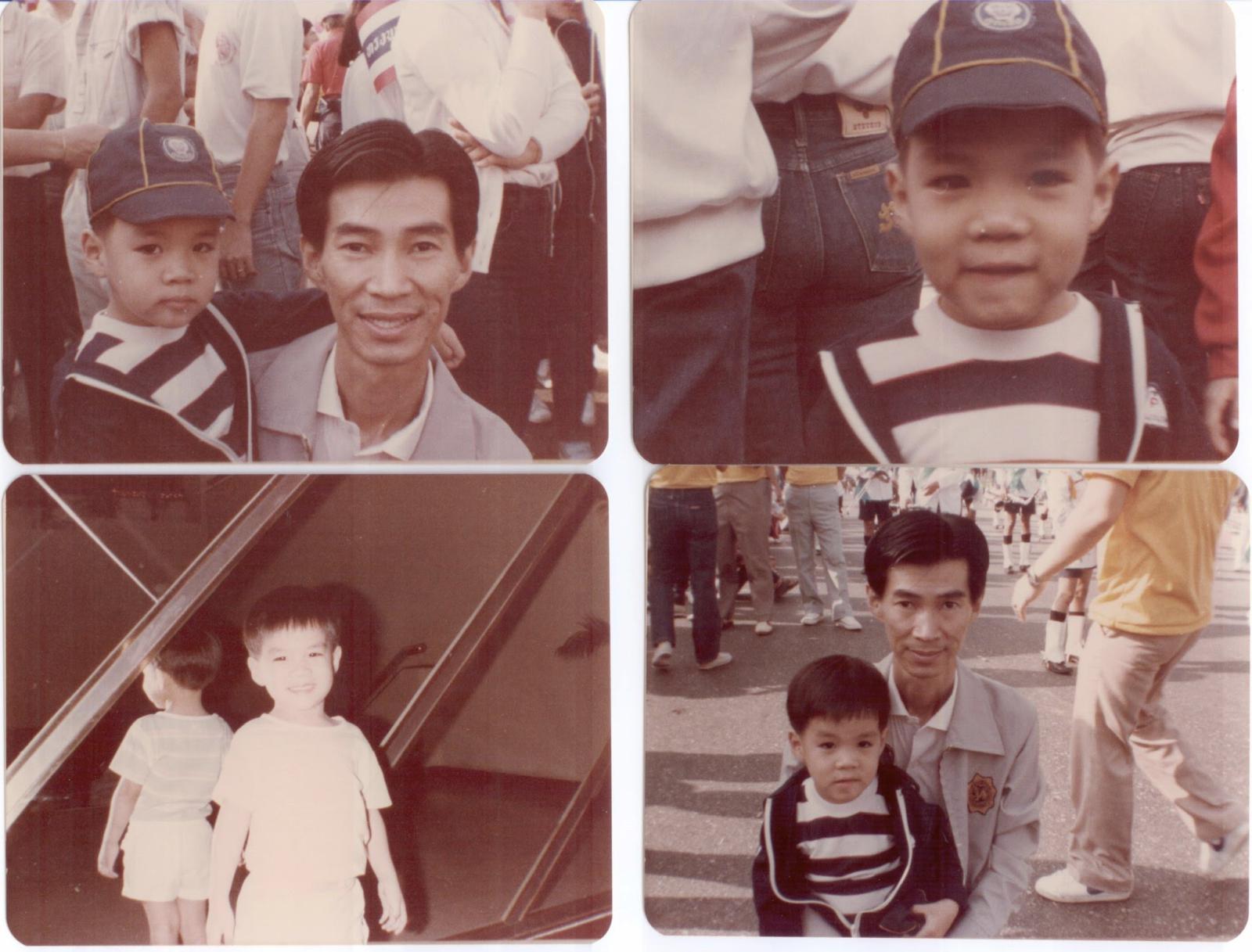
My father, in this story, was the farmer, and I was the turkey. He had an operational assumption that it would be unlikely for him to live as long as to visit me in the US, and he had subtlety made this gesture to some of his close friends, such as excusing himself from a wedding of one of his former co-workers, not attending an important gatherings and meetings, and procrastinating on packing up for a health check-up at a hospital. He knew that he was about to leave us but he didn’t want me to be distracted. So, even since he passed away, I always do three things — in the spirit of design thinking.
- Go back home to visit my friends and family whenever I can. I make it a routine. During my time at home, I would not let anything else distracting me from my precious time with my family, especially my mother;
- Now or never when it comes to meeting someone I’d like to see. We tend to postpone meetings that we do not see immediate needs. But how do we know that which are going to be a great meeting that changes your view (i.e., a positive black swan) or the last meeting between you and that person since we sincerely do not know when are we going to leave this world?
- Call, text, and keep in touch with those whom I care but do not have the time and resource to see them. Sometimes my friends ask me why I send them random posts or photos, I answer “to keep in touch,” and that which is precisely the reason. Thinking of what they would be interested in seeing and reading is a practical act of compassion that reminds you of your value and friendship. Like good gifts, according to Robert B. Cialdini, this very way of keeping in touch, though seen as weird by some friends (to which they eventually got used), are meaningful, unexpected and customized. Sometimes I get to strike a conversation with someone I haven’t seen for decades — and see them in person (thanks to the above now or never rule) for a coffee right after I share with them those random posts.
Unedited original.ต้นฉบับที่ไม่ได้แก้未经修改的原文。
First, this is not about the film Black Swan starring Natalie Portman, but the book The Black Swan: The Impact of the Highly Improbable by Nassim Nicholas Taleb.
But what does Taleb means by the black swan?
It means, as the subtitle of the aforementioned book suggest, something that “seems improbable, but possible. He derives this term from a story of how we humankind believed “all swans were white” until 1697 when some explorers, for the first time, saw black swans in Australia. “Impossible,” was the feeling that these explorers had, but since they saw those black swans with their own eyes they had to believe it.
So, in the design thinking course that I had the pleasure of teaching last semester, I did not introduce this concept until the last 4 weeks of the semester. I was not sure that the book and the concept of black swans (which is arguably one of the most important concepts in risk management today) would be useful to design. Thanks to the lively discussion with my students, I was confirmed energetically by the interaction throughout the 1.5-hour seminar on this very concept that it’s crucial for design thinkers to understand the impact of the highly improbable.
One of the design concepts that I have yet to allude to is “resilience,” or the idea that something that is well designed should be able to recover quickly from the difficulty or robust in difficult situations. If the design is resilience, it will be popular. Think of something as basic as tiding the ribbon around the handle of your carry-on luggage to help you identify it when coming out of the conveyable belt with many other look-alike carry-ons. This “design thinking” is more resilience than a $500 bluetooth-operated carry-on luggage — for which to work you would need batteries in both your smartphone (yes, you’ll also need a smartphone) and the the bluetooth-operated carry-on itself. You would also need to spend time taking the battery out of the carry-on upon your getting through the security gate. Finally, it will only do the job that the ribbon does despite its much higher realm of technology. You’ll still lose it if someone steals it, or it still won’t be arriving with you if the airline misplaced it.
What about for a company, city, or an individual to be resilient? Since we don’t have the superpower to predict the future, what we need is the ability to be less vulnerable to the improbable difficulty. Kodak, as a company, invented many things. The reliance on the market for film blinded the company from seeing the then less-productive child –the digital camera technology. For that reason, Kodak got pushed out of the market by surprise when most people decide that they would go for the memory chips instead of films. So, as Taleb sees it, we need to be resilient in order to survive the unexpected. He also coins another term for this form of resilience — an antidote to the black swans — called “antifragile,” which features also in his book Antifragile: Things That Gain From Disorder. Although I really like this term, that’s another topic for another time. For this post, let’s stick to “resilience” rather than “antifragile” for now.
Let’s get back to the black swans. I want to use the three most vivid examples that Taleb uses in the book to illustrate what kinds of things are considered highly probable.
First, 9/11 attacks — it goes without saying that we could have prevented it if we thought that it was highly probably. The problem that Taleb outlines is that the 9/11 attacks make many of us feel as though we could “sort of” or “almost” predicted them, which is only because they are explained retrospectively. So, the first practical thing to learn about the notion of the black swans is: When the improbable takes place, don’t look back at the past in pursuit of justifying why it happens (as it only looks justifiable after the fact); so, do quickly move on and be antifragile (dang, I just said let’s stick to resilience).
To show you more why 9/11 attacks were only explainable retroactively, let’s look at the second example: “the turkey:”
Consider a turkey that is fed every day. Every single feeding will firm up the bird’s belief that it is the general rule of life to be fed every day by friendly members of the human race “looking out for its best interests,” as a politician would say. On the afternoon of the Wednesday before Thanksgiving, something unexpected will happen to the turkey. It will incur a revision of belief.
Right? Just because it was well fed every day, the turkey was under the impression that everything was under its control — it might even thought of itself as important whereas the bigger power over it operates at a much higher and completely different ontological plane. How many times have you been in this kind of “turkey situation?” For me? Plenty, plenty, plenty (I thought I was fed to strive, but at the end I found out that I was fed to be consumed — metaphorically).
One more example. Third, you:
Imagine a speck of dust next to a planet a billion times the size of the earth. The speck of dust represents the odds in favor of your being born; the huge planet would be the odds against it. So stop sweating the small stuff. Don’t be like the ingrate who got a castle as a present and worried about the mildew in the bathroom. Stop looking the gift horse in the mouth—remember that you are a Black Swan.
So, we are all black swans. Definitionally, we do not have any clue about our birth. Even if we could trace one step back to the meeting of our biological parents: What brought them together and made them decide to have a family? In other words, you are thrown into the world as a black swan. Now we know what the black swans are. How do we deal with them?
Taleb argues, and I hereby add practical advise to his argument in red, three main things about the black swans:
- Black swans are improbable, and often almost impossible, until they happen (just like the “discovery” of the black swans in Western Australia 1697). Don’t beat yourself up too much if you happen to suffer a lot from it because you weren’t prepare for it. You are not alone. Think of the way to be resilience, think of stoicism, think of antifragile and quickly and robustly learn from it in order to rise up as fast as you can again to tackle the existence and aftermaths of the black swans. In design, we cannot always come up with something exclusively “for the black swans” since we don’t know when they are coming (and more importantly what they are); yet, this doesn’t mean that you cannot be somewhat prepared. The same reason we will never know for sure what would be the best antidote to which of the black swans in your life, we also do not know which one of our ideas previously thought as useless might become useful. So, never throw away any notes, drawings, post-it notes, sketches, and prototypes of ideas that you have. Systematically organize them in a shelve, or scan them and organize them on your computer. They might not seem to be useful now, but you may need some of them in dealing with black swans;
- Black swans cannot be explained by the past — think of the turkey story. So, don’t try to make sense of it. What you could do is to make yourself as resilience as possible. This might mean: Don’t get over-consumed by data, take small risks to test the water, do not take any big risk (putting all the eggs in one basket), and try your best to keep your option open and welcome. In design, too, this can be practiced by thinking about the variety of ideas that you are investing your time and resource in. For instance, a lot of people who get laid off from the company for whom they have been working for years often do not know what else to do or how to make a living afterwards. The closing of the company or the lay-off can be the black swans but those who stay afloat after the fact are resilience. A practical advise: Always have a small pet project on the side — something that you are interested in and feeling good about when you engage in. Did you know that WeChat (China’s largest social media + mobile payment network) was sort of a pet project of the mother company? There’re many of these examples. Work on your pet project and enjoy it, as it might become handy to you.
- There are always unexpected factors involved in just about anything. For example, there’s one time that I was so focusing on an exam, which I hoped to ace. I have read all the books, set an alarm on my phone, and I even let many of my friends know that they must call me should I not be present at the exam room at least half an hour before the exam. That morning, well, truth be told, there’s a problem with the main electrical circuit board of my building, so my phone was not charged and therefore was out of battery, which meant that no one on whom I relied could call me. A practical advise? Do not set your alarm clock on your phone; get a real alarm clock from IKEA. Sorry, that was a joke. I would never do that to you. The problem here is that there’re always more factors that we thought we have already covered. One way of looking at any problems is to expect that something might not go as planned (like a stoic) which may include visualizing some worst-case scenarios beforehand and walk through in your imagination, with positive thoughts, about how you might go about and fix it. Moreover, I think those who tend to be at the worst receiving end of a black swan that happen in this way are those who have been criticizing others something that if they could see it through this very lens, would know that it could well be them who make the mistakes. So, a practical advise is, and I shall quite Dr Jordan Peterson, “set your house in perfect order before criticizing the world.” And since the idea of anything that is “perfect” is probably just a fantasy, just don’t criticize and focus on your very own pursuit and care with great care and carefulness.
In my life, there’re many times that I suffered greatly from black swans. I can tell you the most impactful one: The death of my father.
He was 62, and just retired from work for about one and a half year. My father, at the time, lived in Bangkok with my mother and brother. He was no Hercules but he seemed to not be in any stages of seriously bad health, which I found out later that he was not well at all (and he just didn’t want me to know). As for me, I was only a few hours away from my very first class of my doctorate. I had a wonderful girlfriend and was happy to be in the US where I called my intellectual home. My father was planning to come visit me in the States with my mother and we had a series of grand plans on what we wanted to do. Everything was pictured-perfect (at least to me, the turkey), until I receive an nerve-wrackingly short text message from my brother: “Dad passed away.”
My father, in this story, was the farmer, and I was the turkey. He had an operational assumption that it would be unlikely for him to live as long as to visit me in the US, and he had subtlety made this gesture to some of his close friends, such as excusing himself from a wedding of one of his former co-workers, not attending an important gatherings and meetings, and procrastinating on packing up for a health check-up at a hospital. He knew that he was about to leave us but he didn’t want me to be distracted. So, even since he passed away, I always do three things — in the spirit of design thinking.
- Go back home to visit my friends and family whenever I can. I make it a routine. During my time at home, I would not let anything else distracting me from my precious time with my family, especially my mother;
- Now or never when it comes to meeting someone I’d like to see. We tend to postpone meetings that we do not see immediate needs. But how do we know that which are going to be a great meeting that changes your view (i.e., a positive black swan) or the last meeting between you and that person since we sincerely do not know when are we going to leave this world?
- Call, text, and keep in touch with those whom I care but do not have the time and resource to see them. Sometimes my friends ask me why I send them random posts or photos, I answer “to keep in touch,” and that which is precisely the reason. Thinking of what they would be interested in seeing and reading is a practical act of compassion that reminds you of your value and friendship. Like good gifts, according to Robert B. Cialdini, this very way of keeping in touch, though seen as weird by some friends (to which they eventually got used), are meaningful, unexpected and customized. Sometimes I get to strike a conversation with someone I haven’t seen for decades — and see them in person (thanks to the above now or never rule) for a coffee right after I share with them those random posts.