Diaryบันทึก日记
Day 94: On Making an Argument
Grammar only. The title is unchanged.แก้แต่ไวยากรณ์ ชื่อเรื่องคงเดิม只改语法。标题不动。
This entry is in English only.บันทึกนี้มีแต่ภาษาอังกฤษ此篇仅有英文。

O.k. I just couldn’t sleep.
I have been having an issue with sleeping lately. I perhaps should seriously take my mother’s advice not to take a nap after my late-afternoon run. Now, I am wide awake.
Even after using the secret military technique whose claim is that it could make anyone fall asleep in two minutes, I still could not fall asleep. So, while rolling on one side of the bed (as I had this hypothesis that changing from sleeping on the back to the side helps me fall asleep; spoiler alert: I was wrong), I came up with an idea for this post.
So, I want to write about arguments. Specifically, I want to write about how to have the kinds of arguments that benefit you and your counterpart.
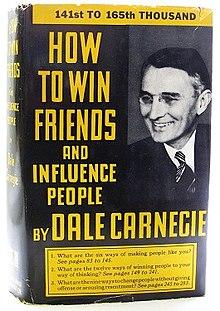
First and foremost, the rule of thumb is not to argue with anyone. This is one of the late life and self-help guru Dale Carnegie’s golden rules in How to Win Friends and Influence People, and also, well, a commonsense. Arguing for the sake of arguing is a waste of time. So, should you argue, make sure that which is a productive and friendly exchange of diverging or opposite views that has the potential to lead to intellectual benefits of the involved parties.
Countless of time in my own life and of those whom I care, I witnessed how an argument could lead, and have led, to an end of friendship, relationship, co-workership, etc. Those are the instances whereby not having an argument at all would have been better for the parties involved. Again, an argument that leads to an end of a friendship isn’t worth pursuing. But, why does it happen?
So, let’s get it straight rule by rule.
The most important rule: Not just an argument (but especially for an argument) but any form of communication that is likely to be effective has to be nonviolent. I am not talking just about a direct verbal abuse (which is obviously violent), but any form of ineffective communication, such as an criticism, judgment, sarcasm, and vague statement. It’s true that most of us get emotional when we engage in an argument, and forget that it’s never as important as the relationship you have with your counterpart with whom you’re arguing. So, for sure, the first thing to do is to watch your own emotion and never let it override your reason. The methods of nonviolent communication will help you do just that. I wrote about this a few times in the past, but let’s reemphasize it here again.
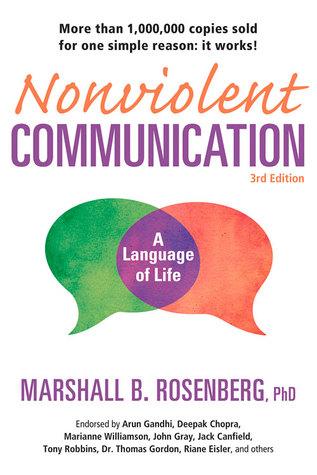
Like me, the psychologist Dr Marshall B Rosenberg believes that the main reason for most conflicts we have in the world today is our inability to communicate “non-violently.” When we communicate, we don’t just say what we feel and what we need from those to whom we’re expressing ourselves. We judge, compare, criticize, curse — most of the time without any good reason.
Most of the time, argues Dr Rosenberg, we use imprecise, judgmental and presumptive language to prematurely evaluate a situation. These are communication that involves the use of negative adjectives (e.g., bad, mean, evil) and unnecessary adverbs (e.g., always, never, frequently) which are neither useful to get our meaning across, nor to get the other people to empathize with you. For instance, how many times does say “You’re always late” help to encourage someone to be punctual?
Here’s one of the examples from Dr’s Rosenberg’s Nonviolent Communication: A Language of Life: Life-Changing Tools for Healthy Relationships:
A couple in distress attending a workshop provides an additional illustration of how nonspecific language can hamper understanding and communication. “I want you to let me be me,” the woman declared to her husband. “I do!” he retorted. “No, you don’t!” she insisted. Asked to express herself in positive action language, the woman replied, “I want you to give me the freedom to grow and be myself.”
Such a statement, however, is just as vague and likely to provoke a defensive response. She struggled to formulate her request clearly, and then admitted, “It’s kind of awkward, but if I were to be precise, I guess what I want is for you to smile and say that anything I do is okay.” Often, the use of vague and abstract language can mask oppressive interpersonal games.
The expert on marriage the psychologist John Gottman at the University of Washington also adds that one secret to a long lasting marriage is precisely the use of precise, non-judgmental and non-presumptive language.
For instance, if your partner forgets to take the garbage out, it’s because he “might have simply forgotten to do so” and not because he was “bad,” “lazy,” or “taking advantage of you.” Asking your partner whether he forgot to take the garbage out is likely to receive a good response than rhetorically asking whether he is doing it intentionally because he is “bad,” “lazy”, or “taking advantage of you.” Once you get to the very bottom of what you’re trying to express every time before you’re doing so, it’s likely that you won’t communicate violently.
Alright. So, a nonviolent communication is the undergirding structure of all good arguments. Here’re the rules (I am cheating here by taking the first 4 rules from Dr Jordan B Peterson’s 12 Rules for Life):
- Treat yourself like someone you are responsible for helping. What Dr Peterson means here is that many times we treat other people better than we treat ourselves. For instance, I have friends who are always there for me when I need them, but whenever they need me they never call. They don’t want to bother me. I think that’s unfair. Dr Peterson’s example is that we tend to make sure that our pet (e.g., dog, cat) take prescribed medicines, while we tend to forget to take our own medicines. We’re kinder to those about whom we care. In making an argument, you need to be as kind to yourself as your counterpart. You’re also learning from the process and the argument should enrich, not deteriorate, your relationship with your counterpart. Don’t pursue an argument that is not helping you personally;
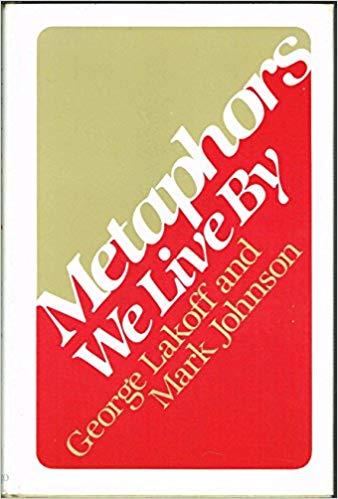
- Assume that the person you are listening to might know something you don’t. I must have heard this from one of the podcasts I listened to a while ago, but there’s this line that really sticks: “If you can’t first argue in the position of your opposition, you have no right to argue your own.” What this rule will remind you is that while making an argument, watch out of things that might allow you to excel in your understanding of the subject matter. Again, the point of the argument is not to win, but to learn. By why do we think that the purpose of an argument is to win? In Metaphors We Live By, the linguistic psychologists George Lakoff and Mark Johnson argue that it’s because of how we have been using “war metaphors,” such as “Your claims are indefensible,” “He attacked every weak point in my argument, ” “His criticisms were right on target,” to name a few (and I recommend the book; it’s a classic!). You get the idea. But that’s misleading. Once and for all, we should treat arguments, not as war, but as learning process. Many of us today are trying to re-write these kinds of misleading metaphors. Love, for instance, doesn’t have to something that we would “fall into,” “hurt by” or cause “heartbreak.” Using these as metaphors for love really isn’t helping;
- Tell the truth – or, at least, don’t lie. Yepppppp;
- Be precise in your speech. Yep. Again vague and imprecise speeches, according to Dr Rosenberg, are considered violent communication. When you want something to do something (e.g., take the trash out), be precise in your speech — in this case, what should be done (e.g, “Could you please take the trash out,” not “Why is the trash still in the house”). In an argument too, be clear in what you’re trying to convey;
- Do some research, or don’t. Make no compromise here. An argument is only worth pursuing when the two opposite views are based on some research. There’s one instance whereby I found myself engaging in a debate about the economy of recycling with a colleague. It took us 5 minutes to realize that none of us knew anything about that topic; hence, we just laughed at our silliness and dropped the “argument. You can have a casual nonviolent conversation about something to stir up some thoughts (but not gossip though) but do not take it as an argument if none of you have done any research or know anything about the subject matter. As the Stoics would say, “it’s completely okay to not having an opinion on something.” If the reason why you’d rather go one restaurant over the other has to do only with your gut feeling, just say so; don’t try to make up other justifications for it;
- “When the facts change, I change my mind. What do you do, sir? This quote is often credited to the great economist John Maynard Keynes (despite the lack of any written evidence). Keynes said so with regards to his changing view regarding macroeconomics of the UK. Often, economists stick to their guns, and their theories; hence, for someone as important as Keynes to say this, it’s not to be taken lightly. He’s right. We don’t know everything. Do you remember when we all used to think that smoking was okay? The psychologist Dr Robert B Cialdini, in fact, points that “consistency” is one of the tricks that salespeople use to sell us things that aren’t that worthy. That’s another golden rule (so many of them, lol). When engaging in an argument, the only preparation to have is to be enlightened, to learn from it, and to change your mind if you find the argument opposing you more convincing.
- Avoid using the word “you” and try to use the word “I.” The worse kind of fallacy is the one that is directed against a person rather than the position (i.e., ad hominem, in Latin lit. “to the person”). Using “I” makes it much easier to express feelings, and much harder to attack the person. While it’s usually useful to start an argument with “I,” e.g., “I believe,” “I think,” “I feel” — and you must follow it up with the magic word, “because.” The psychologist Ellen Langer wrote in her classic study conducted in 1978 about the magical power of the word “because.” Well, it’s not that magical, but let’s say that it would increase substantially the logical compliance and therefore the chance of your argument’s being heard and taken seriously.
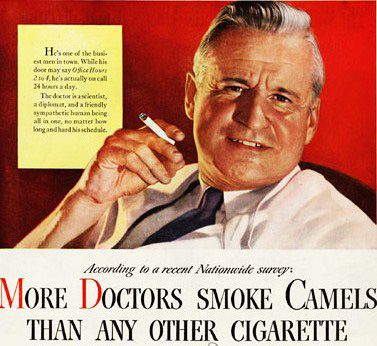
O.k. I am still not sleepy. How about a poster from the old time.
Unedited original.ต้นฉบับที่ไม่ได้แก้未经修改的原文。
O.k. I just couldn’t sleep.
I have been having an issue with sleeping lately. I perhaps should seriously take my mother’s advice not to take a nap after my late-afternoon run. Now, I am wide awake.
Even after using the secret military technique whose claim is that it could make anyone fall asleep in two minutes, I still could not fall asleep. So, while rolling on one side of the bed (as I had this hypothesis that changing from sleeping on the back to the side helps me fall asleep; spoiler alert: I was wrong), I came up with an idea for this post.
So, I want to write about arguments. Specifically, I want to write about how to have the kinds of arguments that benefit you and your counterpart.
First and foremost, the rule of thumb is not to argue with anyone. This is one of the late life and self-help guru Dale Carnegie’s golden rules in How to Win Friends and Influence People, and also, well, a commonsense. Arguing for the sake of arguing is a waste of time. So, should you argue, make sure that which is a productive and friendly exchange of diverging or opposite views that has the potential to lead to intellectual benefits of the involved parties.
Countless of time in my own life and of those whom I care, I witnessed how an argument could lead, and have led, to an end of friendship, relationship, co-workership, etc. Those are the instances whereby not having an argument at all would have been better for the parties involved. Again, an argument that leads to an end of a friendship isn’t worth pursuing. But, why does it happen?
So, let’s get it straight rule by rule.
The most important rule: Not just an argument (but especially for an argument) but any form of communication that is likely to be effective has to be nonviolent. I am not talking just about a direct verbal abuse (which is obviously violent), but any form of ineffective communication, such as an criticism, judgment, sarcasm, and vague statement. It’s true that most of us get emotional when we engage in an argument, and forget that it’s never as important as the relationship you have with your counterpart with whom you’re arguing. So, for sure, the first thing to do is to watch your own emotion and never let it override your reason. The methods of nonviolent communication will help you do just that. I wrote about this a few times in the past, but let’s reemphasize it here again.
Like me, the psychologist Dr Marshall B Rosenberg believes that the main reason for most conflicts we have in the world today is our inability to communicate “non-violently.” When we communicate, we don’t just say what we feel and what we need from those to whom we’re expressing ourselves. We judge, compare, criticize, curse — most of the time without any good reason.
Most of the time, argues Dr Rosenberg, we use imprecise, judgmental and presumptive language to prematurely evaluate a situation. These are communication that involves the use of negative adjectives (e.g., bad, mean, evil) and unnecessary adverbs (e.g., always, never, frequently) which are neither useful to get our meaning across, nor to get the other people to empathize with you. For instance, how many times does saying “You’re always late” help to encourage someone to be punctual?
Here’s one of the examples from Dr’s Rosenberg’s Nonviolent Communication: A Language of Life: Life-Changing Tools for Healthy Relationships:
A couple in distress attending a workshop provides an additional illustration of how nonspecific language can hamper understanding and communication. “I want you to let me be me,” the woman declared to her husband. “I do!” he retorted. “No, you don’t!” she insisted. Asked to express herself in positive action language, the woman replied, “I want you to give me the freedom to grow and be myself.”
Such a statement, however, is just as vague and likely to provoke a defensive response. She struggled to formulate her request clearly, and then admitted, “It’s kind of awkward, but if I were to be precise, I guess what I want is for you to smile and say that anything I do is okay.” Often, the use of vague and abstract language can mask oppressive interpersonal games.
The expert on marriage the psychologist John Gottman at the University of Washington also adds that one secret to a long lasting marriage is precisely the use of precise, non-judgmental and non-presumptive language.
For instance, if your partner forgets to take the garbage out, it’s because he “might have simply forgotten to do so” and not because he was “bad,” “lazy,” or “taking advantage of you.” Asking your partner whether he forgot to take the garbage out is likely to receive a good response than rhetorically asking whether he is doing it intentionally because he is “bad,” “lazy”, or “taking advantage of you.” Once you get to the very bottom of what you’re trying to express every time before you’re doing so, it’s likely that you won’t communicate violently.
Alright. So, a nonviolent communication is the undergirding structure of all good arguments. Here’re the rules (I am cheating here by taking the first 4 rules from Dr Jordan B Peterson’s 12 Rules for Life):
- Treat yourself like someone you are responsible for helping. What Dr Peterson means here is that many times we treat other people better than we treat ourselves. For instance, I have friends who are always there for me when I need them, but whenever they need me they never call. They don’t want to bother me. I think that’s unfair. Dr Peterson’s example is that we tend to make sure that our pet (e.g., dog, cat) take prescribed medicines, while we tend to forget to take our own medicines. We’re kinder to those about whom we care. In making an argument, you need to be as kind to yourself as your counterpart. You’re also learning from the process and the argument should enrich, not deteriorate, your relationship with your counterpart. Don’t pursue an argument that is not helping you personally ;
- Assume that the person you are listening to might know something you don’t. I must have heard this from one of the podcasts I listened to a while ago, but there’s this line that really sticks: “If you can’t first argue in the position of your opposition, you have no right to argue your own.” What this rule will remind you is that while making an argument, watch out of things that might allow you to excel in your understanding of the subject matter. Again, the point of the argument is not to win, but to learn. By why do we think that the purpose of an argument is to win? In Metaphors We Live By, the linguistic psychologists George Lakoff and Mark Johnson argue that it’s because of how we have been using “war metaphors,” such as “Your claims are indefensible,” “He attacked every weak point in my argument,” “His criticisms were right on target,” to name a few (and I recommend the book; it’s a classic!). You get the idea. But that’s misleading. Once and for all, we should treat arguments, not as war, but as learning process. Many of us today are trying to re-write these kinds of misleading metaphors. Love, for instance, doesn’t have to something that we would “fall into,” “hurt by” or cause “heartbreak.” Using these as metaphors for love really isn’t helping;
- Tell the truth – or, at least, don’t lie. Yepppppp;
- Be precise in your speech. Yep. Again vague and imprecise speeches, according to Dr Rosenberg, are considered violent communication. When you want something to do something (e.g., take the trash out), be precise in your speech — in this case, what should be done (e.g, “Could you please take the trash out,” not “Why is the trash still in the house”). In an argument too, be clear in what you’re trying to convey;
- Do some research, or don’t. Make no compromise here. An argument is only worth pursuing when the two opposite views are based on some research. There’s one instance whereby I found myself engaging in a debate about the economy of recycling with a colleague. It took us 5 minutes to realize that none of us knew anything about that topic; hence, we just laughed at our silliness and dropped the “argument. You can have a casual nonviolent conversation about something to stir up some thoughts (but not gossip though) but do not take it as an argument if none of you have done any research or know anything about the subject matter. As the Stoics would say, “it’s completely okay to not having an opinion on something.” If the reason why you’d rather go one restaurant over the other has to do only with your gut feeling, just say so; don’t try to make up other justifications for it;
- “When the facts change, I change my mind. What do you do, sir? This quote is often credited to the great economist John Maynard Keynes (despite the lack of any written evidence). Keynes said so with regards to his changing view regarding macroeconomics of the UK. Often, economists stick to their guns, and their theories; hence, for someone as important as Keynes to say this, it’s not to be taken lightly. He’s right. We don’t know everything. Do you remember when we all used to think that smoking was okay? The psychologist Dr Robert B Cialdini, in fact, points that “consistency” is one of the tricks that salespeople use to sell us things that aren’t that worthy. That’s another golden rule (so many of them, lol). When engaging in an argument, the only preparation to have is to be enlightened, to learn from it, and to change your mind if you find the argument opposing you more convincing.
- Avoid using the word “you” and try to use the word “I.” The worse kind of fallacy is the one that is directed against a person rather than the position (i.e., ad hominem, in Latin lit. “to the person”). Using “I” makes it much easier to express feelings, and much harder to attack the person. While it’s usually useful to start an argument with “I,” e.g., “I believe,” “I think,” “I feel” — and you must follow it up with the magic word, “because.” The psychologist Ellen Langer wrote in her classic study conducted in 1978 about the magical power of the word “because.” Well, it’s not that magical, but let’s say that it would increase substantially the logical compliance and therefore the chance of your argument’s being heard and taken seriously.
O.k. I am still not sleepy. How about a poster from the old time.