Diaryบันทึก日记
Day 93: On Freedom
Grammar only. The title is unchanged.แก้แต่ไวยากรณ์ ชื่อเรื่องคงเดิม只改语法。标题不动。
This entry is in English only.บันทึกนี้มีแต่ภาษาอังกฤษ此篇仅有英文。

Freedom is one of the most difficult topics. We all want freedom, but…
Freedom from what? Apparently, freedom, at least in the society in which we are living today, doesn’t mean you can do whatever you want. That would be like living in what the philosopher Thomas Hobbes describes as the “state of nature” where everyone can use force to take whatever they want from anyone. Apparently, too, nobody living in the “free world” today would accept the idea of any individual freedom’s to hurt others.
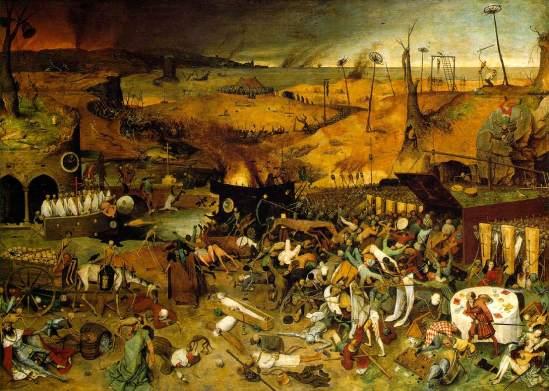
What about the freedom to hurt yourself? Well, no country in the world legalizes suicide for a reason. Suicide is a “conscious decision” that only someone with a somewhat developed mental capacity could perform. What this means is that the society to which that someone belongs must have had invested some resources in bringing him up. Suicide, that is to say, is both a waste of those resources, and an “immoral” act that can potentially mislead the rest of the society.
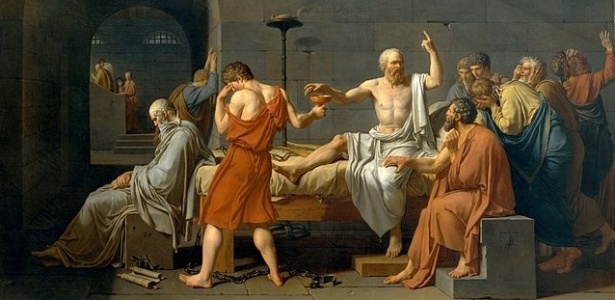
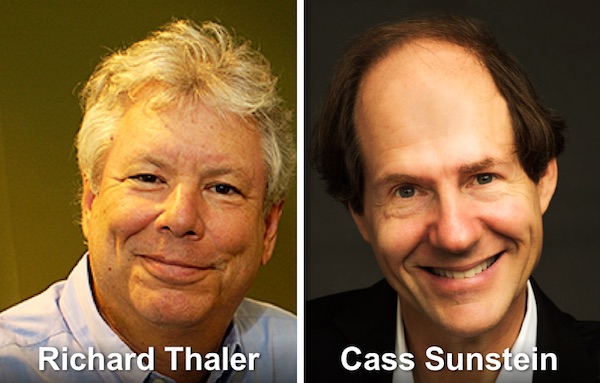
What about the freedom to be stupid and hurt yourself indirectly? That’s up for a debate. But even that, some of the most hardcore “libertarians” (i.e., those who believe in the doctrine of absolute free will) have increasingly endorsed the idea of “libertarian paternalism” — the 2017 Nobel Laureate Richard H. Thaler and the author and legal scholar Cass R. Sunstein’s idea that even those hardcore “free-willers” to live a better life. Even these hardcore free-willers want to be told that fastening their seat belts will prevent them from preventable death, and that they should probably not smoke too much because smoking kills. So, freedom to live trumps to the freedom to live in the dark. These hardcore free-wellers may even argue that they’re “living even more freely” because they are accepting the “forced better way of life,” which they otherwise wouldn’t have known.
I am personally particularly partial to the very last idea (i.e., “libertarian paternalism” in case you missed it), as it speaks to my own being.
I, too, believe in free will, but I also want to say, please help me if you can tell me how to live a better life; please tell me what’s bad for my health; and, please, please, please, tell me what I should do to live a better life. For instance, although I have a PhD in anthropology, I don’t know much about food sciences.
So, even as a free-willer, I often beg (through voting for good people) my government to ban junk food, and endorse nutritious stuff. I also support banning of cigarettes at all public places (even though I was once a chronic smoker). I don’t want to die young! In case I wasn’t clear what I meant earlier (since “libertarian paternalism” may sound oxymoronic), here’s the passage from Thaler and Sunstien’s best-seller Nudge: Improving Decisions About Health, Wealth, and Happiness:
The libertarian aspect of our strategies lies in the straightforward insistence that, in general, people should be free to do what they like—and to opt out of undesirable arrangements if they want to do so. To borrow a phrase from the late Milton Friedman, libertarian paternalists urge that people should be “free to choose.”
We strive to design policies that maintain or increase freedom of choice. When we use the term libertarian to modify the word paternalism, we simply mean liberty-preserving.
And when we say liberty-preserving, we really mean it. Libertarian paternalists want to make it easy for people to go their own way; they do not want to burden those who want to exercise their freedom.
What this mean is that even the smartest people among the free-willers still need some advice.
There’re two reasons for that. First, a society must be defended in the world where knowledge is, simply, too abundant for a single person to know it all. The best of us have to tell the rest what to do — that which is least interruptive and most benefitting to our lives and livelihood.
Second, there’re plenty of evidences that show complete freedom could lead to chaos. Think of a traffic jam, for instance. Or, air pollution. Sound familiar? We all have the right to buy private cars and emit some pollution to the air, but too much of that would suffocate the entire society — including your own children. As we have leaned from great thinker like Garett Hardin, a society can also be overwhelmed with negative things if we’re all thinking we’re free to do whatever we want. Hardin calls it “a tragedy of the commons,” which I think is an urgent question of every society today.

This is when and where “libertarian paternalism” comes in. You can be the smartest person in a certain field, but you can’t be the smartest in all. So, if we assume that our government is capable of recruiting the “smartest” people from all the fields to help us live better in all domains of life, then we’re all “libertarian paternalists” in the sense that we allow ourselves to be led by those who (at least we think they do) know what they are doing.
But, is that freedom? Is freedom then simply the ability to follow the rules of the society that presumably knows how to recruit the best to tell us what to do?
What about some of those great ideas, say, “civil disobedience?” What if I don’t agree with the idea of fastening a seat belt? What if I think banning cigarettes is stupid? Can I disobey things I don’t agree? Shouldn’t that be considered a greater form of freedom?
That’s both a great and horrible question. In a way, it’s also great to be fallibilistic. That said, since we now know the usefulness of seat belts (and danger of smoking), the idea of disobeying the fasten seat belt rule seems, well, plainly stupid. But hey, maybe I could be wrong (that’s fallibilism’s talking). So, let’s look at the bigger picture. Should the libertarian paternalists themselves, too, have some doctrine on which to base their argument?
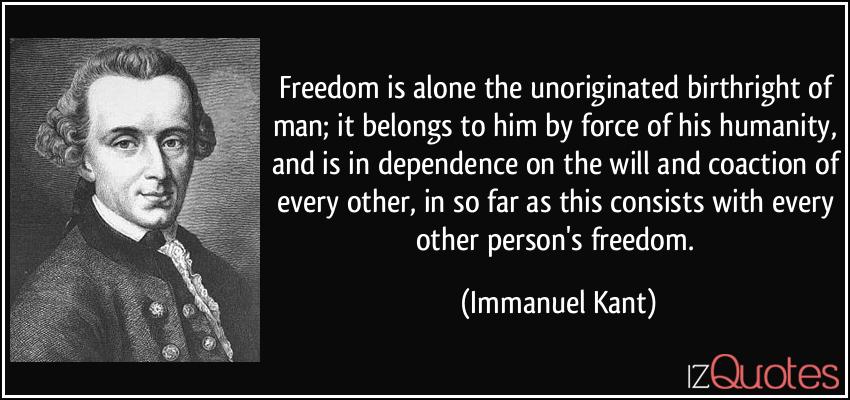
The philosopher Immanuel Kant argues that freedom is (and I of course paraphrase) “the ability to live by your own rules.”
If you have a set of rules by which you want to live your life, and nobody can possibly entice you to follow otherwise then, according to Kant, you’re a “free person.”
Yes, simply put: If you’re a desert-hater, for instance, you’re only free if you will always turn down an offer of a chocolate cake after the dinner at any cost. That which means that you have own your rule by which you live. But what if the society forces you to eat that chocolate cake? If obeying your own rule means disobeying that of the society’s, then you’re only free if you engage in an act of civil disobedience. Yes, not eating that chocolate cake and being put in jail is freedom, for Kant.
In addition to avoiding decision fatigue, there’s another true socio-psychological benefit of turning down that slice of chocolate cake. I resort, again, to Rolf Dobelli’s The Art of the Good Life”:
By being consistent, you signal where you stand and establish the areas where there’s no room for negotiation. You communicate self-mastery, making yourself less vulnerable to attack. Mutual deterrents during the Cold War were based largely on this effect. The USA and the USSR both knew that a nuclear strike would mean instant retaliation. No deliberation, no situational weighing up of pros and cons. The decision for or against the red button had already been taken. Pressing it first simply wasn’t an option.
Kant, however, only argues that those rules have to be strictly adhered to his strictest “categorical imperative,” or the rules that could well “become universal” (apparently eating a chocolate cake wouldn’t be one of those). Think of race and racism, for example. Wouldn’t you agree that we should be all treated equal despite the color of our skin? If your answer, like mine, is yes; then you get the point; that which could become a universal law and therefore is a “categorical imperative.”
The Reverend Martin Luther King Jr. believed that the “the rights of citizens to political and social freedom and equality” should be universal; hence, he went on to, one and for all, change the course of history by civil disobeyed the rule of the state, of the society, and of the conventionality, of the time in which he lived. That’s just one obvious example. There’re plenty. For these, the philosopher Immanuel Kant came up with a few, such as don’t kill yourself, don’t lie, and don’t waste your capacity and learned skills.
I am also sure you can agree that you shall not kill thyself, and that you probably should not lie (e.g., one of Dr Jordon Peterson’s antidotes to chaos “Tell the truth, or at least don’t lie”), but what about “waste your capacity and skill?” Well, if all medical doctors, who spent years learning how to be medical doctors, have decided that they all no longer want to be in the profession, what would happen to those ill people who need their “capacity and skill?” Surely for a society to train a medical doctor, some resources would have to be invested on such training. So, for Kant, a free society can’t operate if it only trains people who will end up wasting their capacity and skill (watch out those who’re not working in what you’ve been trained to do!).
So, it seems as though there isn’t a lot of ways to be completely free.
Now, I want to turn 360 degrees back to the Stoics, Buddha (and John Lennon).
What exactly do these great practical minds think we give ourselves the freedom from? Let me give you 4 of them. If you can be free from all of these, you are free:
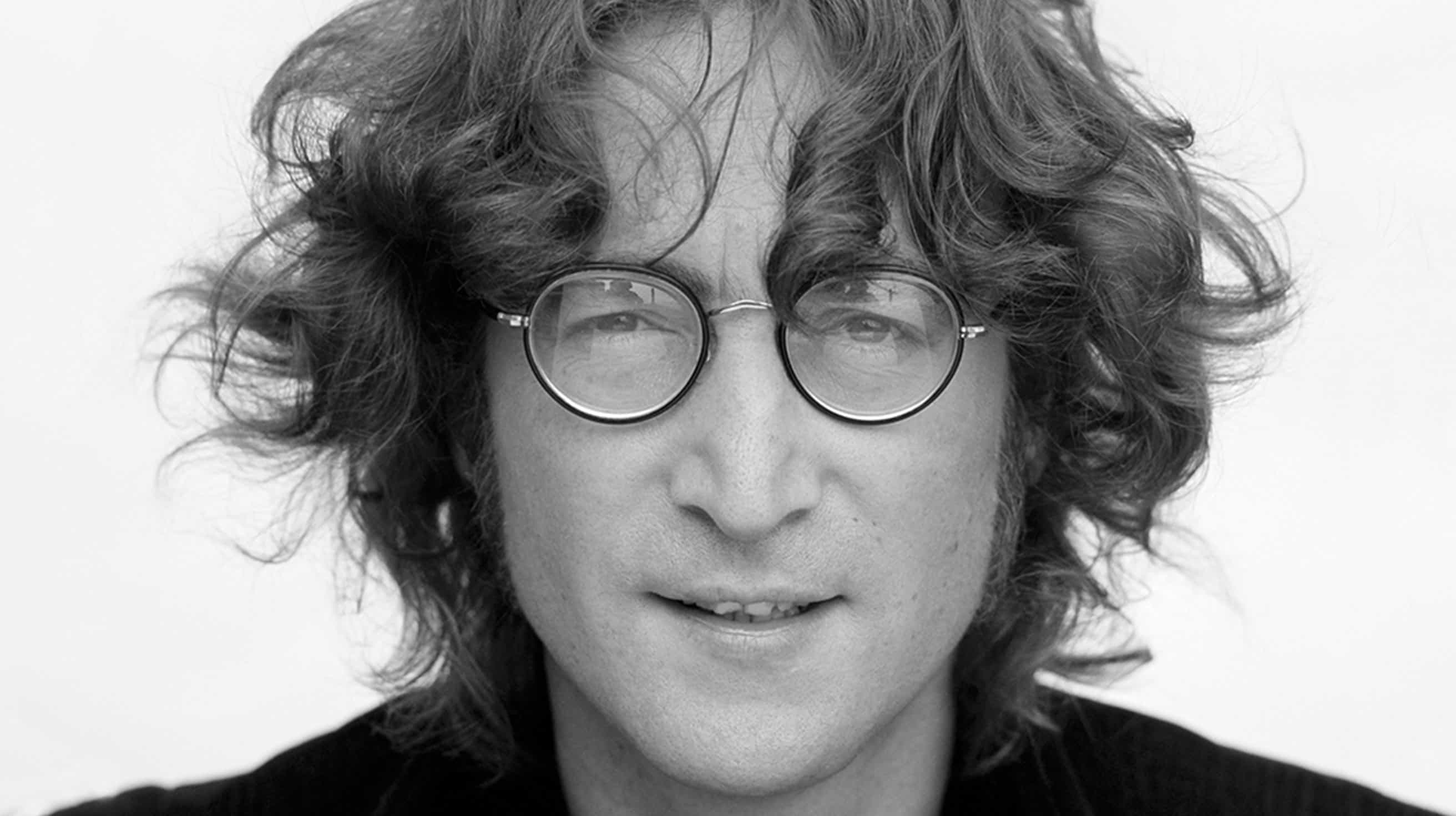
- Freedom from the ability to think. The Stoics are of grave concern with our mental ability to overthink and to, plainly, not stop thinking. The author and and spiritual leader Ekhart Tolle argues in The Power of Now that most of us wasting our opportunity to enjoy life by thinking about the past and the future — and therefore forsaking the presence. The singer, writer, and artists John Lennon, sort of said the same thing that, “Life is what happens to you while you’re busy making other plans.” Descartes might be right that our ability to think (i.e., “I think”) gives us the sense of the existence (i.e., “therefore I am.”). What he’s wrong (or perhaps didn’t address quite eloquently, to give the great philosopher the benefit of the doubt) is that this ability to think doesn’t give us the pleasure that we as a species should enjoy — the pleasure of “being in the moment.” How many of us hear voices in our heads almost all the time? The answer is 99.9999% Most of us find it hard to stop thinking. When we think, as Ekhart Tolle argues, “we stop living in the presence,” which is a waste of the opportunity to be happy. The real freedom to have is the freedom to have that “switch” that you can turn it on and off whenever you wish (This takes a lot of practice and I am still working on it);
- Freedom from judging others. It’s easy for us to be judgmental and opinionated. We’re living in the world where information is treated as social capital. This world makes us want to be judgmental and opinionated just about everything. The same way you wouldn’t want your name to be associated with crime; you wouldn’t want to cast your vote on events, actions, news, of which you do not have a complete knowledge. The real freedom is the ability to restrain yourself from jumping to quick to a conclusion, just because it confirms one of your preexisting biases, or because you feel the social pressure to appear “smart,” or because you feel jealous of others. Simply say no to things that you do not have enough knowledge on which to form an opinion. I do that all the time, and, needless to say, it feels super liberating every time. The true freedom lies in your ability to, simply, be a “gentleperson” in a society that is already rather hateful, rough, and chaotic;
- Freedom from wanting to control what is outside of your control. The Stoics have said it all. There’re only two things that you can control: Your own value and your own opinions. Nobody can take these two things away from you and you always have the absolute control over them. Problems often appear when we begin to think that we can control other people. Parents’ wanting to control their teenage children — because they think it’s in the freedom and right to do so — often end in misery because they choose to place their bet on what they can’t control instead of being fully in charge of their own opinion about their children’s ability to freely go out in the world (and therefore make their own mistakes to learn). You are not free when you want to control what you can’t control.
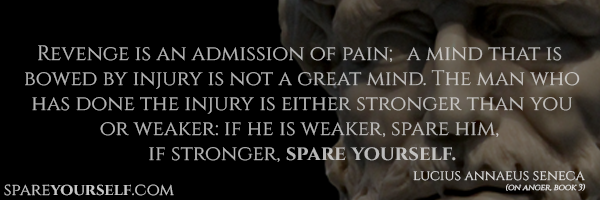
- Freedom from seeking revenges. One of my older colleagues used to remind me that “revenge is a dish best served cold.” He also consistently tells everyone he could find the “famous story” of how he managed to systematically undermine and destroy his former boss’ research center, and therefore his boss’ entire career. This older colleague argued that it was his book who “tried to destroy his career first,” so it’s was in this older colleague’s right to seek revenge. This older colleague always spoke of this revenge as an “achievement” — “I served it to him not just cold, but coldest.” I never agreed with this older colleague of mine when we’re still colleagues, and I still don’t. I feel as though this older colleague of mine had never moved on from the past — he’s still living that past over and over. And since when destroying someone’s career something to be proud of anyway? As both the Buddhist and Chinese old proves go, “Revenge is likely lead to another revenge.” For Buddha, the act of seeking revenge itself yields deep visceral anger that surpasses multiple folds in magnitude the temporary joy received through seeing someone suffers through it. That joy, however, is not the one that gives you the sense of tranquility, but instability. Whenever I think about the mistakes of seeking revenge in the past, I always think my heart’s beating heavy — and it’s not a joyous one. The shrewd and wise Stoics never allow us to dwell over revenge. It’s a waste of time. There’re many other things more important to do. Seneca, for instance, never tried to seek revenge from those who banished, or even sentenced with him hard labour. He simply focused on how to improve himself and get back into the game. He’s not insecure in any ways. As a result, Seneca’s never seeking revenge earned him the reputation of a true sage, and those who did many bad things to him all voluntarily came down to his knees to learn from him. In other words, a truly free person think of revenge “as a dish best not served.” Forgive and forget.
Am I not being free by not using my capacity and skill that I have been trained to do?
I sort of agree with Kant. Although, as a trained architect who barely designs any buildings, I also think that we should all have the right to change our profession. My decision to become an architect (at 16) wasn’t a wise one; and hey, maybe I am just a horrible architect whose absence of buildings is better for the society as a whole. My architectural training actually never went away. So, as I was being trained to become an anthropologist over the past 8 years of my life, I kept my previous profession at bay and tried to incorporate it to my anthropological training in any possible ways that I could. The point is not to retreat to a complete solitude. That wouldn’t be a “free will” but a lazy (and perhaps a selfish) thing to do, for Kant.
So, the fact that I am still here writing this, it’s fine. It’s still considered freedom. I am a writer and an anthropologist. I am still an architect, who now happens to know quite a bit about anthropology.
Unedited original.ต้นฉบับที่ไม่ได้แก้未经修改的原文。
Freedom is one of the most difficult topics. We all want freedom, but…
Freedom from what? Apparently, freedom, at least in the society in which we are living today, doesn’t mean you can do whatever you want. That would be like living in what the philosopher Thomas Hobbes describes as the “state of nature” where everyone can use force to take whatever they want from anyone. Apparently, too, nobody living in the “free world” today would accept the idea of any individual freedom’s to hurt others.
What about the freedom to hurt yourself? Well, no country in the world legalizes suicide for a reason. Suicide is a “conscious decision” that only someone with a somewhat developed mental capacity could perform. What this means is that the society to which that someone belongs must have had invested some resources in bringing him up. Suicide, that is to say, is both a waste of those resources, and an “immoral” act that can potentially mislead the rest of the society.
What about the freedom to be stupid and hurt yourself indirectly? That’s up for a debate. But even that, some of the most hardcore “libertarians” (i.e., those who believe in the doctrine of absolute free will) have increasingly endorsed the idea of “libertarian paternalism” — the 2017 Nobel Laureate Richard H. Thaler and the author and legal scholar Cass R. Sunstein’s idea that even those hardcore “free-willers” to live a better life. Even these hardcore free-willers want to be told that fastening their seat belts will prevent them from preventable death, and that they should probably not smoke too much because smoking kills. So, freedom to live trumps to the freedom to live in the dark. These hardcore free-wellers may even argue that they’re “living even more freely” because they are accepting the “forced better way of life,” which they otherwise wouldn’t have known.
I am personally particularly partial to the very last idea (i.e., “libertarian paternalism” in case you missed it), as it speaks to my own being.
I, too, believe in free will, but I also want to say, please help me if you can tell me how to live a better life; please tell me what’s bad for my health; and, please, please, please, tell me what I should do to live a better life. For instance, although I have a PhD in anthropology, I don’t know much about food sciences.
So, even as a free-willer, I often beg (through voting for good people) my government to ban junk food, and endorse nutritious stuff. I also support banning of cigarettes at all public places (even though I was once a chronic smoker). I don’t want to die young! In case I wasn’t clear what I meant earlier (since “libertarian paternalism” may sound oxymoronic), here’s the passage from Thaler and Sunstien’s best-seller Nudge: Improving Decisions About Health, Wealth, and Happiness:
The libertarian aspect of our strategies lies in the straightforward insistence that, in general, people should be free to do what they like—and to opt out of undesirable arrangements if they want to do so. To borrow a phrase from the late Milton Friedman, libertarian paternalists urge that people should be “free to choose.”
We strive to design policies that maintain or increase freedom of choice. When we use the term libertarian to modify the word paternalism, we simply mean liberty-preserving.
And when we say liberty-preserving, we really mean it. Libertarian paternalists want to make it easy for people to go their own way; they do not want to burden those who want to exercise their freedom.
What this mean is that even the smartest people among the free-willers still need some advice.
There’re two reasons for that. First, a society must be defended in the world where knowledge is, simply, too abundant for a single person to know it all. The best of us have to tell the rest what to do — that which is least interruptive and most benefitting to our lives and livelihood.
Second, there’re plenty of evidences that show complete freedom could lead to chaos. Think of a traffic jam, for instance. Or, air pollution. Sound familiar? We all have the right to buy private cars and emit some pollution to the air, but too much of that would suffocate the entire society — including your own children. As we have leaned from great thinker like Garett Hardin, a society can also be overwhelmed with negative things if we’re all thinking we’re free to do whatever we want. Hardin calls it “a tragedy of the commons,” which I think is an urgent question of every society today.
This is when and where “libertarian paternalism” comes in. You can be the smartest person in a certain field, but you can’t be the smartest in all. So, if we assume that our government is capable of recruiting the “smartest” people from all the fields to help us live better in all domains of life, then we’re all “libertarian paternalists” in the sense that we allow ourselves to be led by those who (at least we think they do) know what they are doing.
But, is that freedom? Is freedom then simply the ability to follow the rules of the society that presumably knows how to recruit the best to tell us what to do?
What about some of those great ideas, say, “civil disobedience?” What if I don’t agree with the idea of fastening a seat belt? What if I think banning cigarettes is stupid? Can I disobey things I don’t agree? Shouldn’t that be considered a greater form of freedom?
That’s both a great and horrible question. In a way, it’s also great to be fallibilistic. That said, since we now know the usefulness of seat belts (and danger of smoking), the idea of disobeying the fasten seat belt rule seems, well, plainly stupid. But hey, maybe I could be wrong (that’s fallibilism’s talking).. So, let’s look at the bigger picture. Should the libertarian paternalists themselves, too, have some doctrine on which to base their argument?
The philosopher Immanuel Kant argues that freedom is (and I of course paraphrase) “the ability to live by your own rules.”
If you have a set of rules by which you want to live your life, and nobody can possibly entice you to follow otherwise then, according to Kant, you’re a “free person.”
Yes, simply put: If you’re a desert-hater, for instance, you’re only free if you will always turn down an offer of a chocolate cake after the dinner at any cost. That which means that you have own your rule by which you live. But what if the society forces you to eat that chocolate cake? If obeying your own rule means disobeying that of the society’s, then you’re only free if you engage in an act of civil disobedience. Yes, not eating that chocolate cake and being put in jail is freedom, for Kant.
In addition to avoiding decision fatigue, there’s another true socio-psychological benefit of turning down that slice of chocolate cake. I resort, again, to Rolf Dobelli’s The Art of the Good Life”:
By being consistent, you signal where you stand and establish the areas where there’s no room for negotiation. You communicate self-mastery, making yourself less vulnerable to attack. Mutual deterrents during the Cold War were based largely on this effect. The USA and the USSR both knew that a nuclear strike would mean instant retaliation. No deliberation, no situational weighing up of pros and cons. The decision for or against the red button had already been taken. Pressing it first simply wasn’t an option.
Kant, however, only argues that those rules have to be strictly adhered to his strictest “categorical imperative,” or the rules that could well “become universal” (apparently eating a chocolate cake wouldn’t be one of those). Think of race and racism, for example. Wouldn’t you agree that we should be all treated equal despite the color of our skin? If your answer, like mine, is yes; then you get the point; that which could become a universal law and therefore is a “categorical imperative.”
The Reverend Martin Luther King Jr. believed that the “the rights of citizens to political and social freedom and equality” should be universal; hence, he went on to, one and for all, change the course of history by civil disobeyed the rule of the state, of the society, and of the conventionality, of the time in which he lived. That’s just one obvious example. There’re plenty. For these, the philosopher Immanuel Kant came up with a few, such as don’t kill yourself, don’t lie, and don’t waste your capacity and learned skills.
I am also sure you can agree that you shall not kill thyself, and that you probably should not lie (e.g., one of Dr Jordon Peterson’s antidotes to chaos “Tell the truth, or at least don’t lie”), but what about “waste your capacity and skill?” Well, if all medical doctors, who spent years learning how to be medical doctors, have decided that they all no longer want to be in the profession, what would happen to those ill people who need their “capacity and skill?” Surely for a society to train a medical doctor, some resources would have to be invested on such training. So, for Kant, a free society can’t operate if it only trains people who will end up wasting their capacity and skill (watch out those who’re not working in what you’ve been trained to do!).
So, it seems as though there isn’t a lot of ways to be completely free.
Now, I want to turn 360 degrees back to the Stoics, Buddha (and John Lennon).
What exactly do these great practical minds think we give ourselves the freedom from? Let me give you 4 of them. If you can be free from all of these, you are free:
- Freedom from the ability to think. The Stoics are of grave concern with our mental ability to overthink and to, plainly, not stop thinking. The author and and spiritual leader Ekhart Tolle argues in The Power of Now that most of us wasting our opportunity to enjoy life by thinking about the past and the future — and therefore forsaking the presence. The singer, writer, and artists John Lennon, sort of said the same thing that, “Life is what happens to you while you’re busy making other plans.” Descartes might be right that our ability to think (i.e., “I think”) gives us the sense of the existence (i.e., “therefore I am.”). What he’s wrong (or perhaps didn’t address quite eloquently, to give the great philosopher the benefit of the doubt) is that this ability to think doesn’t give us the pleasure that we as a species should enjoy — the pleasure of “being in the moment.” How many of us hear voices in our heads almost all the time? The answer is 99.9999% Most of us find it hard to stop thinking. When we think, as Ekhart Tolle argues, “we stop living in the presence,” which is a waste of the opportunity to be happy. The real freedom to have is the freedom to have that “switch” that you can turn it on and off whenever you wish (This takes a lot of practice and I am still working on it);
- Freedom from judging others. It’s easy for us to be judgmental and opinionated. We’re living in the world where information is treated as social capital. This world makes us want to be judgmental and opinionated just about everything. The same way you wouldn’t want your name to be associated with crime; you wouldn’t want to cast your vote on events, actions, news, of which you do not have a complete knowledge. The real freedom is the ability to restrain yourself from jumping to quick to a conclusion, just because it confirms one of your preexisting biases, or because you feel the social pressure to appear “smart,” or because you feel jealous of others. Simply say no to things that you do not have enough knowledge on which to form an opinion. I do that all the time, and, needless to say, it feels super liberating every time. The true freedom lies in your ability to, simply, be a “gentleperson” in a society that is already rather hateful, rough, and chaotic;
- Freedom from wanting to control what is outside of your control. The Stoics have said it all. There’re only two things that you can control: Your own value and your own opinions. Nobody can take these two things away from you and you always have the absolute control over them. Problems often appear when we begin to think that we can control other people. Parents’ wanting to control their teenage children — because they think it’s in the freedom and right to do so — often end in misery because they choose to place their bet on what they can’t control instead of being fully in charge of their own opinion about their children’s ability to freely go out in the world (and therefore make their own mistakes to learn). You are not free when you want to control what you can’t control.
- Freedom from seeking revenges. One of my older colleagues used to remind me that “revenge is a dish best served cold.” He also consistently tells everyone he could find the “famous story” of how he managed to systematically undermine and destroy his former boss’ research center, and therefore his boss’ entire career. This older colleague argued that it was his book who “tried to destroy his career first,” so it’s was in this older colleague’s right to seek revenge. This older colleague always spoke of this revenge as an “achievement” — “I served it to him not just cold, but coldest.” I never agreed with this older colleague of mine when we’re still colleagues, and I still don’t. I feel as though this older colleague of mine had never moved on from the past — he’s still living that past over and over. And since when destroying someone’s career something to be proud of anyway? As both the Buddhist and Chinese old proves go, “Revenge is likely lead to another revenge.” For Buddha, the act of seeking revenge itself yields deep visceral anger that surpasses multiple folds in magnitude the temporary joy received through seeing someone suffers through it. That joy, however, is not the one that gives you the sense of tranquility, but instability. Whenever I think about the mistakes of seeking revenge in the past, I always think my heart’s beating heavy — and it’s not a joyous one. The shrewd and wise Stoics never allow us to dwell over revenge. It’s a waste of time. There’re many other things more important to do. Seneca, for instance, never tried to seek revenge from those who banished, or even sentenced with him hard labour. He simply focused on how to improve himself and get back into the game. He’s not insecure in any ways. As a result, Seneca’s never seeking revenge earned him the reputation of a true sage, and those who did many bad things to him all voluntarily came down to his knees to learn from him. In other words, a truly free person think of revenge “as a dish best not served.” Forgive and forget.
Am I not being free by not using my capacity and skill that I have been trained to do?
I sort of agree with Kant. Although, as a trained architect who barely designs any buildings, I also think that we should all have the right to change our profession. My decision to become an architect (at 16) wasn’t a wise one; and hey, maybe I am just a horrible architect whose absence of buildings is better for the society as a whole. My architectural training actually never went away. So, as I was being trained to become an anthropologist over the past 8 years of my life, I kept my previous profession at bay and tried to incorporate it to my anthropological training in any possible ways that I could. The point is not to retreat to a complete solitude. That wouldn’t be a “free will” but a lazy (and perhaps a selfish) thing to do, for Kant.
So, the fact that I am still here writing this, it’s fine. It’s still considered freedom. I am a writer and an anthropologist. I am still an architect, who now happens to know quite a bit about anthropology.